ICE Under Scrutiny: Fatal Shootings, Surging Arrests and a Growing Fight Over Immigration Enforcement
For years, the immigration debate has revolved around one number: how many people the federal government can arrest and deport. Now, another set of numbers is becoming harder to ignore.
Immigration and Customs Enforcement officers fatally shot two men within six days in July. Neither was the original target of the operation that put ICE officers in his path. Both encounters involved vehicles. Neither officer involved had body-camera footage capable of providing a complete visual record of the critical moments.
Those details have transformed two local shootings into a much larger test of how quickly immigration enforcement can expand before oversight struggles to keep pace.
Two ICE operations ended with the wrong men dead

In Houston, 52-year-old Lorenzo Salgado Araujo was driving to a construction job on July 7 when ICE officers attempted to stop his van.
Federal officials later acknowledged that Salgado Araujo was not the person they were seeking. Officers had been searching for other men connected to a similar vehicle and believed he resembled their target.
ICE said Salgado Araujo ignored commands, maneuvered his vehicle toward officers and created a threat that prompted an agent to fire.
But passengers inside the van have disputed that account. Written statements filed in federal court said Salgado Araujo had stopped and that officers were not standing directly in front of the van when shots were fired. The shooting remains under investigation, meaning neither account should yet be treated as a final determination of what happened.
Six days later, another immigration operation ended with gunfire in Biddeford, Maine.
Johan Sebastián Durán Guerrero was driving away from a residence ICE had been monitoring when officers attempted to stop him. DHS said an officer fired after Durán Guerrero tried to flee and created a public-safety threat.
He, too, was not the person ICE had originally been looking for.
That coincidence is what makes the cases particularly difficult to dismiss as unrelated tragedies.
Two enforcement operations. Two vehicle stops. Two fatal shootings. Two people who were not the intended targets.
ICE briefly changed course, then Trump reversed it
The shootings immediately produced something rarely seen during the administration’s immigration crackdown: a nationwide tactical retreat.
ICE deportation officers were told to suspend most vehicle stops while officials reviewed the incidents and additional training, according to multiple reports. Exceptions remained for certain criminal targets and operations conducted with partner agencies.
The pause barely lasted.
President Donald Trump publicly rejected abandoning traffic stops, describing them as an important enforcement tool and directing ICE officers to continue using them while being “judicious, fair and smart.” The White House confirmed that his statement effectively overturned the suspension. That rapid reversal exposed the central tension now surrounding ICE.
The administration wants speed, reach and dramatically higher arrest totals. Recent events are increasing pressure for more caution, verification and documentation. Those objectives do not always move comfortably together.
Street arrests have become a much bigger part of immigration enforcement
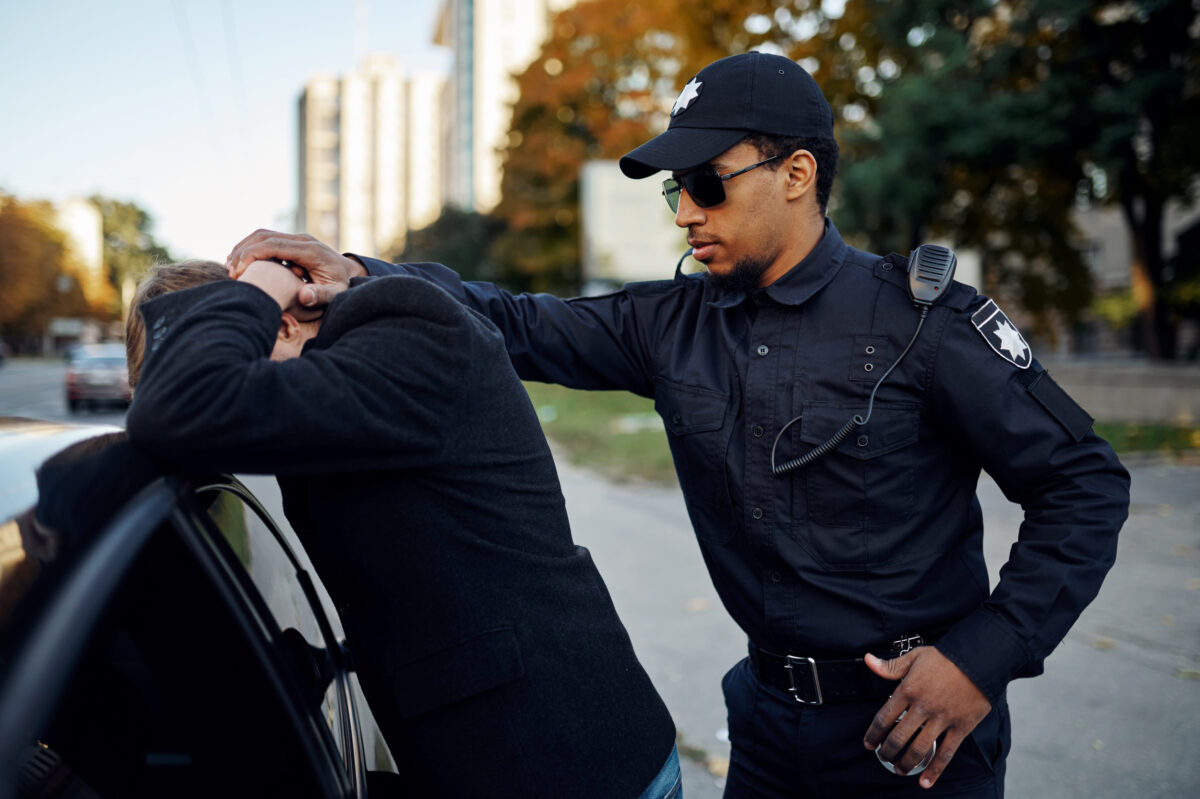
The scale of the change helps explain why ICE encounters are increasingly appearing in neighborhoods and on local roads.
An analysis by the Deportation Data Project found that ICE arrests quadrupled during the first nine months of Trump’s second administration compared with the preceding period.
More strikingly, street arrests increased more than elevenfold. Arrests of people without criminal convictions increased more than sevenfold, according to the researchers.
That represents more than an increase in enforcement. It represents a change in where enforcement happens.
Moving an immigrant from a jail into federal custody creates a controlled transfer. Stopping someone in a car on a residential street introduces traffic, passengers, bystanders, uncertainty and split-second decisions.
As those encounters multiply, rare mistakes can become nationally significant patterns simply because the government is creating far more opportunities for them to occur.
Civil-rights complaints are growing alongside the arrest numbers
The ACLU added another layer to that debate in July when it released a review of more than 1,200 immigration-enforcement incidents across eight states during 2025.
The organization said more than 400 incidents involved alleged misconduct by immigration officers. Its broader findings documented accusations involving physical force, chemical irritants, children, U.S. citizens and people observing or recording enforcement activity.
The report comes from an advocacy organization and does not represent every ICE encounter nationwide. Its findings should therefore not be interpreted as a misconduct rate for the agency as a whole.
Still, the collection highlights a problem that grows automatically with enforcement scale: the government increasingly encounters people beyond the individual it originally intended to arrest.
The Houston and Maine shootings offer the starkest possible examples.
Body cameras could become ICE’s next accountability battle
ICE is now preparing to equip field officers nationwide with body-worn cameras by the end of September.
The agency spent roughly $30.9 million in July on cameras, according to reporting on the rollout. Yet the policy governing those devices could create another controversy.
ICE’s rules allow senior officials substantial discretion over whether footage from serious incidents is released publicly. Even recordings involving deaths or major injuries can be withheld or delayed when agency leadership determines disclosure is not in ICE’s interests.
That makes the cameras more than a technology story.
They could become the dividing line between simply recording government power and making that power genuinely reviewable.
The next ICE debate may be about evidence, not arrest totals

usicegov, Public domain, via Wikimedia Commons
The Trump administration argues that aggressive enforcement is necessary to carry out immigration law and remove people who have no lawful basis to remain in the country. ICE officers can also encounter dangerous situations in which force may be legally justified.
But greater enforcement authority creates a corresponding need for greater proof when encounters end badly. That may be the lasting significance of the Houston and Maine shootings.
The defining immigration statistic of the next year may not simply be how many people ICE arrests. It may be how many disputed encounters are recorded, how many investigations become public, how often agents stop the wrong person and how quickly Americans are allowed to see the evidence when the government’s version of events is challenged.
As ICE’s footprint grows across American streets, accountability is no longer a side issue in the immigration debate. It is becoming part of the enforcement policy itself.