Ilhan Omar Responds After Bernie Sanders Says “No Serious Person” Running for Office Supports “Defunding the Police” Amid DSA Debate
The debate over “defunding the police” has returned to the center of Democratic politics, but this time the argument is unfolding inside the party’s progressive movement.
Sen. Bernie Sanders sought to draw a firm line between the candidates he considers serious contenders for public office and some of the most sweeping positions associated with the Democratic Socialists of America, or DSA. Days later, Rep. Ilhan Omar of Minnesota was asked whether Sanders’ description matched the political reality she sees.
Her response did not simply endorse or reject Sanders’ argument. Instead, Omar reframed the dispute around a crucial distinction: the difference between activist language, campaign rhetoric and policies that elected officials are actually attempting to enact.
That distinction matters because the DSA’s newly published national program goes considerably further on policing than Sanders suggested most serious candidates are willing to go. At the same time, Minneapolis, the city at the heart of the 2020 policing debate and part of Omar’s political base, has spent the years since George Floyd’s murder building a public-safety system that combines policing reforms with alternative responses and violence-prevention programs.
Bernie Sanders Says Serious Candidates Are Not Running on Defunding the Police
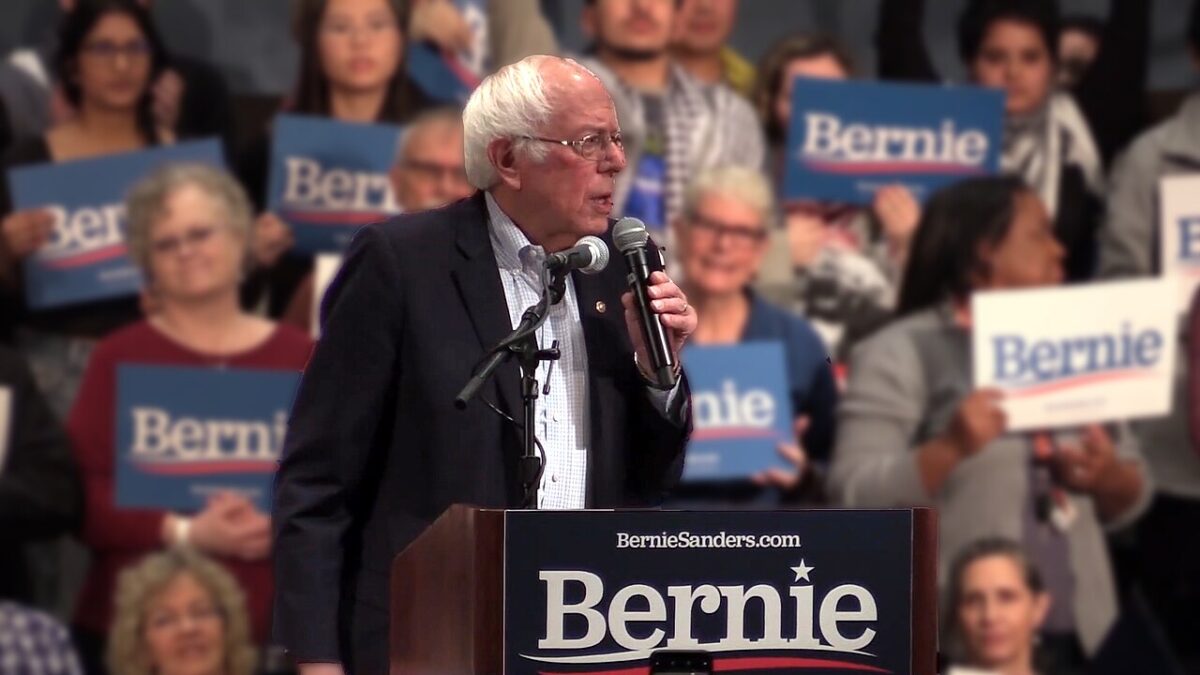
The latest controversy began during Sanders’ August 5 appearance on Pod Save America, where host Jon Favreau questioned him about the growing influence of democratic socialist candidates and some of the policies associated with the DSA.
The episode followed progressive victories that have renewed questions about how much influence democratic socialism may have over the Democratic Party heading into future elections. Sanders appeared on the program to discuss that political movement and the direction of the broader progressive coalition.
Favreau raised several politically explosive ideas associated with socialist politics, including abolishing prisons, drastically changing policing and loosening immigration restrictions.
Sanders pushed back strongly against the suggestion that those positions represented the candidates he considers viable.
“No serious person that I know who is running for office believes in, quote unquote, defunding the police,” Sanders said during the discussion.
Sanders then separated abolishing or defunding law enforcement from what he considers legitimate police reform.
He noted that he had served as mayor of Burlington, Vermont, for eight years and worked directly with police officers. He described policing as difficult work while arguing that departments still need reforms addressing racism and the division of responsibilities between officers and other professionals.
Sanders specifically pointed toward issues such as mental-health emergencies and drug addiction, suggesting some responsibilities currently placed on police officers could instead be handled by people with different expertise.
That position places Sanders in territory familiar to many Democrats since 2020: reform policing, increase accountability and create non-police responses for some situations, but reject the politically loaded idea that communities should simply eliminate conventional law enforcement.
Ilhan Omar Explains What She Thinks Sanders Meant
The conversation moved directly into Omar’s political backyard when CNN’s Kaitlan Collins asked the Minnesota Democrat about Sanders’ statement.
Omar represents a district centered on Minneapolis, making her particularly relevant to a debate shaped by events in that city.
Asked whether Sanders was correct, Omar pointed back to the upheaval that followed George Floyd’s murder in Minneapolis in May 2020.
She argued that communities such as Minneapolis were forced into a much deeper conversation about the meaning of public safety and how a troubled relationship between police and residents should be addressed.
Omar described the Minneapolis Police Department as having been “essentially problematic” and suggested that once a local debate over policing became a national political slogan, some of its original meaning became harder to preserve.
Her central argument was that Americans generally want two things at once: safer communities and meaningful accountability when police departments fail the people they are supposed to protect.
When Collins pressed Omar more directly on Sanders’ contention that no serious candidate is actually advocating police defunding, Omar narrowed the issue to legislation.
“To that regard, I would say that he is right,” Omar said, explaining that she had not seen recent legislation or ordinances advancing the kind of sweeping policy implied by the national “defund the police” debate.
That answer effectively allowed Omar to agree with Sanders without pretending the broader abolitionist movement had disappeared.
The DSA Platform Makes the Disagreement Harder to Ignore
This is where the political debate becomes more complicated. Sanders describes himself as a democratic socialist, but his political positions are not identical to every policy promoted by the Democratic Socialists of America. The organization’s current “Workers Deserve More” program makes that distinction especially important.
Under a section titled “End Mass Incarceration and Police Immunity,” the DSA calls for demilitarizing police departments, weakening police union power and redirecting funding toward public services. The program explicitly describes those moves as steps toward eventually fully abolishing the police and prison system.
The DSA program goes substantially beyond policing. It calls for abolishing the Senate, replacing the presidency and Supreme Court with institutions subordinate to Congress, ending ICE detention and deportations, expanding immigration amnesty and constructing a multiparty political system with proportional representation.
The organization says the program was drafted between April and June 2026 by a committee created through a process established by its 2025 National Convention before being finalized and approved.
So when Sanders argues that most serious candidates he knows do not support abolishing police departments or prisons, he is not describing the DSA platform itself. He is describing what he believes actual candidates are prepared to campaign on and attempt to enact.
That difference has become increasingly important as democratic socialist candidates gain visibility while also facing questions about how closely they should be tied to every plank of the national organization’s agenda.
Francesca Hong Shows Why the Question Is Politically Difficult
Wisconsin’s gubernatorial race has offered one of the clearest examples. Democratic socialist state Rep. Francesca Hong has emerged as a major contender in Wisconsin’s Democratic gubernatorial primary, placing her candidacy at the center of the debate over the future of the party’s progressive wing.
Hong has faced questions about previous statements regarding policing and about whether she embraces the full national DSA agenda.
She has made clear that she does not support the organization’s entire national platform, while describing democratic socialism more broadly as politics centered on working-class people. That creates precisely the political gray area Sanders was trying to describe.
A politician can identify with democratic socialism without endorsing every national DSA proposal. Likewise, a candidate may once have used language associated with police abolition while campaigning today on a different or narrower public-safety platform.
For Democrats, however, those distinctions are unlikely to end the political argument. Opponents can point directly to the DSA’s written program. Progressive candidates then face the challenge of explaining which parts they support, which parts they reject, and how their current positions differ from statements made during the intense political atmosphere of 2020.
Minneapolis Has Moved Toward a Mixed Public-Safety Model
Omar’s comments become easier to understand when we examine what Minneapolis has actually done. Rather than simply eliminating conventional policing, the city has pursued a broader community-safety system.
Minneapolis now describes its strategy as combining expanded emergency-response services, violence prevention and police reform. City officials say the goal is to send appropriate resources to different types of emergencies, including developing non-police responses in situations where officers may not be necessary. At the same time, the city continues to maintain a police department.
Minneapolis has introduced new use-of-force rules, additional de-escalation training, restrictions on certain traffic-stop practices and new accountability measures. The city has also developed behavioral crisis response services and a broader Office of Community Safety bringing together police, fire, 911, emergency management and neighborhood-safety programs.
Federal intervention also demonstrated that concerns about policing in Minneapolis were not merely political rhetoric.
The Justice Department previously concluded that Minneapolis and its police department engaged in a pattern or practice of conduct violating constitutional and federal civil-rights protections. A federal consent decree established requirements covering excessive force, discriminatory policing, behavioral-health encounters, supervision and officer accountability.
That history helps explain Omar’s refusal to treat the entire debate as a choice between supporting police exactly as they existed before 2020 and abolishing them altogether.
Sanders and Omar Are Drawing a Line Between Movement Politics and Governing
What we are ultimately watching is a debate over how progressive movements translate activist demands into governing policy.
The slogan “defund the police” once compressed several different ideas into three words. For some activists, it meant reducing police budgets and transferring money to housing, mental-health care or community services. For others, it represented a longer-term abolitionist project.
Those distinctions became politically difficult to communicate once the slogan entered national electoral politics.
Sanders is now drawing his own boundary clearly. He supports police reform, alternative responses for some emergencies and changes to the criminal-justice system, but he rejects the idea that serious candidates in his political orbit are campaigning to eliminate policing altogether.
Omar’s response largely supported that interpretation while preserving the context that produced the original debate. And the DSA’s written platform ensures the question will not disappear.
Its program really does envision dramatically transforming American policing and government. Sanders really does reject some of those positions. Omar really does argue that local demands for reform can become distorted when converted into national political messaging. Those statements can all be true simultaneously.
The bigger question for the progressive movement is therefore no longer simply whether “defund the police” remains a popular slogan. It is whether democratic socialist candidates can separate the policies they actually intend to govern on from the more sweeping ambitions promoted by activists and national organizations.
As the 2026 elections bring more progressive candidates into competitive races, we are likely to hear that question repeatedly. For Sanders and Omar, the answer appears increasingly clear: public-safety reform remains part of the progressive agenda, but they do not want police abolition to define every candidate operating under the democratic socialist banner.