Italy Tightens Schengen Controls With Spain After Ceuta Migration Surge, Sparking New EU Border Debate
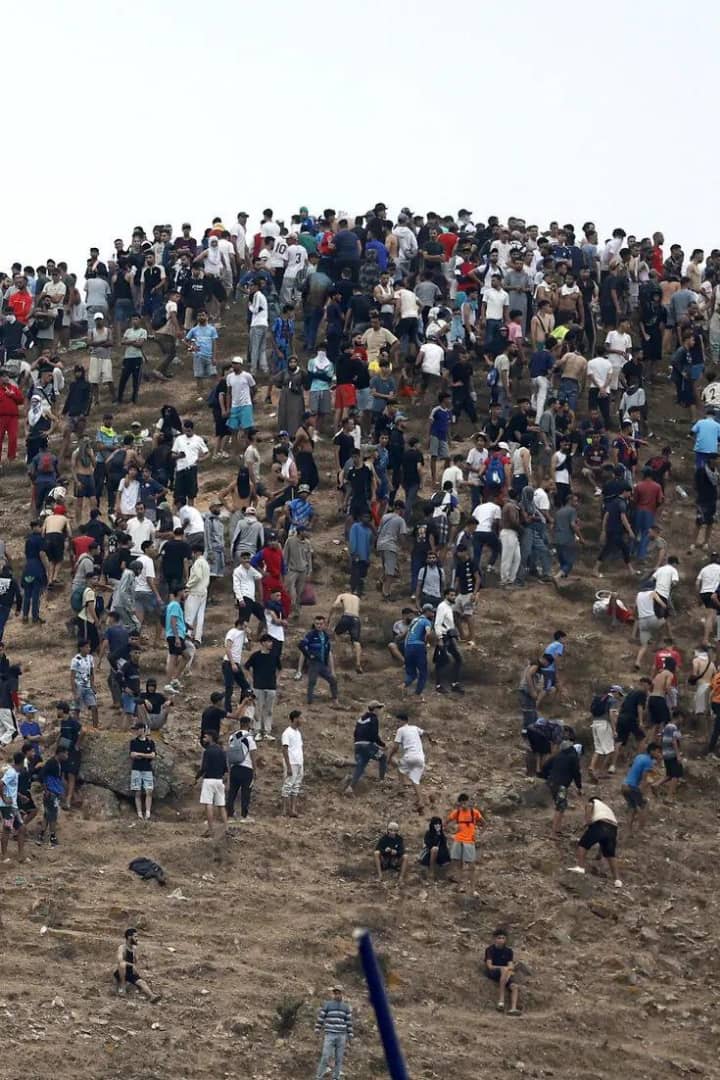
A sudden migration crisis on the edge of Europe has pushed the continent’s border system into unfamiliar territory, with Italy temporarily tightening travel controls with Spain after thousands of migrants arrived in the Spanish enclave of Ceuta.
The decision marks one of the most significant recent challenges to Europe’s passport-free travel system, known as the Schengen Area. It has intensified a political dispute over how countries should respond when migration pressures overwhelm border regions.
Italy announced that it would suspend parts of the Schengen travel arrangement with Spain for one month following a large migrant influx into Ceuta, a Spanish territory located on the northern coast of Africa. The measure introduces targeted checks for certain non-European Union nationals arriving from Spain by air or sea, while Spanish citizens and other EU citizens are not affected.
The announcement does not remove Spain from the Schengen Area. Instead, it represents a temporary restoration of specific border checks, a mechanism allowed under European rules when governments cite security concerns or exceptional circumstances.
The move has opened a wider debate about the balance between protecting Europe’s borders and maintaining one of the continent’s most important achievements: the ability of millions of people to travel freely across participating countries.
The Ceuta Crisis That Sparked Italy’s Decision
The dispute began after a dramatic surge of migrants entering Ceuta from neighboring Morocco.
Ceuta is a small Spanish territory on Africa’s northern coastline. Because of its unique geographic position, it has long been a pressure point in Europe’s migration debate. The territory sits outside mainland Europe but remains part of Spain, making it one of the closest entry points into the European Union for migrants traveling from North Africa.
Reuters reported that Italy’s decision followed a mass influx of migrants into Ceuta from Morocco. The Italian government said the temporary restrictions were necessary to protect national security and prevent possible consequences from the movement of undocumented migrants through European borders.
The crisis placed renewed attention on the challenges faced by countries located along Europe’s external borders. Spain, Italy and Greece have frequently argued that they carry a disproportionate burden because migrants often arrive first through their territories before seeking asylum or moving elsewhere in Europe.
For residents of Ceuta, the situation created uncertainty as local authorities responded to the sudden arrival of large numbers of people. The event also became a political flashpoint, with European governments debating whether existing migration rules are strong enough to handle sudden surges.
The scale of the arrivals quickly turned a regional border challenge into a wider European political issue, forcing Spain to respond while drawing attention from governments across the continent.
What Happened in Ceuta?
The crisis began after a large number of migrants crossed into Ceuta, a Spanish territory located on the northern coast of Africa.
Reuters reported that more than 50,000 migrants entered the enclave during the surge, while other reports placed the figure closer to 60,000. The crossings overwhelmed local authorities and led Spain to deploy additional security forces.
The Spanish government said it was working with Moroccan authorities to manage the situation, while officials blamed human-smuggling networks and misinformation for encouraging people to attempt the crossing.
The crisis also resulted in deaths during the dangerous crossings, according to reports from international media.
The situation placed Spain under intense political pressure at home and abroad, as officials attempted to defend their border response while managing criticism from European partners.
Spain Pushes Back Against Criticism
Spanish officials rejected claims that the country had lost control of its borders.
Prime Minister Pedro Sánchez described the situation as a serious challenge and said Spain was responding to protect its territory while working with neighboring Morocco.
The Spanish government has argued that the migration surge was influenced by organized smuggling networks and difficult economic conditions in Morocco rather than simply government policy decisions.
Spain has also reported that many migrants later returned to Morocco after the initial crossings.
Italy’s decision came as European governments continued debating whether existing border rules were strong enough to handle sudden migration pressures.
Italy’s Temporary Schengen Move Explained
Italy’s announcement does not represent a permanent suspension of travel between the two countries.
Under Schengen rules, member states can temporarily reintroduce border controls under specific circumstances. These measures are designed as emergency tools rather than permanent replacements for open borders.
According to Reports, Italian border authorities will carry out targeted checks on non-EU nationals arriving from Spain by air or sea. The government said the measure would not affect Spanish citizens or other EU citizens traveling between the two countries.
Italy also coordinated with France to strengthen controls along the Franco-Italian border in an effort to prevent undocumented migrants from moving through the region.
Italian Prime Minister Giorgia Meloni defended the decision, describing it as a temporary security measure rather than a permanent change to European travel rules. She also emphasized the importance of avoiding unnecessary disruption during the busy summer tourism season.
The announcement reflects a growing tension inside Europe: governments want stronger control over migration flows, but businesses, travelers and EU institutions want to preserve the advantages of open movement.
Why Schengen Matters Across Europe

The Schengen Area is one of the European Union’s most visible achievements.
Created to reduce internal border checks, it allows travelers to move between participating countries without routine passport controls. The system supports tourism, trade, employment and daily life for millions of Europeans.
A person living in one Schengen country may often work, study or travel across several neighboring countries without facing traditional border procedures.
However, the system depends on trust between member states. Countries must believe that external borders are effectively managed and that security concerns are addressed collectively.
When one country believes another country’s border policies create risks for the wider region, political pressure often follows.
That is what has happened after the Ceuta crisis. Italy’s action reflects concerns that migrants entering Spain could eventually travel onward within Europe.
Spain Faces Pressure Over Migration Policy
The Italian decision has increased pressure on Spain’s government as European leaders debate how to respond.
Spain has argued that migration challenges require cooperation with neighboring countries, particularly Morocco, where many migrants begin their journey toward European territory.
Spanish authorities have previously worked with Moroccan officials to manage border crossings and prevent dangerous journeys.
Supporters of Spain’s approach argue that migration cannot be solved through border restrictions alone. They say European countries need coordinated policies addressing asylum procedures, legal migration routes and cooperation with countries of origin and transit.
Critics argue that countries must do more to prevent unauthorized arrivals and strengthen external border controls before migrants reach European territory.
The disagreement reflects a wider European divide that has existed for years.
Meloni’s Government Pushes for Stronger Border Controls
Italy’s move fits with Prime Minister Giorgia Meloni’s broader political focus on reducing irregular migration.
Since taking office, Meloni has made immigration enforcement one of her government’s major priorities, calling for stronger European action to control unauthorized arrivals.
Her government has argued that European countries need more effective border protection and faster procedures for dealing with people who do not qualify to remain.
Critics of the Italian approach argue that temporary border restrictions can create political tension without addressing the underlying causes of migration.
Some opposition figures have described the move as symbolic, arguing that migrants arriving in Spain’s Ceuta territory were not necessarily heading toward Italy. Critics has questioned whether the measure would have a practical impact on migration flows.
The disagreement highlights the political challenge facing European leaders: migration is both a security issue and a humanitarian issue.
A New Test for European Unity
The Schengen system has faced pressure before.
Several European countries have temporarily restored border checks during periods of security concerns, migration pressure or public emergencies.
But each new restriction raises questions about the future of Europe’s open-border model.
Supporters of stronger controls argue that free movement can only survive if external borders are secure.
Supporters of maintaining fewer internal restrictions warn that repeated border controls could weaken one of the European Union’s most important achievements.
The dispute between Italy and Spain shows how quickly migration issues can become broader questions about sovereignty, security and cooperation.
What Happens Next?
For now, Italy’s measure remains temporary.
The immediate focus will be on whether migration pressures around Ceuta decrease and whether European governments can agree on a broader approach.
The crisis has already produced political consequences beyond Spain’s borders. It has forced European leaders to confront a familiar but unresolved question: how can countries maintain free movement inside Europe while managing pressure at the continent’s external borders?
For travelers, the impact is limited because EU citizens are not affected by the new checks. For policymakers, however, the issue is much larger.
The Ceuta crisis has become another reminder that Europe’s migration debate is far from settled. As governments balance security concerns with the principles of cooperation and free movement, the future of Schengen remains one of the continent’s most closely watched political issues.