James Carville’s Prediction About Donald Trump Sparks Fierce Political Debate as 2026 Midterms Approach
In Washington, a renewed political storm is forming after veteran Democratic strategist James Carville made a series of strong predictions about Donald Trump’s political future, including claims that the former president could eventually step away from office if public sentiment continues to shift sharply against him.
The remarks, made during Carville’s Politics War Room podcast, have quickly circulated across political circles, adding fresh intensity to an already polarized national conversation ahead of the upcoming midterm elections. What is emerging is not just another partisan exchange, but a deeper reflection of America’s growing divide over leadership, economic pressure, and the direction of national policy.
Carville’s Warning and the Midterm Election Pressure Point
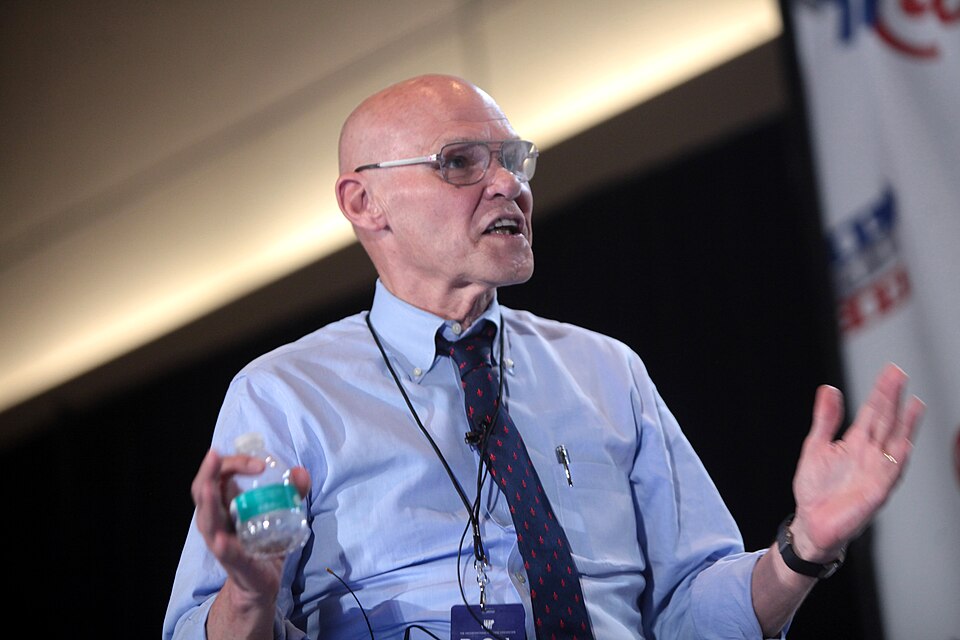
Carville argued that Donald Trump faces a politically difficult environment heading into the next major election cycle, suggesting that voter dissatisfaction on issues such as the cost of living could shape the outcome in unexpected ways. He claimed that the political climate is shifting rapidly, citing declining approval ratings and growing frustration among voters facing economic pressure in their daily lives.
While Carville’s comments were framed as analysis, they also reflect a broader concern among strategists on both sides of the aisle: whether traditional political momentum is becoming harder to predict in a volatile public mood. At the center of his argument is the belief that upcoming elections will serve as a major test of political endurance, messaging strategy, and voter loyalty.
Claims About Leadership Stability and Political Fatigue
Carville also suggested that Trump may struggle to maintain long-term political focus under sustained pressure, referencing past reports and public appearances that critics have interpreted as signs of fatigue. These remarks have fueled intense debate, particularly among supporters who strongly reject the characterization and view it as politically motivated framing.
However, analysts note that discussions about leadership stamina are not new in American politics, especially when high-pressure national and international issues are involved. In this case, the conversation has expanded beyond personality politics and into broader questions about executive endurance, media scrutiny, and the psychological toll of continuous political conflict.
Supporters Push Back, Calling Predictions Politically Motivated
The response from Trump allies and conservative commentators was swift, with many dismissing Carville’s remarks as partisan rhetoric rather than serious forecasting. A White House spokesperson, responding to earlier criticisms referenced in the discussion, defended Trump’s record and highlighted areas such as economic policy, border security, and international negotiations.
Supporters argue that political opponents frequently use media platforms to shape narratives that emphasize decline rather than policy outcomes. This back-and-forth illustrates a familiar pattern in American politics: competing interpretations of the same events, filtered through deeply divided ideological lenses.
The Broader Political Context Behind the Debate
Beyond the personalities involved, Carville’s comments fall in the middle of several major national issues that are shaping voter sentiment. Key concerns include: persistent inflationary pressures on household budgets, ongoing debates over healthcare and public spending, disagreements over immigration and border policy, foreign policy tensions and global instability, and deep partisan divisions in Congress.
These factors contribute to an environment in which political predictions carry greater weight, even when they are speculative. In this climate, commentary from veteran strategists like Carville tends to gain traction quickly, especially when it touches on leadership vulnerability or election uncertainty.
Midterm Elections Seen as a Critical Turning Point
The upcoming congressional elections remain a focal point for both parties, with control of the House and Senate shaping the next phase of national policy. All 435 House seats and 35 Senate seats will be contested, along with dozens of gubernatorial races across the country.
Political analysts say the stakes are unusually high, not just for party control, but for long-term policy direction on taxes, spending, judicial appointments, and regulatory frameworks. Carville’s prediction, whether taken literally or not, reflects a broader expectation that voter turnout and sentiment could significantly reshape the balance of power.
Media Reaction and Intensifying Public Debate
The reaction to Carville’s statements has been amplified by cable news coverage, social media commentary, and political podcast networks, where interpretations of his remarks vary widely. Some commentators view the prediction as exaggerated political theater, while others see it as a reflection of deeper dissatisfaction within segments of the electorate.
This divide highlights how modern political discourse is increasingly driven by fragmented media ecosystems, where narratives evolve rapidly and often take on a life of their own. As a result, even speculative commentary can influence public perception far beyond its original context.