Jeffries urges Democrats to refocus after primaries, warning that their true political adversary remains Donald Trump
House Democratic Leader Hakeem Jeffries is trying to pull Democrats back toward a single central battlefield after a tense round of primaries exposed fresh cracks within the party. His message was direct, strategic, and impossible to miss: once the primary fights end, Democrats must remember that the real political opponent is Donald Trump and the MAGA movement, not each other.
The warning came after high-profile Democratic primaries in New York delivered a sharp signal from voters. Several candidates aligned with New York City Mayor Zohran Mamdani and the progressive left defeated establishment-backed Democrats, including sitting members of Congress. The results immediately sparked questions about the direction of the Democratic Party, the strength of democratic socialism in New York, and whether internal fights over Israel, affordability, immigration, and party identity could distract Democrats heading into the next major election cycle.
Jeffries did not pretend the primaries were meaningless. He acknowledged that Democratic districts are diverse, that voters make different choices in different places, and that primaries are part of life in the House. But he also made clear that Democrats cannot allow internal disappointment, ideological tension, or bruised endorsements to become the party’s defining story.
In plain terms, we are watching a party try to absorb a message from its voters without turning it into a civil war.
New York Primary Results Put Democratic Divisions on Full Display
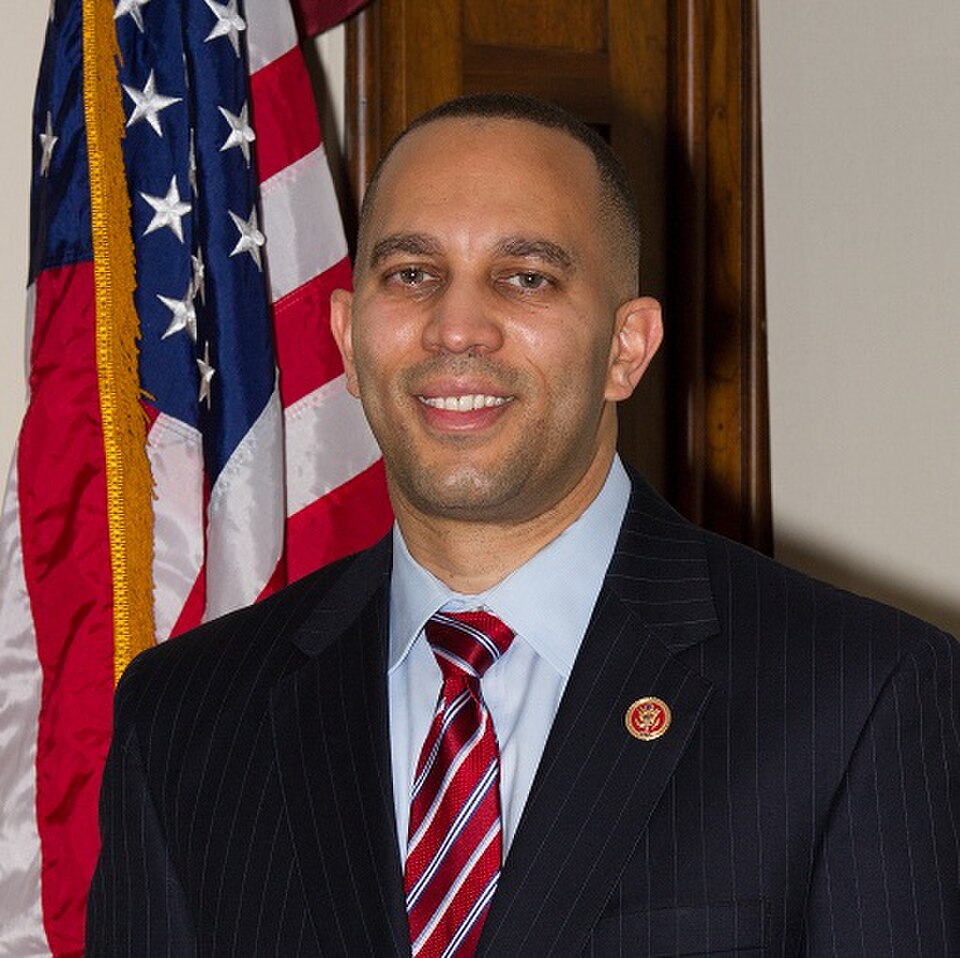
The political backdrop matters. The New York primaries did not simply produce routine local results. They became a test of power between the Democratic establishment and the party’s energized progressive wing.
Mamdani-backed candidates delivered major victories across New York City. Former New York City Comptroller Brad Lander won the Democratic nomination in New York’s 10th Congressional District, defeating Rep. Dan Goldman. Community advocate Darializa Avila Chevalier defeated Rep. Adriano Espaillat in New York’s 13th Congressional District. Assemblywoman Claire Valdez won in New York’s 7th Congressional District, another victory for the Mamdani-aligned left.
Those results stung because Jeffries had supported some of the incumbents who lost. Goldman had been known nationally for his role in efforts to hold Trump accountable. Espaillat had built his profile as a voice for immigrant communities and as chair of the Congressional Hispanic Caucus. For Jeffries, backing them was not a casual choice. It was a defense of colleagues he viewed as effective, experienced, and aligned with the broader Democratic mission.
Yet voters in those districts chose differently. That is the tension now sitting at the heart of the Democratic conversation. The party wants energy, but not chaos. It wants fresh voices, but not fragmentation. It wants to hear voters, but not hand Republicans a portrait of Democratic disorder.
That is why Jeffries’ line matters. It was not only a comment about Trump. It was a warning about political discipline.
Why Jeffries’ Enemy Is Donald Trump’ Line Landed So Hard
Jeffries’ statement carried weight because it came at a moment when Democrats were not arguing over a single small issue. They are debating the party’s identity.
Progressives are pressing for a more aggressive economic agenda, stronger criticism of corporate power, tougher housing affordability measures, expanded social benefits, and a foreign policy posture that is more openly critical of Israel’s government. Centrists and establishment Democrats are warning that the party risks moving too far from swing voters, suburban moderates, and working-class communities that may dislike Trump but remain skeptical of slogans tied to democratic socialism.
Jeffries tried to narrow that widening battlefield. By saying Democrats should remember that the enemy is Donald Trump and MAGA extremism, he was asking the party to distinguish between internal competition and external threat.
That distinction is important. Primary opponents are rivals. Trump, in Jeffries’ framing, is the force Democrats must defeat to protect their governing agenda. The difference is not just rhetorical. It shapes how Democrats campaign, how they fundraise, how they talk about each other, and whether voters see them as a party ready to govern.
If Democrats spend the next phase attacking their own factions with more force than they attack Trump, Republicans will not need to define them. Democrats will have done the work themselves.
Mamdani’s Influence Is Now a National Democratic Story
The rise of Zohran Mamdani has moved beyond New York City politics. His endorsements now carry enough force to reshape congressional primaries, unsettle incumbents, and force national Democrats to respond.
That is not a small development. New York City has always been a Democratic stronghold, but it is also a laboratory for the party’s future. It contains wealthy donors, powerful unions, immigrant communities, young renters, deeply progressive neighborhoods, establishment networks, and voters frustrated by the cost of living. When a political movement breaks through there, Washington pays attention.
Mamdani’s allies framed the primary results as a rejection of status quo politics. That argument has emotional power because many voters are angry about rent, groceries, healthcare costs, student debt, wages, and the sense that traditional politicians speak fluently about struggle while moving slowly on relief.
Jeffries understands that anger. His own public messaging has focused heavily on affordability, healthcare, corruption, and the cost of living. But he is also trying to protect a national coalition that includes progressives, moderates, Black voters, Latino voters, Jewish voters, union households, suburban professionals, young renters, and older Democrats who may share economic concerns but not always the same ideological language.
That is the puzzle. Democrats need the energy Mamdani represents. They also need the discipline Jeffries is demanding.
Israel, Gaza, and the Party’s Hardest Internal Debate
One of the most sensitive issues emerging from the New York primaries is Israel and the war in Gaza. Some of the winning candidates were sharply critical of Israel’s government and aligned with voters who want Democrats to take a stronger stand on Palestinian rights and U.S. military support.
Jeffries responded carefully. He has said he supports Israel’s right to exist as a Jewish and democratic state while also supporting the aspirations of Palestinians for dignity, autonomy, and self-determination. That position reflects the balancing act many Democratic leaders are attempting: support Israel’s security, recognize Palestinian suffering, and avoid letting the issue fracture the party beyond repair.
But the primary results show that the debate is no longer confined to activists or foreign policy circles. It is now part of congressional elections. In some districts, criticism of Israel’s government appears to carry real political force. In others, pro-Israel Democrats remain strong. Jeffries pointed to Rep. Ritchie Torres, who won decisively despite facing criticism over his support for Israel, as evidence that Democratic voters are not moving in one single direction.
That matters because it challenges easy narratives. The Democratic Party is not simply becoming one thing. It is becoming many things at once. The danger is that those competing identities could collide at the exact moment the party needs unity against Trump.
House Democrats Face a Bigger Test Than One Primary Night
The New York results also created concern among House Democratic centrists. Some moderates are already warning that a larger left-wing bloc could use a narrow House majority to demand concessions from leadership, similar to how conservative hard-liners have pressured Republican speakers in recent years.
That possibility raises a serious question of governance. If Democrats win back control of the House, can Jeffries keep the caucus unified? Can progressives push for bold policy without paralyzing the party? Can centrists protect vulnerable districts without appearing to dismiss the energy of younger and more left-leaning voters?
These are not theoretical questions. They could decide whether Democrats pass legislation or spend their time negotiating with themselves.
Jeffries’ leadership challenge is becoming clearer. He must respect primary voters without rewarding chaos. He must defend incumbents without insulting challengers. He must speak to the left without losing the center. He must confront Trump while managing a coalition that does not always agree on what kind of Democratic Party should come next.
That is a difficult task. But it is also the job of a party leader.
Trump Remains the Glue Holding Democrats Together
For all the internal Democratic disputes, Donald Trump remains the one figure who can still unify nearly every wing of the party. Progressives oppose his immigration agenda, his court appointments, his approach to executive power, and his attacks on democratic institutions. Moderates warn that Trump’s style and policies threaten stability, alliances, and constitutional norms. Establishment Democrats see him as the central political threat of the era.
That shared opposition is why Jeffries returned to Trump in his remarks. It gives Democrats a common language when internal arguments become too loud.
The challenge is turning anti-Trump unity into a positive governing offer. Voters may oppose Trump, but many also want to know what Democrats will do about rent, wages, healthcare, food prices, housing supply, public safety, immigration, education, and corruption. Jeffries appears to understand that. His message did not stop at warning about Trump. It also pointed to an America where working people can live a comfortable, affordable life.
That is the bridge Democrats need to build: from opposition to proposition, from resistance to results.
Democrats Must Decide Whether Primaries Are Wounds or Warnings
The central question after the New York primaries is not whether Democrats will disagree. They will. The question is whether they can turn disagreement into renewal instead of resentment.
If establishment Democrats dismiss the progressive victories as a temporary protest, they risk ignoring real voter frustration. If progressives treat every incumbent as an enemy, they risk weakening the coalition needed to win power. If both sides spend the next year relitigating endorsements, Trump and Republicans will benefit from every Democratic distraction.
Jeffries is asking Democrats to remember the sequence: compete hard in primaries, then reunite for the general fight. That is basic politics, but basic politics becomes difficult when the wounds are fresh and the stakes are national.
We are now seeing a Democratic Party under pressure from two directions. From the outside, Trump and Republicans are forcing Democrats to defend democracy, voting rights, affordability, and institutional stability. From the inside, younger and more progressive voters are demanding a party that moves faster, speaks more plainly, and fights harder for working people.
Both pressures are real. The party that survives them will not be the one that silences debate. It will be the one who learns how to debate without self-destruction.
Jeffries’ Warning Is Really a Test of Democratic Discipline
Jeffries’ message after the primaries was not designed to erase the results. It was designed to contain the fallout. He knows the Democratic Party cannot afford to look afraid of its own voters. He also knows it cannot afford to fracture into camps that treat each other as permanent enemies.
That is why his Trump warning landed with such force. It placed the primary fights inside a larger frame. It reminded Democrats that internal victories mean little if the party cannot win the larger battle for power. It also reminded progressives and centrists that the country will not be governed by the loudest faction, but by the coalition that can win and then function.
The New York primaries showed that Democratic voters are restless. Jeffries’ response showed that Democratic leaders are trying to absorb that restlessness without losing the plot.
The party’s next test is whether it can carry both lessons at once: voters want change, and elections still require unity.
In the end, Jeffries’ warning is less a slogan than a test. After the primaries, Democrats must decide whether they want to win arguments inside the party or win power outside it.