Jerry Seinfeld Responds to “Free Palestine” Request With Three Words
Comedian and television legend Jerry Seinfeld made headlines after a blunt interaction with a social media influencer who asked him to say “free Palestine.” Seinfeld’s three-word response, “doesn’t exist,” instantly sparked debate online, generating attention across platforms for its brevity and perceived provocation.
The exchange underscores the increasingly public intersection between entertainment, politics, and social media. Seinfeld, whose career spans decades in stand-up comedy and television, has traditionally maintained a humorous, apolitical persona, making this remark notable for its stark simplicity.
The Viral Interaction
The influencer approached Seinfeld during a livestream, prompting the comedian’s response. His comment immediately circulated across Twitter, Instagram, and other social platforms, drawing reactions from fans, critics, and media outlets alike. Clips of the encounter were shared widely, fueling discussions about the role of celebrities in political discourse.
Seinfeld’s direct wording contrasted sharply with the influencer’s expectation of a supportive statement. This divergence highlights the tension between public figures’ personal boundaries and the demands of online audiences seeking political affirmation.
Social Media Backlash and Fan Reactions

Reactions were immediate and polarized. Supporters praised Seinfeld for his candor, emphasizing his right to express personal opinions and his refusal to be coerced into making statements. Others criticized the comment as dismissive or controversial, noting the sensitivity of the geopolitical issue.
Online discussions illustrated the modern dynamics of celebrity influence: one brief interaction can trigger widespread commentary, debate, and reinterpretation. Social media acts as both an amplifier and a magnifier, extending the reach and intensity of public reactions.
Seinfeld’s Public Persona and Political Engagement
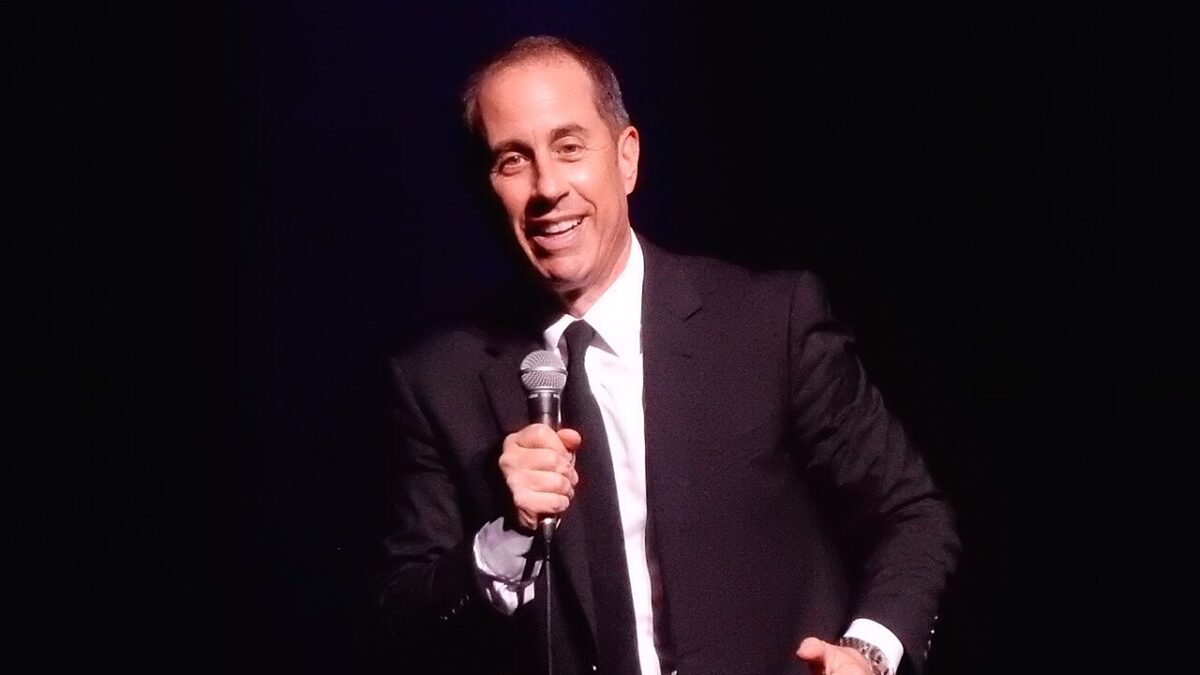
Historically, Seinfeld has cultivated a comedic identity centered on observational humor rather than political activism. His remark represents a rare instance in which audience interaction prompted a response that touched on international politics.
This incident demonstrates how even figures known for entertainment can become entangled in political debates, illustrating the blurred lines between celebrity, public expectation, and global issues in the digital age.
Implications for Celebrities and Public Discourse
The exchange raises broader questions about the expectations placed on public figures to comment on political topics. In the age of social media, audience members often assume access and influence, while celebrities navigate privacy, personal beliefs, and the management of their public persona.
Seinfeld’s concise response exemplifies a defensive strategy: maintaining personal boundaries while inadvertently igniting viral discussion. The incident serves as a case study in the complex relationship between celebrity influence, audience expectations, and instantaneous global attention.
Cultural and Media Impact
Media coverage quickly highlighted the encounter, analyzing the comedian’s response and its reception. News outlets, blogs, and commentators used the clip to discuss celebrity accountability, freedom of expression, and the influence of social media on public debate.
The situation illustrates how modern media cycles amplify brief interactions into sustained discussions, with cultural significance extending beyond the initial exchange. It also emphasizes the power of phrasing and brevity in generating public engagement.