McDonald’s Has a Non-Negotiable Burger Rule, and It Explains Why Your Order Tastes So Familiar
A McDonald’s burger may look simple, but employees must follow a precise assembly sequence. The rule isn’t just about making the sandwich look tidy: the order of the bun, sauces, toppings, cheese, and meat creates a consistent taste, texture, and melt from one order to the next.
That means the familiar cheeseburger you grab on a road trip is more than a beef patty and a few toppings thrown between two buns. At McDonald’s, the placement of every component matters, and one small change, especially involving the cheese on a double burger, can affect the finished sandwich.
The rule: Build each burger the same way

The rule is simple: McDonald’s burgers must be assembled in their designated build order. Employees are not supposed to improvise the stacking sequence, swap component placement, or build a sandwich from whichever direction seems most convenient in the moment. Reporting on employee practices describes the approach as a specific, repeatable process intended to ensure the same product is delivered every time.
For the standard hamburger and cheeseburger, the process typically begins with a split bun moving through a toaster. The top half, called the “crown,” is then dressed with condiments before adding the toppings and patty. A commonly described build sequence places mustard first, followed by ketchup, onions, pickles, cheese when appropriate, then the hot beef patty; the bottom bun, known as the “heel,” closes the sandwich before it is wrapped and served.
McDonald’s official U.S. product descriptions confirm the expected components, even though they do not publish the full restaurant training assembly guide on every menu page. The chain says its classic hamburger includes a 100% pure beef patty seasoned with salt and pepper, plus pickle, chopped onions, ketchup, and mustard. Its cheeseburger adds a slice of American cheese to that formula.
It might sound overly particular for a burger that can disappear in a few bites, but fast-food systems depend on repetition. A customer expects the same familiar combination of tangy pickle, savory beef, soft bun, condiments, and melted cheese whether they order in a hometown drive-thru or during a long highway stop. A defined assembly order is one way a massive restaurant system delivers that consistency at speed.
Related: New Whataburger Expected to Open Oct. 5 in Shenandoah Near The Woodlands
Why cheese placement is a bigger deal than it sounds
The best-known example of the stacking rule involves the McDouble. McDonald’s describes the sandwich as two 100% pure beef patties, a single slice of American cheese, onion, pickles, ketchup, and mustard. The key detail, according to accounts of McDonald’s restaurant procedures, is that the cheese goes between the patties rather than on top of both.
A McDonald’s department manager identified as Sam explained the practical reason in a previously reported interview with Mental Floss: “Like placing the cheese between the patties with a McDouble, if they don’t put the cheese between the patties, the cheese won’t melt.” That placement lets residual heat from two freshly cooked patties reach the cheese, giving it a better chance to soften and melt before the burger is wrapped.
This is not only a cheese issue. The precise order also affects how the burger is eaten. Condiments spread on the crown coat the upper bun; onions and pickles sit within the sandwich rather than falling directly onto the wrapper; and placing the patty toward the bottom creates a stable base when the sandwich is turned right-side up. The order helps workers assemble quickly, but it also protects the experience of actually taking a bite.
The rule also helps explain why a McDouble and Double Cheeseburger are distinct menu items, even though both have two beef patties. McDonald’s says the McDouble has one slice of cheese, while the Double Cheeseburger has two. How those slices are layered affects how heat moves through the burger and how much cheese is in each bite, so the difference isn’t merely a technicality on the menu board.
Consistency is the real secret sauce
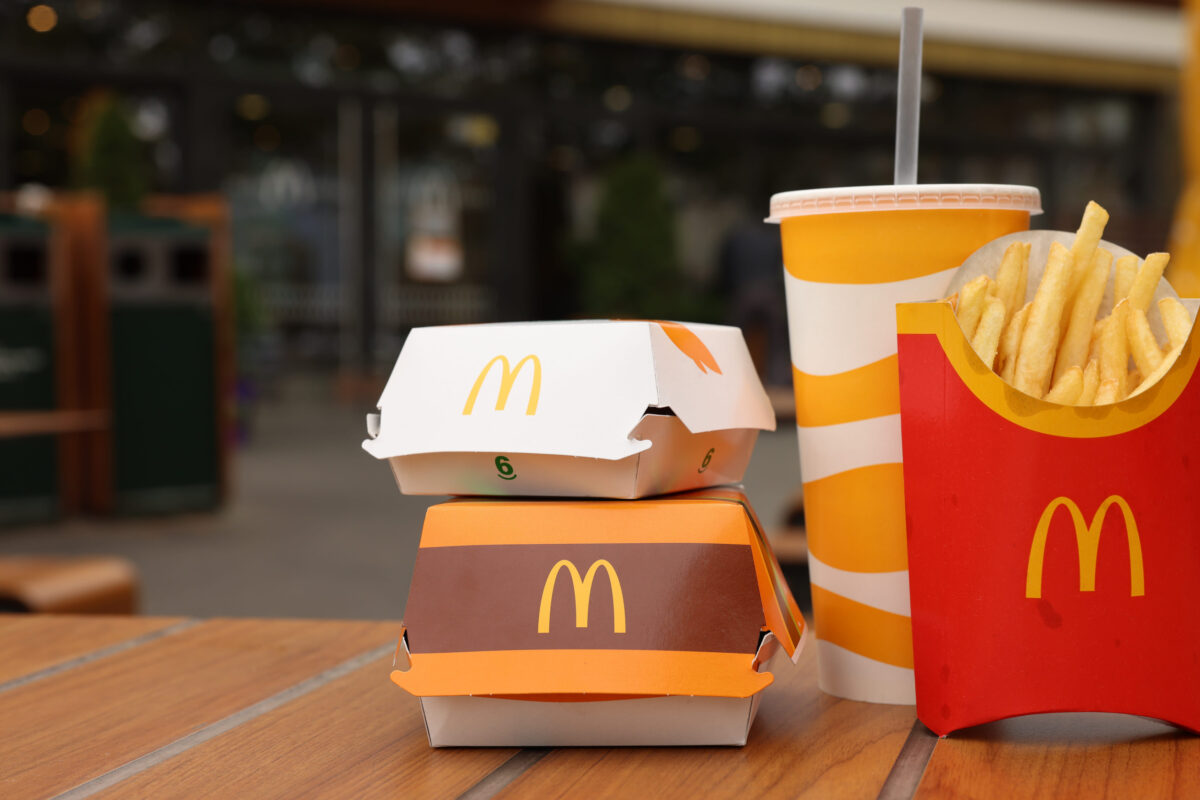
liudmilachernetska via 123rf photos
McDonald’s has built much of its identity around uniformity. The company says its food-safety standards and protocols extend from sourcing and menu development through packaging, distribution, and restaurant operations. It also says suppliers and restaurants are subject to requirements, training and third-party auditing intended to verify key food-safety procedures.
That broader obsession with standards shows up in the burger itself. McDonald’s says its classic U.S. burgers use 100% pure beef patties seasoned with salt and pepper, while its standard cheeseburger features pickle, chopped onions, ketchup, mustard and American cheese. Those ingredients are familiar, but the company’s system depends on giving them to customers in a predictable arrangement.
McDonald’s put it plainly when discussing updates to its classic burgers in 2023, saying it aimed to preserve “the perfectly seasoned 100% pure beef, tangy pickles, and just-right ratio of ketchup and mustard that made us famous.” The company also said it was adding white onions to patties while they were still on the grill to develop a juicier, more caramelized flavor. That reminds us that fast food isn’t only about ingredients; timing, heat, and placement shape the final bite.
So, no, the person building your burger is not meant to treat the assembly station like an open-ended culinary experiment. The burger is supposed to follow its prescribed sequence, down to the placement of the cheese and the order of the sauces. It may be a small behind-the-counter rule, but it is part of the reason a McDonald’s cheeseburger remains instantly recognizable: every layer is there on purpose.