U.S. Strikes Iran Over Ceasefire Violation as Fears Grow of a Wider War
The fragile ceasefire was fractured today, July 7, 2026, after the U.S. Central Command (CENTCOM) confirmed a new series of powerful retaliatory strikes inside Iran after multiple commercial ships were targeted in the Strait of Hormuz.
What began as another tense day in one of the world’s most dangerous shipping corridors quickly turned into a high-stakes military flashpoint, raising fears that a ceasefire meant to cool the region could instead become the next step toward a wider war.
U.S. Strikes Iran After Alleged Ceasefire Violation
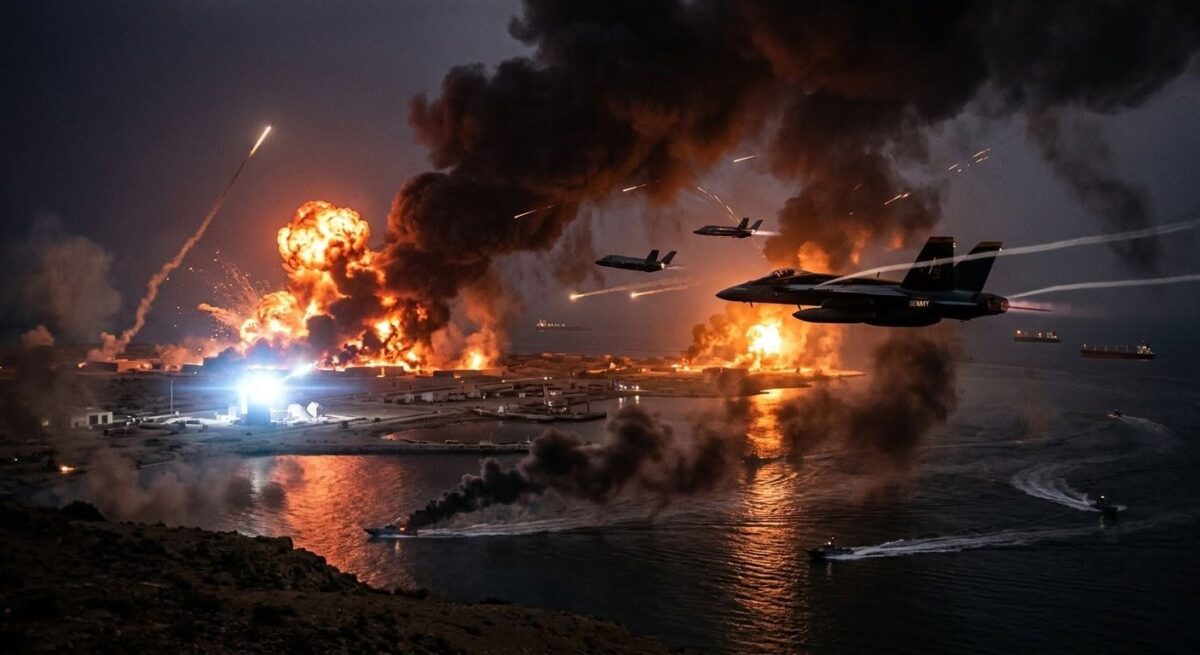
According to early reporting, the U.S. military carried out airstrikes against Iranian targets after Washington accused Tehran of violating a recent ceasefire understanding by endangering commercial ships near the Strait of Hormuz. The strikes reportedly targeted military infrastructure tied to air defense systems, surveillance sites, missile positions, drone launch areas, and port-related facilities.
The U.S. response came after multiple vessels were reportedly struck or damaged in the region, including a Qatari liquefied natural gas tanker and a Saudi crude tanker. Qatar publicly blamed Iran for the attack on its LNG vessel, while U.S. officials also pointed to Tehran as responsible for the broader pattern of aggression in the area.
Tanker Attacks Triggered The Latest U.S. Response
The Qatari LNG tanker Al Rekayyat was reportedly hit by a drone or projectile, sparking a fire near its engine room. Reports also said a Saudi-flagged tanker was damaged, while a third vessel incident added to fears that commercial traffic in the region was again becoming a direct target.
Qatar’s reaction was especially significant because Doha has played a diplomatic role in regional talks involving Washington and Tehran. By blaming Iran, Qatar placed direct pressure on Tehran while also signaling that attacks on Gulf-linked shipping would not be treated as routine wartime noise.
Washington Pulls Back Oil Sanctions Relief
The military response was not the only move from Washington. The U.S. also revoked a license that had allowed Iran to sell oil and petrochemical products under a recent arrangement tied to de-escalation efforts. The move effectively stripped away one of the clearest economic benefits Iran had gained from the fragile understanding.
That decision gave the crisis a financial edge. It was not just about missiles, drones, and damaged ships. It was also about whether Tehran would continue to receive limited economic breathing room while Washington accused it of violating the very conditions that made that relief possible.
Oil Prices Jump As War Fears Return
Energy markets reacted quickly. Oil futures rose sharply Tuesday as traders weighed the risk of a renewed U.S.-Iran military spiral and the possibility of further disruption in the Strait of Hormuz. CBS News reported that Brent crude and West Texas Intermediate both climbed more than 5 percent during the day as tensions escalated.
For American households, that is the part of the story that could become personal fast. A distant military exchange can lead to higher fuel costs, higher shipping expenses, and renewed inflationary pressure if the crisis begins to squeeze global energy supplies. That is why Wall Street, Washington, and ordinary drivers are all watching the same stretch of water with growing concern.
Iran Faces Growing Regional Pressure
Iran has faced condemnation from Gulf states after the tanker incidents, with Qatar and Saudi Arabia both raising concerns about the danger to international shipping and energy security. Maritime authorities also reportedly raised the threat level for vessels transiting the area, reflecting a darker mood among ship operators and insurers.
Tehran, however, has pushed back against U.S. accusations, arguing that Washington’s threats and military actions undermine diplomatic efforts. That competing narrative is now part of the danger. Each side is presenting itself as responding to the other, creating a cycle that can turn a limited strike into a larger confrontation.
Why Americans Should Pay Attention
For U.S. readers, this story matters for three major reasons. First, American forces are directly involved again, which means the risk to U.S. troops and assets in the Middle East is rising. Second, the Strait of Hormuz remains one of the world’s most sensitive energy routes. Third, the latest violence threatens to weaken a ceasefire arrangement that was already under heavy strain.
The biggest question now is whether the U.S. airstrikes stop the attacks or invite another round of retaliation. If Iran responds militarily, Washington could face pressure to strike again. If shipping companies pull back from the route, energy prices could climb further. If diplomacy collapses completely, the region could slide toward a broader war that few governments say they want, but many now fear.
A Fragile Ceasefire Is Now Under Serious Threat
The July 7 airstrikes show how thin the ceasefire has become. A deal designed to reduce fighting is now being tested by ship attacks, military retaliation, economic punishment, and rising public warnings from multiple governments. The situation remains fluid, and casualty figures, damage assessments, and official explanations could still change as more details emerge.
For now, the message is clear: the U.S.-Iran crisis has entered another dangerous phase. What happens next in the Strait of Hormuz could determine whether Tuesday’s airstrikes remain a limited show of force or become the opening chapter of a wider conflict with consequences felt across the world.