Kentucky flooding disaster exposes infrastructure strain, risks of rapid escalation, and compounding climate extremes across the US South and Midwest.
When rainfall becomes a regional emergency rather than a local event

The Kentucky flooding disaster began as a period of relentless rainfall, but it quickly evolved into a multi-state emergency that reshaped roads, homes, and entire emergency systems across the region. At least four people died in Kentucky, while one additional fatality was reported in Tennessee as flash flooding intensified across multiple counties. The Kentucky flooding disaster also triggered widespread water rescues, emergency declarations, and urgent warnings from state officials.
The significance of the Kentucky flooding disaster extends beyond immediate fatalities. It reflects a growing pattern of short-duration, high-intensity rainfall events that overwhelm local drainage systems. Meteorological agencies have increasingly documented rainfall rates exceeding 2 to 3 inches per hour during similar events across the Ohio Valley and Appalachian regions.
Governor Andy Beshear declared a statewide emergency as conditions escalated rapidly, underscoring how quickly localized storms can become statewide crises. In several counties, rainfall totals reached record or near-record levels within hours, forcing emergency services into continuous rescue operations. The Kentucky flooding disaster therefore represents not only a weather event, but a structural test of preparedness and response capacity.
Historical flood patterns in Kentucky show that the region has long been vulnerable to river flooding, but flash flooding introduces a different level of urgency. Unlike river flooding that builds over days, flash floods compress destruction into minutes. This compression defines the Kentucky flooding disaster and distinguishes it from earlier flood events in the state’s history.
Infrastructure is under pressure as drainage systems reach failure thresholds.
The Kentucky flooding disaster revealed critical stress points in infrastructure systems designed for lower-intensity rainfall conditions. Roads were washed out in multiple counties, bridges were compromised, and drainage channels failed to contain rapidly rising water. These failures did not occur in isolation. They emerged simultaneously across different counties as rainfall intensified.
Culverts and low water crossings became central failure points during the Kentucky flooding disaster. These structures are designed to channel water beneath roads, but during extreme rainfall, they often reverse function and concentrate water flow. Once this occurs, vehicles can be swept into confined channels with little warning or opportunity to escape.
Engineering standards for drainage systems are typically based on historical rainfall averages. However, climate trend analyses from federal agencies have shown an increase in extreme precipitation events in parts of the Midwest and Southeast. The Kentucky flooding disaster reflects this widening gap between infrastructure design assumptions and current environmental conditions.
Local officials reported that entire road segments became impassable within short timeframes. In some areas, residents encountered washed-out pavement where roads had previously been intact only hours earlier. This sudden collapse of mobility routes significantly complicated emergency response operations during the Kentucky flooding disaster.
The psychology of familiar risk and why known roads become fatal traps
One of the most consistent behavioral patterns in the Kentucky flooding disaster involves the role of familiarity in decision-making. Many flood-related fatalities occur on roads that victims have used repeatedly under normal conditions. This familiarity creates an illusion of safety that does not reflect rapidly changing environmental realities.
In the Kentucky flooding disaster, at least one fatality involved a vehicle being swept away in floodwater. This reflects a broader trend observed in flash flooding events across the United States, where drivers attempt to navigate water-covered roads they assume are passable. The transition from a safe roadway to a deadly current often occurs in less than fifteen minutes.
Psychological studies on disaster response highlight that humans tend to rely on prior experience when making rapid decisions under stress. During the Kentucky flooding disaster, this reliance became a vulnerability. Roads that appeared unchanged at a distance concealed structural failure, hidden currents, or submerged drop-offs.
The danger is amplified at night or during heavy rainfall when visibility decreases. In such conditions, drivers cannot accurately assess water depth or flow strength. The Kentucky flooding disaster demonstrates how perception can diverge sharply from reality during extreme weather events, turning routine travel routes into high-risk zones.
Minutes that define survival during flash flood escalation cycles

Flash flooding operates on compressed timelines, and the Kentucky flooding disaster illustrates how quickly conditions can shift from manageable rainfall to life-threatening inundation. Meteorological reports indicated rainfall rates of 2 to 3 inches per hour in affected areas, with localized totals exceeding several inches in a single day.
This intensity creates rapid surface runoff, especially in urbanized or saturated rural terrain. As water accumulates faster than it can be absorbed or diverted, roads, yards, and basements begin to flood almost simultaneously. During the Kentucky flood disaster, this process unfolded across multiple counties simultaneously.
Emergency alerts often lag behind real-time ground conditions. By the time flash flood warnings are issued or upgraded, water may already be moving through residential areas. The Kentucky flooding disaster highlights this temporal gap between hazard development and public response.
Once water begins flowing across roadways, the situation escalates quickly. Vehicles lose traction, and even shallow water can create enough force to displace them. In the Kentucky flooding disaster, this dynamic contributed to multiple rescue operations and fatalities across the region.
Protective instinct and the human cost of rescue-driven behavior
The Kentucky flooding disaster also included a tragic case in Tennessee where a mother died while attempting to rescue her son from floodwaters inside a culvert. The child survived after reaching safety, but the mother was later found trapped in fast-moving water. This incident underscores how protective instincts can override personal safety calculations during emergencies.
Behavioral research in disaster psychology shows that individuals often prioritize family members over their own survival during crises. During the Kentucky flooding disaster, this pattern became visible in real time as life-saving efforts placed individuals directly into hazardous flow zones.
Culverts and drainage channels are particularly dangerous in these scenarios because they concentrate water force into narrow passages. During the Kentucky flooding disaster, such structures became lethal environments in which escape was nearly impossible once inside.
These events highlight a difficult reality in emergency preparedness. Emotional responses often conflict with survival strategies. The Kentucky flooding disaster demonstrates how quickly instinctive decisions can intersect with environmental hazards to produce irreversible outcomes.
Emergency systems stretched across simultaneous county-level crises.

As the Kentucky flooding disaster expanded, multiple counties declared states of emergency within a short timeframe. This created a layered response environment where state agencies, local governments, and emergency responders operated under concurrent pressure.
Governor Beshear activated emergency protocols, including price gouging protections and expanded pharmacy access for residents who lost medication due to flood damage. These measures reflect how disasters extend beyond physical damage into economic and healthcare disruptions.
Search and rescue teams were deployed across flooded regions, often working in conditions where roads were partially destroyed or submerged. The Kentucky flooding disaster required coordination among agencies to simultaneously address evacuation, infrastructure assessment, and public safety messaging.
Emergency management systems are designed for scalability, but simultaneous multi-county activation creates resource competition. The Kentucky flooding disaster exposed how quickly demand can exceed available response capacity during regional weather events.
Drainage infrastructure as hidden risk amplifiers during extreme rainfall
A defining structural feature of the Kentucky flooding disaster was the role of drainage infrastructure in both managing and amplifying risk. Culverts, storm drains, and roadside channels are typically invisible components of urban and rural design systems.
During extreme rainfall, these systems can become flow accelerators rather than controlled outlets. Water entering culverts at high volume can exit with increased velocity, creating dangerous currents near roadways and residential zones. The Kentucky flooding disaster demonstrated this transformation across multiple counties.
This infrastructure paradox is not unique to Kentucky. Similar patterns have been observed in flash flooding events across the United States, particularly in regions with rapid development and aging drainage systems. However, the Kentucky flooding disaster brought renewed attention to how quickly these systems can fail under extreme stress.
The challenge lies in modernization. Upgrading drainage infrastructure to match current rainfall extremes requires long-term investment and engineering redesign. The Kentucky flooding disaster underscores the urgency of addressing these vulnerabilities before the next major rainfall event.
A regional storm system with uneven but concentrated impact zones
The Kentucky flooding disaster did not occur in isolation. The same storm system affected Tennessee, southern Indiana, and parts of North Carolina, producing uneven rainfall distribution across the region. Some counties experienced record-level precipitation while nearby areas saw significantly less impact.
This spatial variability complicates emergency response planning. Resources must be distributed based on rapidly changing conditions rather than uniform forecasts. During the Kentucky flooding disaster, this meant that some communities required immediate rescue operations while others remained under warning status.
Meteorological data show that convective storm systems often produce narrow corridors of intense rainfall. These corridors explain why the Kentucky flooding disaster resulted in severe localized damage rather than evenly distributed flooding across the entire region.
The result is a patchwork of disaster intensity. One county may face washed-out infrastructure while another remains operational, even when they are in close geographic proximity. This uneven impact pattern defines modern flash flood events across much of the United States.
When flood recovery collides with extreme heat conditions
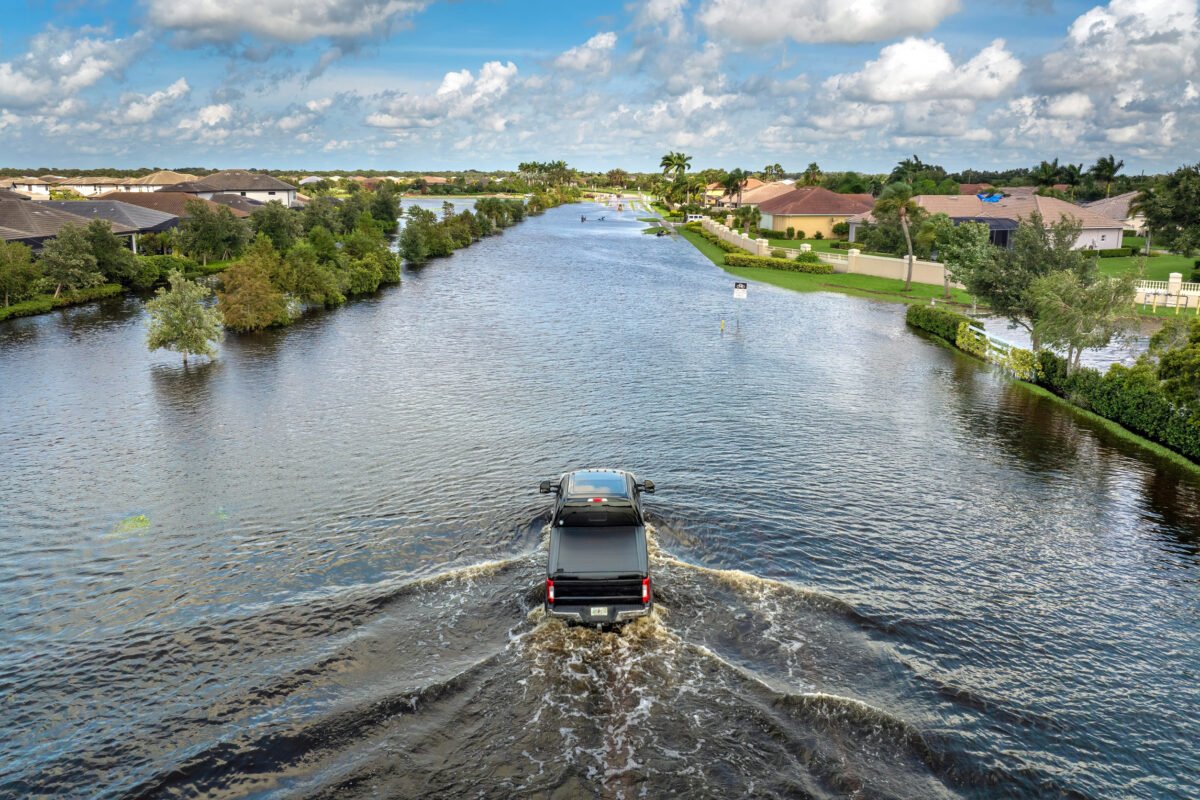
As floodwaters began to recede, forecasts indicated a rapid transition to extreme heat across the Midwest and eastern United States. Heat advisories were expanded across multiple states, with warnings of dangerous humidity and elevated heat indices.
This transition adds a secondary layer of risk to the Kentucky flooding disaster recovery process. Cleanup operations require physical labor, often in damaged environments without stable electricity or cooling systems. Heat exposure increases health risks for residents and emergency workers.
The combination of flood damage followed by extreme heat creates a compounding stress cycle. Infrastructure repairs slow down, power restoration becomes more urgent, and vulnerable populations face increased health risks. The Kentucky flooding disaster, therefore, continues even after rainfall ends.
A disaster shaped by timing, systems, and human vulnerability
The Kentucky flooding disaster illustrates how modern weather events operate at the intersection of environmental intensity, infrastructure limits, and human decision-making. It is not defined solely by rainfall totals or fatalities, but by how rapidly multiple systems were overwhelmed at once.
The deeper question emerging from the Kentucky flooding disaster is not only how much rain fell, but how prepared systems are for events that compress destruction into minutes rather than days. As climate variability increases, the gap between expectation and reality continues to narrow.
In that narrowing space, communities face a difficult reflection. When familiar roads, trusted infrastructure, and routine decisions no longer align with environmental conditions, what becomes the new standard for safety, and how quickly can societies adapt before the next event arrives?