Massive New Mosque Opens in Dearborn Heights as Michigan’s Muslim Community Expands
A sweeping new Islamic campus crowned with golden domes has officially opened in Dearborn Heights, giving Metro Detroit’s growing Muslim community far more than another place to gather for prayer.
The Imam Al-Hasanain Mosque anchors the Islamic Institute of America’s new headquarters on Beech Daly Road. The nearly 60,000-square-foot complex sits on seven acres, can accommodate more than 1,100 worshippers and offers parking for more than 500 vehicles. The institute describes it as one of the largest mosques in North America.
The prayer hall welcomed large crowds during Eid al-Fitr in March, when hundreds attended its first major service. The formal grand-opening celebration followed in June, beginning with the mosque’s first official Friday prayer on June 5 and continuing with a dedication ceremony and gala dinner the next evening.
For a community that spent years squeezing into an overcrowded location, the opening was not simply a ribbon-cutting moment. It was the answer to a problem that had become impossible to ignore.
A $16 Million Campus Built for More Than Prayer
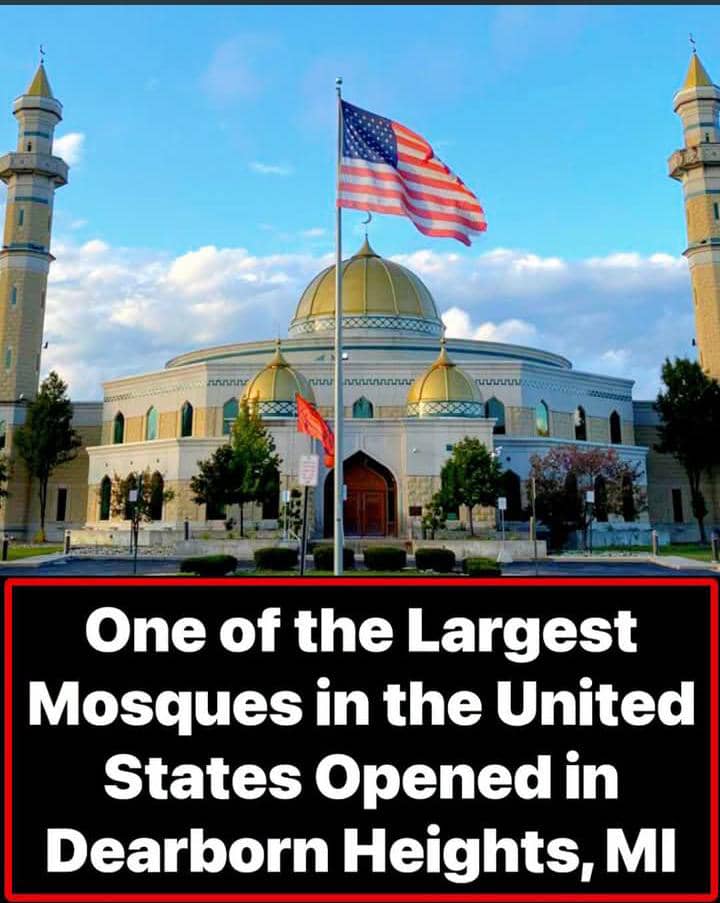
The project cost approximately $16 million, according to detailed local reporting on the development. Along with the main prayer space, the campus includes classrooms, youth areas, cultural and community rooms, a large event hall, a commercial kitchen, and facilities intended for educational programs.
In other words, this is not a building designed to sit quietly between weekly services.
The Islamic Institute of America says it serves roughly 1,500 families and operates Arabic and English programs, including Friday prayers, Qur’an classes, youth gatherings, weekend education, spiritual retreats and interfaith activities. Its Muslim Youth Connection program is intended to give younger members opportunities to design and lead activities themselves.
Danielle Elzayat, chairwoman of the institute’s board of directors, told guests that the occasion represented more than the completion of a structure. She described it as “the opening of your home,” a place where coming generations could worship, study, serve others and develop a sense of belonging.
The scale is impressive, but the people behind the mosque repeatedly made the same point: square footage is not the mission.
Imam Sayed Hassan Qazwini, who founded the institute in 2015, summed up that philosophy plainly: “Our goal is to build people before building places.”
Years of Crowding Turned Into a Community Blueprint
The new mosque was born partly from the success and limitations of the institute’s former home on Ford Road.
Attendance had grown so much that Ramadan programs, Eid celebrations, and regular community events frequently pushed the old facility beyond its practical capacity. Vehicles lined up along the busy road, parking became a constant headache, and police were sometimes needed to help manage traffic. Some worshippers reportedly left because there was simply no room.
“The large turnout from the very first day reflects a real need,” Qazwini told The Arab American News after the mosque began receiving worshippers. Even with the larger prayer hall, crowds reportedly filled the facility during Eid and continued turning out in large numbers for Friday prayers.
A major turning point came when businessman Mike Shehadi offered to purchase the institute’s previous property for about $5 million and provided the land for the new campus. The larger site allowed organizers to expand their original plans from roughly 43,000 square feet to about 60,000 square feet. Community donations and approximately $5 million in bank financing also helped fund the work.
Architect Ghassan Abdelnour designed the complex, Luna Construction handled the building work, artist Harout Bastajian contributed decorative elements, and engineer Ali Hatit worked on the interior design. Their finished product combines unmistakably Islamic architecture with the practical demands of a busy American community center.
Qazwini has said the center is intended to welcome Muslims across sectarian and ethnic lines. During the planning stage, he stressed that the institute wanted to be a center “for everyone,” including visitors of other faiths who attend classes, events and interfaith programs.
Leaders Frame the Opening as a Promise of Service

The dedication brought together Muslim leaders, Christian clergy, elected officials, donors and residents, turning the celebration into a visible display of Metro Detroit’s religious diversity.
Detroit Archbishop Edward Weisenburger told the gathering that he experienced respect, kindness and “a profound divine presence” when he entered the campus. He said institutions such as the mosque could strengthen relationships among people of different faiths.
Dearborn Heights Mayor Mo Baydoun called the opening a “historic day” and noted that the mosque stands near Christian churches. He presented that closeness as an example of different religious communities sharing the same city rather than retreating into separate corners.
U.S. Rep. Rashida Tlaib praised the institute’s leadership and argued that religious institutions carry responsibilities beyond worship, including supporting vulnerable people, defending justice and strengthening relationships within the wider community. Abdul El-Sayed similarly urged the mosque to measure its success through service, including feeding people in need and helping those facing hardship.
Those priorities are already reflected in plans for counseling, family support, health initiatives and a possible medical clinic for uninsured residents. The institute also operates educational programs and a religious seminary that has attracted hundreds of in-person and online students from multiple countries.
The golden domes will probably be what drivers notice first. But the real test of the Imam Al-Hasanain Mosque will be what happens beneath them: young people learning, families finding support, neighbors meeting across religious lines and a once-overcrowded community finally having room to grow.
As Qazwini told supporters, “The real investment” is not the building itself. It is the people who will fill it.