Minnesota Water Cyberattacks Expose a Frightening American Weakness as Trump and Walz Trade Blame
A household faucet should not become a frontline in an international cyber conflict. Yet attackers reached technology connected to more than 30 Minnesota community water systems, while the president and the state’s governor turned an unresolved national security investigation into another bitter political fight.
President Donald Trump blamed Minnesota and Democratic Gov. Tim Walz for the attacks, dismissing a possible Iran connection without presenting evidence. Walz fired back by blaming federal cybersecurity reductions, but he also released no proof showing that those changes allowed the intrusions to happen.
While politicians traded accusations, the disturbing facts remained unchanged. Attackers had found a path to equipment used to monitor or control vital water operations; similar incidents were reported in at least seven states, and some affected utilities outside Minnesota experienced pressure loss, flooding, and reduced operational control.
Americans Pay Their Water Bills but Inherit the Cybersecurity Risk
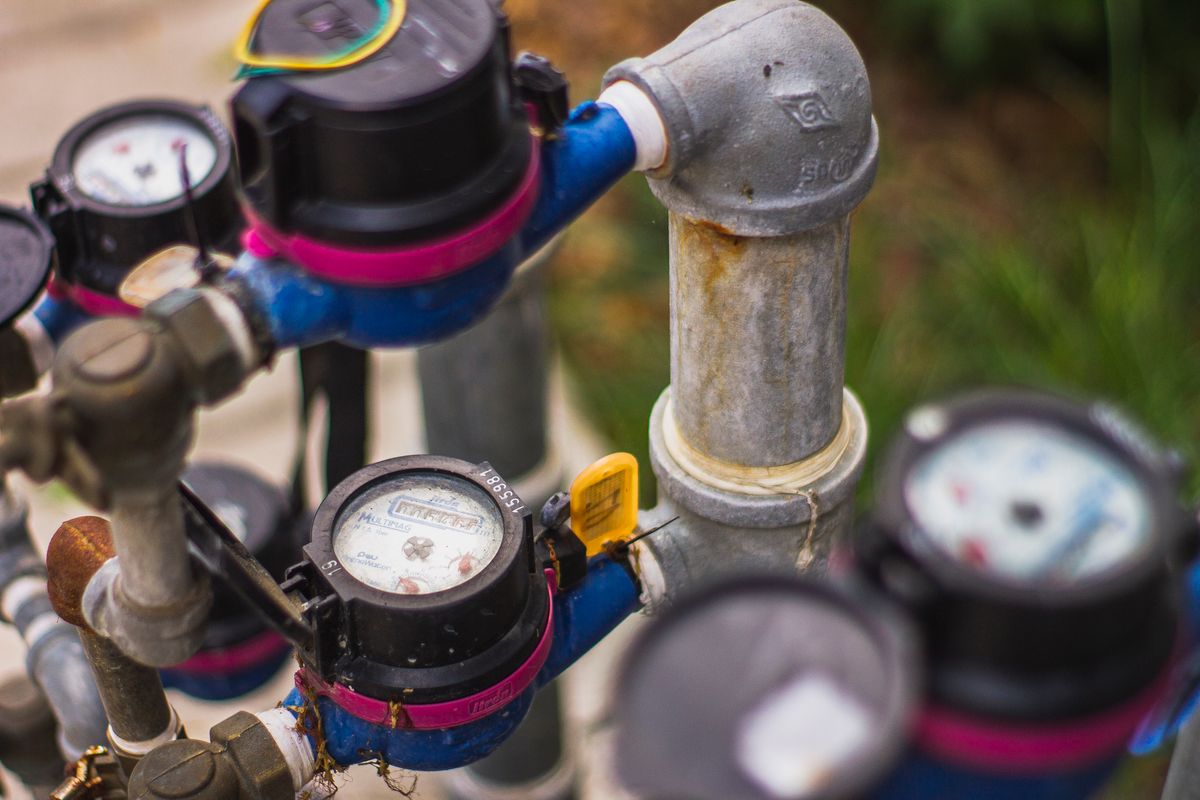
Millions of Americans pay water bills with the reasonable expectation that clean water will arrive whenever they turn a handle. They do not expect internet-connected industrial equipment, vulnerable passwords, exposed controllers, or poorly secured cellular modems to stand between their families and one of life’s most basic necessities.
The Minnesota cyberattacks revealed how much invisible technology now supports that daily convenience. Pumps, valves, tanks, pressure systems, and treatment equipment can be monitored through programmable logic controllers, commonly called PLCs. When those controllers are exposed to the internet, hackers may be able to reach the machinery behind a service that communities cannot live without.
Minnesota officials said no known drinking water contamination occurred and did not ask residents to change their water use during the initial response. That is reassuring, but it should not erase the underlying failure. Attackers still reached operational technology at more than 30 community systems before government agencies began publicly explaining what had happened.
The most alarming part of the story is not that American water stopped flowing everywhere. It is that hostile actors apparently found equipment associated with essential public services accessible enough to target across several states. The absence of a catastrophe does not transform a serious intrusion into a successful security strategy.
Trump Blames Minnesota Without Identifying the Attackers
Trump addressed the incident during a July 31 Cabinet meeting at Camp David. He said he did not believe Iran was responsible and called Minnesota officials “grossly incompetent,” but he offered no technical findings, intelligence assessment, or forensic evidence supporting that conclusion. The White House did not explain who the president believed conducted the attacks.
The statement converted a complicated investigation into a familiar political insult. It may be legitimate to ask whether Minnesota utilities used adequate passwords, properly configured firewalls, or left sensitive controllers exposed to the internet. Those questions concern security failures, however, and do not identify the people who deliberately entered the systems.
A poorly locked door does not prove that the homeowner committed the burglary. In the same way, vulnerable water infrastructure may explain how an attacker gained access, but it does not establish whether the operation came from Iran, a criminal group, independent hacktivists, or another government. Trump’s accusation offered blame without attribution.
Walz responded by saying Trump knew who was responsible and understood that other states had also been attacked. The governor argued that federal reductions associated with the Department of Government Efficiency weakened the Cybersecurity and Infrastructure Security Agency. He credited Minnesota specialists with identifying the vulnerability and working with local utilities to stop the activity.
Walz’s response raised serious questions about federal readiness, but it did not prove that reductions at CISA caused these intrusions. No publicly available forensic report has established that a staffing decision, budget reduction, or federal policy change created the specific opening exploited in Minnesota. His argument, like Trump’s attack, moved beyond the evidence released to the public.
Americans were therefore left watching two powerful political figures make confident claims that investigators had not verified. Trump treated local incompetence as the explanation, while Walz portrayed weakened federal cyber defenses as a central cause. Neither side supplied enough evidence to close the case.
More Than 30 Minnesota Water Systems Were Targeted
The attack was not a single suspicious login at one isolated facility. Minnesota IT Services said coordinated malicious activity targeted operational technology at more than 30 community water systems on July 26 and 27, 2026. That scale immediately transformed a local technology problem into a statewide infrastructure emergency.
Minnesota activated its cybersecurity response capabilities and began coordinating with local utilities, state health and public safety agencies, the FBI, the Environmental Protection Agency, and CISA. Response teams shared indicators of compromise, investigated affected equipment, contained activity, and assisted utilities with recovery. State officials said the response prevented more serious effects on critical services.
Preventing a worse outcome deserves recognition, but containment does not eliminate the original exposure. If malicious actors could reach dozens of community systems through similar equipment or network configurations, other utilities may have the same vulnerability without knowing it. A defense that begins after attackers enter the system is less comforting than a network designed to keep them out.
Minnesota officials did not identify all affected communities or provide a complete public accounting of every intrusion. That caution may help protect active investigations, but it also leaves residents with unanswered questions about what equipment was accessed, how long attackers remained connected, and whether any settings were altered. People cannot independently evaluate a risk when many technical details remain confidential.
Sen. Amy Klobuchar said National Cyber Director Sean Cairncross confirmed that there were no effects on Minnesota services at that stage. State officials also reported no active requests for residents to reduce consumption or change how they used their drinking water. Those statements apply to the known Minnesota consequences and not necessarily to every incident reported nationwide.
Hackers Did Not Need to Poison Water to Cause Damage
The cyberattack targeted operational technology rather than a conventional office network. Operational technology communicates with physical equipment, which means an intrusion can affect far more than email, payroll files, or a government website. It can interfere with the systems operators use to see what is happening inside a water facility.
The FBI and EPA warning identified Rockwell Automation and Allen Bradley MicroLogix 1100 and 1400 controllers in the reported activity. Attackers accessed internet-facing devices and changed passwords and Internet Protocol addresses. Those actions prevented some operators from monitoring or controlling connected equipment.
Changing an Internet Protocol address may sound like a minor technical act, but it can effectively make a controller disappear from the network used by employees. Changing the password can then lock the legitimate operator out of the device. Together, those modifications can leave employees unable to see conditions remotely or issue the commands needed to manage equipment.
At least one organization discovered changes to PLC project files after identifying discrepancies in its ladder logic. Ladder logic controls how industrial equipment responds to inputs and changing conditions. Unauthorized modification can therefore create risks beyond inconvenience because the controller may begin executing instructions that legitimate operators did not approve.
The FBI received reports of pressure loss and flooding at some unnamed facilities. Pressure loss is especially dangerous because it can create conditions in which untreated groundwater enters distribution pipes. That does not prove contamination occurred, but it explains why utilities may issue boil water notices after certain pressure events.
The consequences depend on what each controller manages. A device used only for monitoring creates a different risk from one controlling pumps, valves, chemical processes, or pressure. The availability of manual controls can determine whether a cyber intrusion becomes a short disruption or a prolonged operational emergency.
Similar Attacks Reach At Least Seven States
The Minnesota incident did not occur in isolation. The FBI said water and wastewater utilities in at least seven states reported related incidents beginning July 27, with some activity degrading water operations. Federal officials did not publicly name every affected state or confirm that one attacker was responsible for every report.
ABC News reported that Georgia and Michigan were among states dealing with similar incidents. Michigan authorities distributed an FBI public service announcement and later received nine reports describing activity matching the warning. Those reports still required verification and should not automatically be treated as nine confirmed successful attacks.
The multistate activity makes Trump’s attempt to place the entire problem at Minnesota’s feet difficult to sustain. Minnesota may have had vulnerable systems, but the FBI’s warning described a wider campaign against equipment used by utilities across the country. A national pattern cannot be credibly reduced to a personal attack on one Democratic governor.
The pattern also suggests that attackers may be taking advantage of repeated configurations installed by outside contractors. The FBI warned that similarities in network setups provided by third parties may allow attackers to reproduce successful techniques across several customers. One insecure design can become dozens of vulnerable sites when it is copied from town to town.
That possibility should concern Americans far beyond Minnesota. Municipal water systems frequently depend on specialized vendors to install, maintain, and remotely troubleshoot equipment. If utilities do not maintain complete inventories and independently review contractor connections, an old modem or forgotten controller can remain publicly reachable for years.
The Possible Iran Connection Remains Unproven
Federal investigators have legitimate reasons to examine whether Iranian-affiliated hackers were involved. Before the Minnesota attacks, American agencies had warned that actors associated with Iran were targeting internet-connected PLCs across critical infrastructure. The techniques described in those warnings resemble elements of the recent water system activity.
The EPA described an active Iranian-affiliated threat involving the exploitation of internet-connected controllers. A related federal advisory was updated on July 22, only days before the Minnesota attacks. The update expanded the range of potentially targeted PLC equipment and provided new information about malicious techniques.
A Minnesota Fusion Center assessment reportedly found that the incidents aligned with an Iran-linked sabotage campaign. Cybersecurity specialists also told Reuters that the activity appeared consistent with previously documented Iranian-affiliated targeting. Those findings make Iran a serious investigative lead, but they do not amount to an official attribution.
Cyber attribution is difficult because attackers can route activity through servers in several countries, use stolen credentials, imitate another group’s methods, and destroy logs. Investigators must compare infrastructure, malicious commands, access times, equipment selection, intelligence reporting, and previous operations. Some of the strongest evidence may remain classified even after officials reach a conclusion.
The FBI’s July 30 warning did not publicly blame Iran. Minnesota officials also said the federal government was evaluating the activity within the wider national investigation. As of August 1, no federal or state agency had formally named the responsible actor.
Trump was therefore entitled to question an unproven attribution, but he provided no basis for dismissing Iran as a possibility. His alternative explanation was not another attacker supported by evidence. It was a political accusation against Minnesota.
America’s Small Water Utilities Are Attractive Targets
The United States does not operate its drinking water through one centrally managed national network. Thousands of municipal, regional, private, and rural systems use different equipment, budgets, contractors, and security practices. That fragmentation gives attackers a large collection of potential targets rather than one heavily defended system.
Large utilities may have cybersecurity specialists, around-the-clock monitoring, updated equipment, and formal incident response teams. Small systems may rely on a handful of employees who must manage water quality, equipment repairs, regulatory paperwork, emergency response, and technology. Cybersecurity becomes another expensive responsibility competing for limited money and attention.
The EPA has previously warned that disruptive attacks affect water utilities of every size, including small systems. Federal law requires community systems serving more than 3,300 people to assess risks and prepare emergency response plans. Systems serving 3,300 or fewer people are not covered by that particular federal assessment requirement, despite facing similar threats.
Rural families should not receive weaker cybersecurity simply because fewer people live in their community. Attackers searching the internet for exposed controllers do not care whether a water tower serves 2,000 residents or two million. In fact, a smaller utility with fewer technical resources may be the easier target.
The financial problem cannot be ignored. Replacing controllers, restructuring networks, hiring specialists, monitoring logs, and securing remote connections cost money. If federal and state leaders demand stronger security without providing sustainable funding and technical assistance, local utilities may eventually pass costs to customers who are already struggling with household expenses.
The Warning Signs Were Already Public
These attacks were not the first indication that water system controllers faced danger. Federal agencies have repeatedly warned utilities to remove operational technology from direct internet exposure, strengthen passwords, restrict network access, and maintain manual operating capability. The latest incidents show that warnings alone have not removed vulnerable equipment from the internet.
Remote connections are often installed because they save time and money. A technician can check a pump station from another location instead of driving to the facility, and a contractor can diagnose equipment without sending someone onsite. Convenience becomes dangerous when that remote pathway lacks a secure gateway, effective authentication, continuous logging, or strict access controls.
Some systems may also contain undocumented cellular modems. A utility can build a strong firewall around its main network while an overlooked modem creates a separate route directly to field equipment. Without an accurate inventory, employees may not even know the connection exists.
The federal warning urged utilities to place secure gateways and firewalls between PLCs and outside networks. It also recommended complex passwords, controlled network access, protected cellular modems, reviewed logs, validated project files, and tested manual controls. These are not futuristic defenses requiring experimental technology, but basic protections that exposed utilities should already have been implementing.
Americans Deserve Evidence Instead of Political Theater
The most damaging response to a critical infrastructure attack is allowing partisan conflict to bury the technical warning. Americans need to know which devices were compromised, what weaknesses allowed access, whether contractors repeated insecure configurations, and what changes will prevent another incident. They gain little from politicians exchanging accusations before investigators complete their work.
Trump’s claim did not identify the attackers or explain the national pattern. Walz’s response did not prove that federal reductions caused the vulnerability. Both statements helped their political narratives more than they helped residents understand the risk to their water systems.
Public officials should be careful because premature accusations can interfere with trust. If the government later attributes the campaign to Iran, Trump will have dismissed a real foreign threat without evidence. If investigators identify another actor, officials who confidently pointed toward Iran will have overstated an incomplete assessment.
The responsible position is not vague or timid. More than 30 Minnesota water systems were targeted, at least seven states reported incidents, and some utilities experienced serious operational effects. Those facts are already troubling enough without inventing certainty.
The Worst Outcome Was Avoided, but the Failure Remains
Minnesota residents were not told that their drinking water had been contaminated, and officials reported no service effects during the initial response. That prevented the incident from becoming the public health disaster many families fear when they hear that hackers reached water infrastructure. It does not mean the system performed acceptably.
Security cannot be measured only by whether the worst imaginable consequence occurred. If a burglar enters a home but leaves before harming anyone, the family still replaces the broken lock. America should treat exposed water controllers with the same urgency.
Every utility should now determine whether its PLCs, remote terminal units, human machine interfaces, or cellular modems are publicly reachable. Officials should verify who installed each connection, who can access it, what logs are retained, and whether employees can operate safely without the network. Those reviews should produce measurable corrections rather than another collection of recommendations that smaller communities lack the resources to follow.
The Minnesota attacks delivered an ugly warning about the condition of American critical infrastructure. Attackers found systems worth targeting, politicians found opponents worth blaming, and residents were once again expected to trust that agencies would contain the danger.
Unless exposed equipment is removed and local utilities receive sustained support, the next intrusion may leave the country with consequences that cannot be dismissed as another political argument.