More Than 40,000 People Are Reported Missing in Venezuela. This Should Be Impossible to Ignore
More than 40,000 people are reportedly missing after a disaster, which is not a small number. It is not a sidebar. It is not something to scroll past between celebrity drama, campaign chatter, and the daily internet shouting match. In Venezuela, after two powerful earthquakes hit within seconds of each other, the missing-persons count has climbed into staggering territory, with reports now placing the number well above 40,000.
That does not mean every person listed is confirmed dead. That distinction matters. In the chaos after a massive disaster, “missing” can mean trapped, displaced, unreachable, separated from family, or still waiting to be entered into official records. But that actually makes the story more urgent, not less. Behind every name is someone refreshing a phone, checking a hospital, digging through debris, or staring at a building that used to be home.
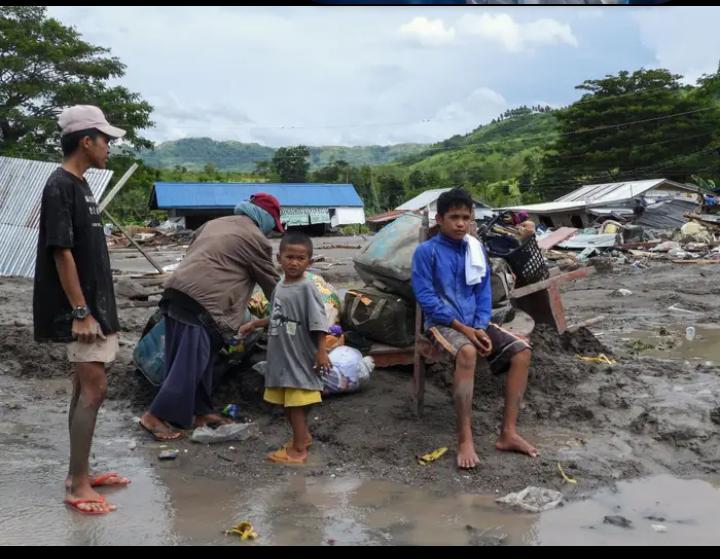
The confirmed death toll has already risen sharply, and rescue teams are racing against time in La Guaira, Caracas, Caraballeda, Catia La Mar, and other badly damaged areas. Foreign rescuers have arrived. Families are sleeping outside. Social media has turned into a giant missing-persons wall. And in one of the week’s darkest twists, many Venezuelans say the first people digging were not always officials with equipment, but neighbors with bare hands.
A Disaster Counted in Names, Photos, and Desperate Phone Calls
The earthquakes that struck Venezuela were not ordinary tremors. Reports describe a rare one-two punch: a magnitude 7.2 quake followed seconds later by a magnitude 7.5 quake. That kind of back-to-back shaking can turn damaged buildings into death traps before people even understand what is happening.
The worst-hit areas include La Guaira, the coastal state near Caracas, where apartment blocks, public housing units, and ocean-view towers collapsed. Some families were at home. Some were celebrating birthdays. Some were simply doing what people do on a normal evening before the ground rewrites the entire story.
That is why the missing count has become so haunting. The number is huge, but the search is painfully personal. AP reported that families used shovels, ropes, heavy equipment, and bare hands to search through toppled concrete. Reuters described residents and rescue crews combing through rubble while relatives begged for cranes and more help.

One mother, Jennifer Palacios, told Reuters that her 6-year-old son and five other relatives were still buried in a housing complex in La Guaira. “It’s the community that has managed to get people out alive,” she said. “We need them to bring cranes to move the slabs. There are still people trapped.”
That quote cuts through everything. Not politics. Not headlines. Not statistics. A mother is asking for cranes because her child is under concrete.
And she is not alone. Alejandro Serrano traveled across the country searching for his 24-year-old sister, Ana, after her building was destroyed. “I hope they don’t find her” in the rubble, he told Reuters, explaining that he meant he hoped she was still alive somewhere else. “But I need to find her.”
That is the impossible emotional math of a disaster: hoping someone is missing because the alternative is worse.
Why the Missing Number Is So High and Why It Must Be Handled Carefully
The headline number is shocking, but it needs careful wording. “Reported missing” does not mean “confirmed dead.” It also does not mean officials have fully verified every name. After a disaster, lists can overlap. Families may report the same person in different places. People may be found alive but not removed from a registry right away. Internet outages, damaged roads, hospital chaos, and displacement can all make the numbers messy.
Still, messy does not mean meaningless.
AP reported that Venezuela’s government said families had reported at least 68,900 people missing three days after the earthquakes. Reuters reported that more than 55,000 people were listed as unaccounted for on a website promoted by the country’s opposition. Earlier reporting also noted independent online registries tracking tens of thousands of missing or unaccounted-for people, reflecting the lack of clear official data.
That is the bigger issue. Venezuela is not just dealing with broken buildings. It is dealing with broken information systems at the exact moment when information can save lives.
In a strong disaster response, families need quick answers: Which hospitals are receiving victims? Which shelters are open? Which neighborhoods are blocked? Which buildings have been searched? Who has been rescued? Who is still trapped? Who has been identified?
Instead, many families have turned to WhatsApp, Facebook, X, and volunteer-run databases. That may sound resourceful, and it is. But it is also a warning sign. When a country’s missing-persons system becomes a public group chat, families are being asked to carry a burden that should be shared by institutions.
The emotional toll is visible everywhere. Beisy Rivas, a 60-year-old resident in Los Corales, told Reuters that many neighbors had been sleeping in the street because of aftershocks. “My nerves are on edge, thinking about the dead and about the people who lost relatives,” she said.
That is the part that gets lost when the world only sees a number. People are not just missing from buildings. They are missing from dinner tables, birthday parties, bedrooms, school runs, and family WhatsApp groups that will never sound normal again.
The World Is Arriving, But the Clock Is Brutal

International aid is now entering Venezuela. Reuters reported that more than 1,600 foreign rescuers had arrived, with more teams on the way. AP reported that 17 flights carrying rescue personnel had reached the country by Saturday. Teams from Mexico, the United States, Brazil, El Salvador, France, and other countries have joined the response.
The European Union said eight member states were sending assistance through its civil protection mechanism, including firefighters, rescue dogs, medical staff, telecommunications support, shelter equipment, and energy supplies. European Commission President Ursula von der Leyen put it plainly: “Venezuela is not alone.”
That line matters, but the real test is on the ground. Rescue crews are fighting aftershocks, heat, unstable buildings, damaged roads, and limited access. AP reported that Acting President Delcy Rodríguez said more than 14,000 members of the military and police were patrolling affected areas, with access restrictions in place. Officials say they need to keep roads clear for emergency vehicles. Families say help has been uneven and too slow.
Both things can be true at once. Disaster zones need order. Families also need urgency.
Jeremy Lewin, a senior U.S. State Department official involved in foreign assistance, described the effort as a “race against the clock.” That is not a figure of speech. In collapsed buildings, the first 48 to 72 hours are often critical for finding survivors, though some people can survive longer depending on injuries, air pockets, water, and conditions.
That is why the missing count deserves global attention now, not later. Once the cameras move on, families will still be looking. Once the death toll stops changing every hour, the harder work begins: identifying bodies, reuniting survivors, rebuilding homes, checking damaged buildings, restoring hospitals, and making sure missing people do not become forgotten people.
So yes, more than 40,000 people reported missing in Venezuela should be a top story. Not because the internet needs another tragedy to debate, but because this is exactly the kind of crisis where attention can turn into pressure, pressure can turn into aid, and aid can turn into someone being pulled out alive.
The world does not have to pretend every number is final. It does have to understand what the number means.
It means thousands of families are still waiting for one message, one call, one hospital list, one rescue worker shouting back from the rubble.
And for them, this is not just a major story.
It is the only story.