7 Reasons Your Nonstick Pan May Stop Performing as Expected
A nonstick pan that once released eggs or pancakes with little effort can eventually start making breakfast feel like a cleanup project. When food begins sticking, it is easy to assume the pan has simply reached the end of the road. But everyday habits can also influence how certain nonstick surfaces perform.
How a pan is heated, what goes into it, how it is cleaned, and even how it is stored may affect food release and surface condition. Just as important, care instructions are not identical across every manufacturer, product line, or coating. Before changing your routine, check the guidance for your specific cookware.
These seven common habits are worth a closer look.
Cooking on High Heat
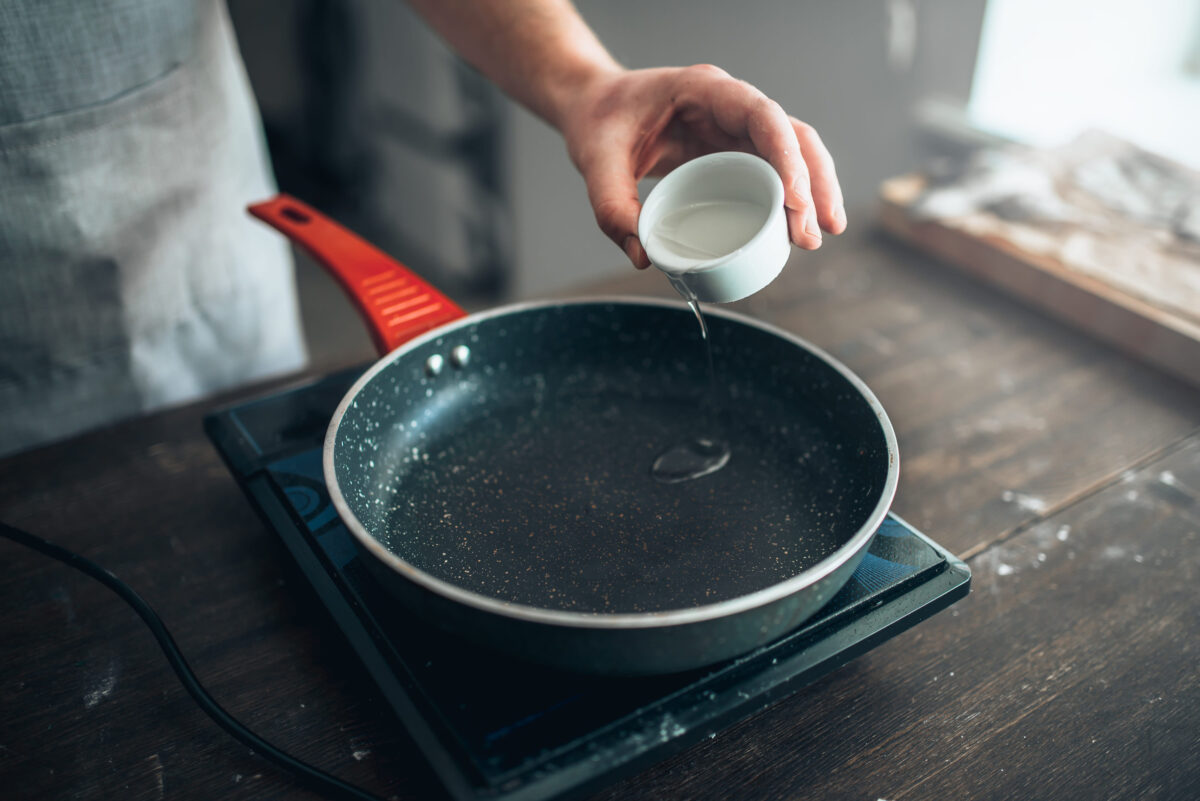
Turning the burner up can seem like the fastest way to get dinner moving, but repeated high heat may affect the performance of some coated pans.
All-Clad says high heat can cause premature wear on the ceramic nonstick coating covered by its care guidance and may lead to sticking. Tefal also says repeated overheating can weaken a nonstick coating.
For the nonstick cookware covered by All-Clad’s guide, the company recommends low or medium heat and advises against overheating oil. That does not mean the same setting applies to every nonstick pan. The better approach is to follow the heat recommendations provided for the cookware you actually own.
Leaving an Empty Pan on a Hot Burner
It is easy to put a pan on the stove, turn on the burner, and then get distracted chopping vegetables or looking for ingredients. For some coated cookware, leaving the pan empty while it heats can be a problem.
All-Clad says empty preheating can overheat and damage its ceramic nonstick surface. Tefal similarly advises against leaving empty pans on a heated burner.
All-Clad’s instructions for its ceramic nonstick cookware call for adding butter or oil while the pan is preheating. That is a product-specific recommendation rather than a rule for every nonstick pan. Check your own cookware instructions to see how the manufacturer wants it preheated.
Related: 8 Cast Iron Mistakes That Are Destroying Your Skillet, And How to Fix Them
Using Cooking Spray
A quick mist of cooking spray may seem convenient, but certain manufacturers warn that repeated use can interfere with nonstick performance.
All-Clad says cooking sprays can leave buildup on its ceramic nonstick cookware, reducing food release. The company also advises against nonstick cooking spray for other nonstick lines listed in its care guidance because performance may decline over time.
For its ceramic nonstick cookware, All-Clad suggests using butter or an appropriate cooking oil instead. Other cookware may come with different instructions, so the practical takeaway is to see what your pan’s manufacturer recommends rather than assuming every coating reacts the same way.
Letting Grease or Food Residue Remain
A pan can look fairly clean after being wiped with a paper towel, yet residue may still be left behind.
Tefal identifies food buildup as one possible reason a pan that once released food easily can start sticking. Its guidance also notes that simply wiping a pan or rinsing it with water may leave a film of grease behind.
For the specific pan covered in Tefal’s FAQ, the company describes soaking it with water and dishwashing liquid, then gently cleaning it with a baking-soda-and-water paste and a nonabrasive sponge. That method should not be treated as a universal fix for every nonstick surface.
The broader lesson is simpler: clean your pan according to the manufacturer’s directions instead of relying only on a quick wipe or rinse.
Scraping the Surface With Utensils
The spoon, spatula, or other tool you use can matter, especially if the cookware maker recommends protecting the coated surface from scratching.
All-Clad warns that metal utensils may scratch its nonstick surfaces and can chip or wear its ceramic coating. Tefal also connects scratching with reduced nonstick performance.
However, utensil guidance is not identical across all cookware. Tefal specifically notes that allowances differ among its product ranges. All-Clad recommends silicone, nylon, plastic, or wooden utensils where appropriate for the cookware involved.
Rather than applying one rule to every pan, use the utensil types recommended for your particular product. The same goes for cutting food directly in the pan when the manufacturer advises against doing so.
Related: 7 Kitchen Items You Should Get Rid Of
Scrubbing With Abrasive Cleaners or Pads
When cooked-on food refuses to budge, aggressive scrubbing can be tempting. But for certain coated pans, that approach may create a different problem.
All-Clad says steel wool, harsh scouring pads, and aggressive cleaners can damage its nonstick surface. Tefal also identifies abrasive cleaning as a factor that can contribute to coating wear.
Cleaning methods should match the cookware. A technique that works well on an uncoated surface should not automatically be carried over to a nonstick pan.
Instead of reaching for the toughest scrubber available, check the care instructions for the specific coating and use the cleaning method recommended by its manufacturer.
Stacking Pans Without Protection
Cooking and washing are not the only moments when a nonstick surface can take wear. Storage can matter, too.
When pans are stacked directly on top of one another, their surfaces can come into contact with other cookware. All-Clad recommends placing padding between its ceramic nonstick pans to help prevent chipping or damage. It also recommends liners or pan protectors when stacking nonstick cookware.
That does not mean stacking automatically damages every nonstick pan. But if your cookware maker recommends protection between pieces, a soft liner or pan protector can reduce direct contact during storage.
A nonstick pan’s performance can be influenced by more than what happens while food is cooking. Heat, preheating habits, residue, utensils, cleaning methods, and storage can all play a role depending on the cookware involved.
Because care instructions vary among manufacturers, product lines, and coatings, the best reference is the guidance that came with your particular pan. Changing a habit will not necessarily restore a surface that is already worn or damaged, but following the manufacturer’s recommendations can help you use and care for the cookware as intended.