Reverse Aging Is No Longer Just Lab Hype, and the Human Truth Is Getting Weird
The phrase “reverse aging drug” sounds like it was ripped from a billionaire’s fantasy lab. Futuristic, dramatic, and almost too convenient, it suggests science has finally found a way to bargain with time.
But the real story is more serious. A Boston biotech company has moved an experimental cellular rejuvenation treatment into a human trial. The first test is not about smoother skin or turning back the clock for the whole body. It begins with the eye.
This distinction matters. This is not a miracle injection for anyone afraid of aging. It is an early medical trial aimed at optic nerve disease. The bigger question is whether aging or damaged cells can be coaxed back toward function without creating new biological risks.
Phase 1 is about caution, not miracles

The phrase “first reverse aging drug” grabs attention, but this is not a finished therapy. ER 100 is being tested in a Phase 1 trial, where the main focus is safety. Doctors are watching for side effects, immune responses, and tolerability.
The milestone is not that aging has been defeated. It is that scientists are testing cellular rejuvenation in a human, carefully and methodically.
The eye, not the whole body
The injection went into a single eye of a patient with glaucoma, a disease that damages the optic nerve and can steal vision silently. This makes the trial more medical than cosmetic.
Starting with the eye also allows scientists to monitor risk in a controlled environment. It is a sensitive organ, but easier to track than the entire body.
Resetting cells without erasing them
ER 100 uses a process called cellular reprogramming. Cells carry instructions, but age, illness, or damage can scramble them. The goal is to make older or damaged cells behave more youthfully without erasing their identity.
It is a delicate balance. Too little change, nothing happens. Too much, and cells could misbehave or grow uncontrollably.
Safety first: cancer risk looms
Cellular reprogramming has been theoretically linked to uncontrolled cell growth. ER 100 uses three transcription factors, OCT4, SOX2, and KLF4, to influence cells without fully reverting them to a stem cell state.
The hope is huge, but safety is paramount. The trial will reveal whether cells can be nudged toward rejuvenation without introducing dangerous side effects.
Glaucoma makes the trial urgent
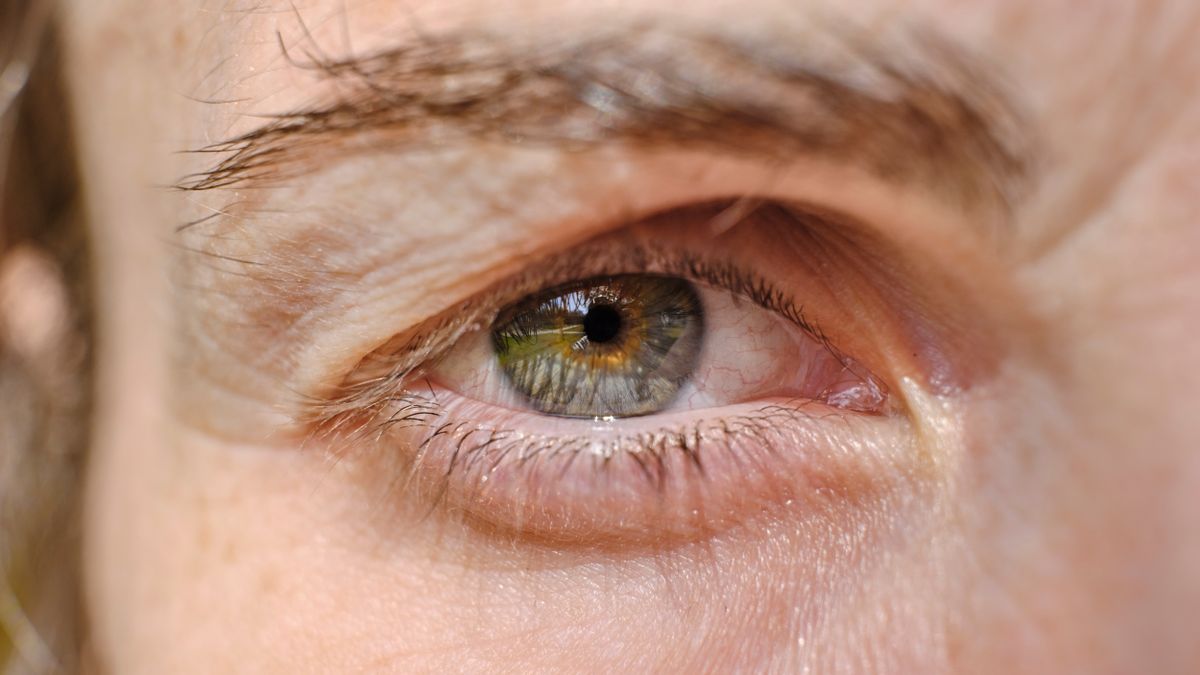
Glaucoma is one of the leading causes of irreversible blindness. It destroys retinal ganglion cells, which carry visual signals from the eye to the brain. Once these cells are lost, the body does not naturally regenerate them.
ER 100 targets damaged cells in a way that current treatments cannot. Instead of just slowing progression, it asks whether lost function can be partially restored.
NAION adds stakes
The trial also addresses non-arteritic anterior ischemic optic neuropathy (NAION), which can cause sudden, painless vision loss due to disrupted blood flow to the optic nerve.
Limited treatment options make this a high-stakes testing ground. If ER 100 can restore even some function in these cells, the implications for eye medicine could be profound.
Billionaire buzz inflates the hype
Longevity science attracts investors, flashy headlines, and hype. Every lab update sounds like a doorway to immortality.
A first human dose does not prove the treatment works, nor does it mean clinics will offer it soon. It does show that risky, fascinating ideas are moving from theory into human testing.
The real prize: healthspan, not immortality

The strongest outcome is not eternal youth but healthspan, staying functional and healthy for longer. If cellular rejuvenation safely restores damaged tissue, treatments could eventually extend to other organs, including the liver, muscle, and brain.
That future is unproven, but the first human dose brings it closer to possibility.
Slow results, careful steps
Early trials move slowly because safety matters more than speed. Doctors will monitor for inflammation, immune reactions, vision changes, and other unexpected responses. Even positive early results only pave the way for expanded studies.
Medicine demands proof, and patience is part of progress.
Crossing a serious boundary
For decades, “reverse aging” was a supplement industry slogan. It has now entered regulated human trials. Scientists are no longer only asking how to slow the decline; they are testing whether some forms of cellular damage can be reversed.
This is a moment where science edges into territory once considered science fiction. The potential to reshape medicine is enormous if the treatment proves safe and repeatable.
The first human injection of ER 100 is not a youth shot. It is not a cure for aging. Anyone selling it that way is moving faster than the evidence.
But the trial deserves attention. For the first time, cellular rejuvenation has stepped into human testing for serious optic nerve disease. The danger is hype. The possibility is history. And somewhere between those extremes, medicine may be learning to speak the language of aging cells.