Russia’s Brutal 2 Million-Casualty War Is Exposing Putin’s Painful Battlefield Crisis
Russia’s war in Ukraine has entered a grim statistical milestone that is hard to ignore and even harder to interpret without stepping back. New analysis cited in international reporting places combined military casualties on both sides at more than 2 million, a figure that includes killed, wounded, and missing soldiers since the full-scale invasion began in 2022. It is not just a number; it is a reflection of how industrialized and punishing this conflict has become and how far it has drifted from any quick or decisive outcome.

What makes this moment stand out is not only the scale but also the pace at which losses are accumulating, while frontlines barely move by comparison. Military analysts tracking the war, including those at the Center for Strategic and International Studies (CSIS), have been central to this assessment, piecing together battlefield reports, intelligence estimates, and public data to understand what is happening beyond the headlines.
The 2 Million Figure That Redefines the War
The most striking detail in the latest analysis is the scale of total military casualties. According to CSIS estimates widely cited in international coverage, Russia and Ukraine together have now suffered more than 2 million casualties, with Russia accounting for the larger share.
The breakdown is staggering. CSIS estimates suggest Russia has endured roughly 1.4 million casualties, which include hundreds of thousands of deaths and an even larger number of wounded or missing personnel. Ukraine, meanwhile, is also estimated to have suffered hundreds of thousands of military casualties, reflecting the sheer intensity of the fighting across eastern and southern fronts.
What matters here is not just the arithmetic; it’s what the numbers represent. These are trained soldiers, mobilized civilians, and long-term losses that ripple back into economies, families, and national institutions. CSIS analysts describe the war as one of the most casualty-heavy conflicts in Europe since World War II, and the data helps explain why both sides are increasingly leaning on drones, long-range strikes, and fortified defensive positions rather than traditional large-scale offensives.
The key takeaway from this analysis is that the war is no longer defined by movement, but by attrition. And attrition at this scale has consequences that extend far beyond the battlefield.
A Battlefield That Moves Inches, Not Miles

Despite the enormous human cost, the front lines in Ukraine have shifted surprisingly slowly in many sectors. CSIS analysis highlights that Russian advances in several contested regions have been measured in tens of meters per day in some areas, underscoring just how difficult territorial gains have become under modern surveillance and drone warfare.
This slow progress reflects a broader transformation in how the war is being fought. The battlefield is now saturated with reconnaissance drones, precision artillery targeting, electronic warfare systems, and layered defenses. Movement is quickly detected, and concentration of forces often results in heavy losses before significant breakthroughs can occur.
At the same time, Ukraine has increasingly relied on asymmetric tactics, particularly drone warfare and targeted strikes against logistics and supply lines inside occupied territory and even into Russia itself. CSIS analysis notes that these capabilities have helped Ukraine raise the cost of Russian advances, even when manpower disparities remain a challenge.
What emerges is a war that no longer resembles the fast-moving armored thrusts many expected in the early stages. Instead, it is a grinding contest of endurance, where small territorial changes can cost thousands of lives and months of planning.
This dynamic also helps explain why casualty numbers are rising so sharply without corresponding shifts in territorial control. The war has become less about sweeping victories and more about survival under constant pressure.
What These Numbers Say About Where the War Is Headed
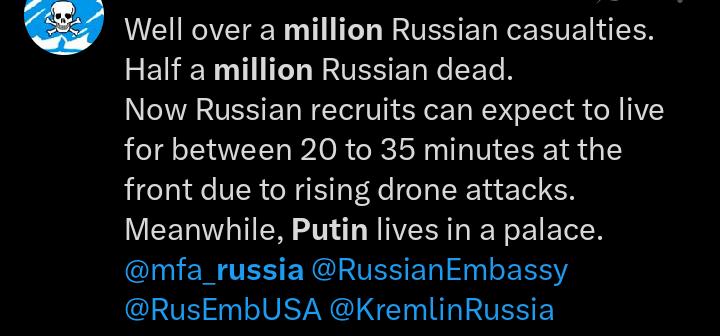
Perhaps the most important question raised by this data is not what has already happened, but what comes next. CSIS analysis suggests that Russia continues to sustain extremely high monthly casualty rates, in some periods reportedly tens of thousands per month, driven by repeated offensive operations and heavy reliance on infantry assaults.
At the same time, recruitment and replenishment efforts inside Russia are struggling to keep pace with losses, according to the same assessments. That does not necessarily mean an immediate collapse in manpower, but it does suggest increasing strain over time, especially if casualty trends remain consistent.
Ukraine, meanwhile, faces a different kind of pressure. While its forces have generally inflicted higher proportional losses on Russian units in many engagements, they remain heavily dependent on external military aid, particularly air defense systems, ammunition, and long-range strike capabilities.
CSIS analysts emphasize that wars of this scale often come down to endurance rather than momentum alone. That means economic resilience, political stability, and sustained military supply chains may matter as much as battlefield tactics in determining how the conflict evolves.
What is clear from the data is that neither side is currently positioned for a quick resolution. Instead, the war appears locked into a long-term attritional phase where gains are incremental, losses are substantial, and strategic breakthroughs remain rare.
And that is what makes the “2 million casualties” figure more than just a milestone. It is a signal that this is no longer a conventional war with a clear rhythm of advance and retreat. It is a prolonged grinding conflict where time, resources, and human endurance are now the main weapons on both sides.