Scientists Turn Used Coffee Grounds Into Insulation That Could Help Keep Buildings Cooler
Your morning coffee may have a future beyond the trash bin. Scientists in South Korea have transformed spent coffee grounds into a biochar-based insulation material that could give one of the world’s most common food wastes a new purpose.
Researchers at Jeonbuk National University created a porous composite material from used coffee grounds, converting them into carbon-rich biochar and combining that material with ethyl cellulose. Early testing found the material could slow heat transfer at levels comparable to expanded polystyrene foam.
The research does not mean coffee grounds are ready to replace building insulation tomorrow. Instead, it highlights a possible future use for a waste product generated by homes, cafés and coffee processing facilities.
Coffee Grounds Turned Into Biochar
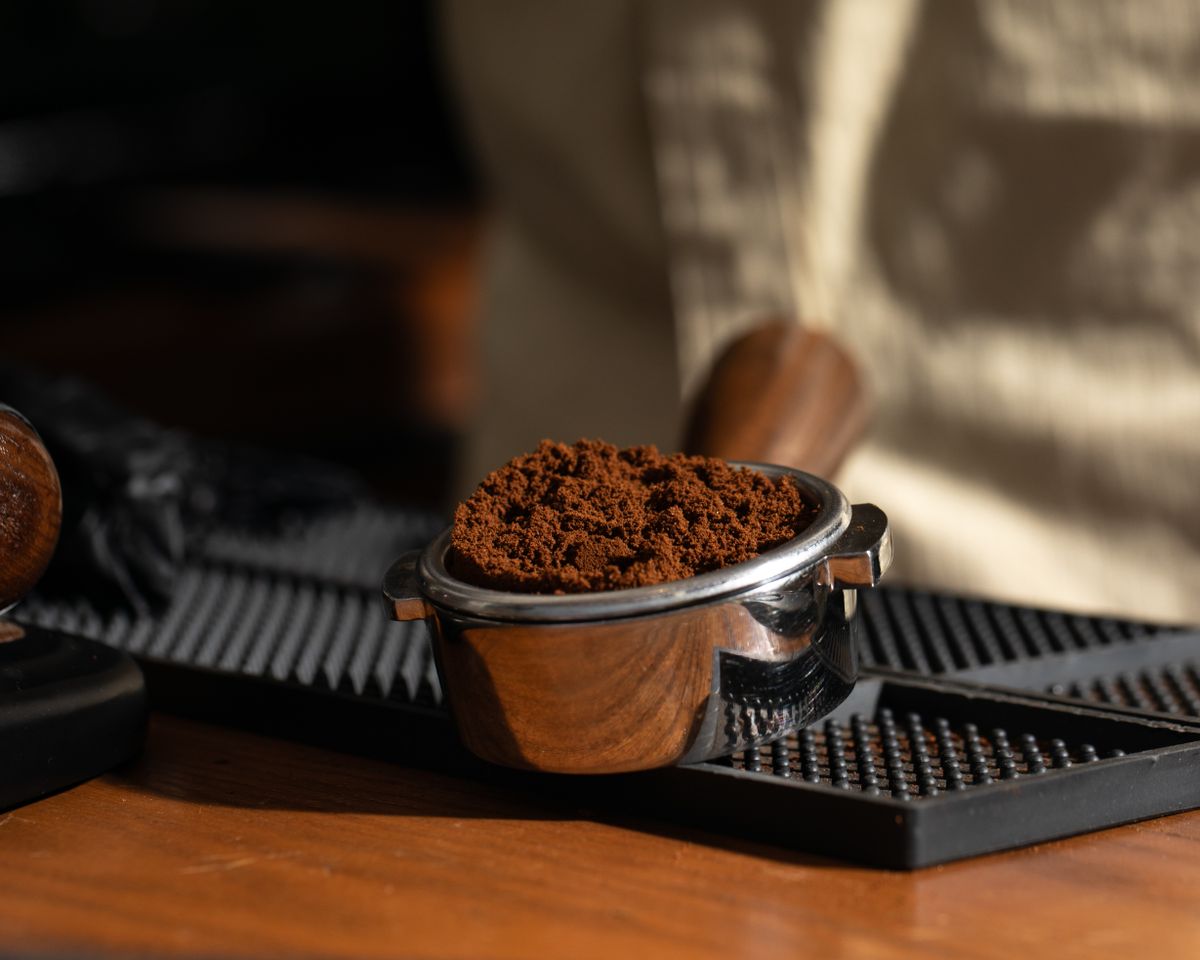
The research team’s process starts with spent coffee grounds, which are converted into a carbon-rich material known as biochar. The scientists then blend that material with ethyl cellulose to create an insulating composite.
The goal is not to make a new type of coffee product. It is to transform a familiar kitchen waste item into a material that could potentially have a role in construction and heat management.
The idea is simple: something normally discarded may have useful properties when processed in a different way.
Related: 10 Innovative and Practical Ways to Use Coffee Beyond Drinking It
A Material Designed to Slow Heat Movement
The coffee-ground composite works through its porous structure. The researchers found that carbonizing the coffee grounds at 700 degrees Celsius created a material with about 71% porosity.
Those tiny air-filled spaces help slow the movement of heat through the material. In insulation, controlling heat transfer is the key purpose, and the researchers tested whether the coffee-ground material could perform in that role.
The study found the resulting material recorded thermal conductivity of 0.04 watts per meter per kelvin, which the researchers compared with expanded polystyrene foam in their testing.
The Coffee Material Matched Foam in Early Tests
In a small rooftop-solar model, the coffee-ground composite reduced heat transfer below a solar panel at a level similar to conventional foam insulation.
That result does not mean the material is already a replacement for standard insulation products. It shows that the composite demonstrated similar performance in the researchers’ tests under the conditions studied.
The project remains an early-stage example of how waste materials can be explored for new uses.
A New Possibility for Millions of Tons of Coffee Waste
Researchers say the project could eventually provide another option for dealing with the more than 8 million tons of spent coffee grounds generated worldwide each year.
Coffee grounds are already being studied for several possible applications, including soil amendments, biofuels, food ingredients, and construction materials.
This research adds another idea to that list: using coffee waste as a component in a material designed to help manage heat.
It Is About Insulation, Not Cooling a Room
The coffee-ground composite does not create cold air or actively lower a building’s temperature. Its role is to help limit the movement of heat through a material.
That distinction matters because insulation and cooling systems work in different ways. A material that slows heat transfer can be useful in building design, but it does not function like an air conditioner.
The coffee-based material is about controlling heat movement, not producing cooling.
The Material Uses Renewable Inputs
The researchers describe the composite as using renewable inputs. In laboratory testing, the material also biodegraded faster than traditional foam.
Those findings add to the appeal of exploring alternative materials, especially when they come from a waste stream that is produced in large quantities.
However, more testing would be needed before the material could move from a laboratory project into everyday buildings.
The Big Question: Can It Become a Real Building Material?
The research is an interesting example of turning a common waste product into something unexpected. But several practical questions remain before coffee-ground insulation could become a real-world option.
Researchers would need to determine whether the material can be made durable, moisture-resistant, fire-safe, affordable, and suitable for building codes.
For now, the story is less about a new insulation product appearing on store shelves and more about a creative experiment: used coffee grounds becoming a potential heat shield instead of simply being thrown away.