Supreme Court Keeps Mail Ballot Grace Periods Alive in Major Election Day Ruling
The Supreme Court has now made one thing clear in one of the most closely watched election cases of the year: a ballot does not become late simply because the mail truck arrives after Election Day.
In a 5-4 decision, the justices ruled that states may count mail ballots that are postmarked by Election Day but received afterward, rejecting a Republican-led challenge to Mississippi’s ballot deadline law.
The ruling preserves Mississippi’s rule allowing properly postmarked mail ballots to be counted if they arrive within five business days after the election, and it gives breathing room to other states with similar systems.
This is not a ruling that allows people to vote after Election Day. That distinction matters. The Court did not say states can extend Election Day by stealth, stretch voting into the following week, or treat late choices as valid. Instead, the majority said federal law requires voters to make their choice by Election Day, but it does not force states to receive every mailed ballot by that same date.
That may sound technical, but in election law, technical details can decide whether thousands of ballots survive or disappear.
What the Supreme Court Actually Decided in Watson v. RNC
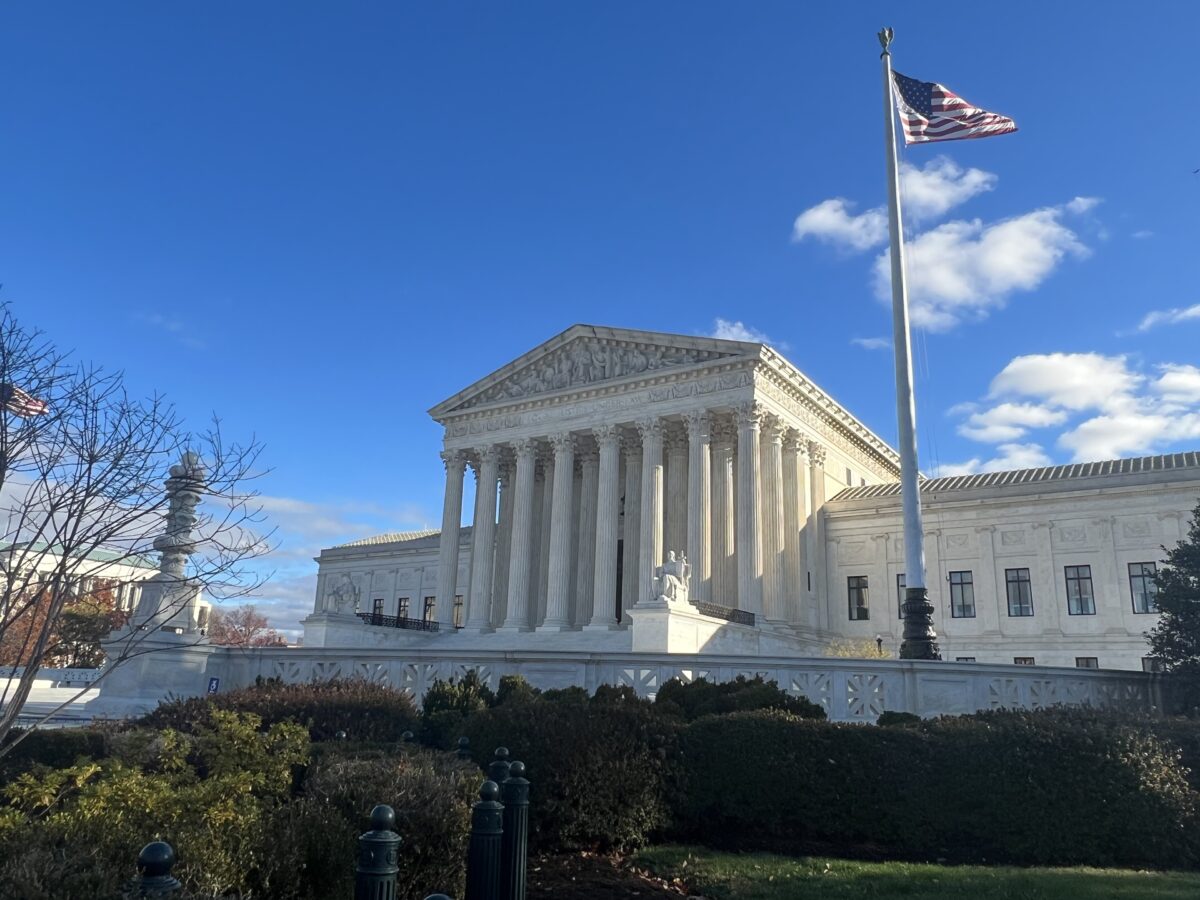
The case, Watson v. Republican National Committee, centered on a narrow but powerful question: when federal law sets Election Day, does that mean ballots must be both cast and received by that day?
The Republican National Committee and other challengers argued that Mississippi’s grace period conflicted with federal statutes establishing a uniform Election Day for presidential and congressional elections.
In their view, once Election Day ends, the ballot box should close not only for voters but also for election officials receiving mailed ballots. The Supreme Court disagreed.
Justice Amy Coney Barrett, writing for the majority, said the federal election-day statutes do not create a national ballot-receipt deadline.
In plain terms, Congress set the day by which voters must make their choice. It did not write a rule requiring that every mailed ballot physically land in an election office by the close of that same day.
That distinction became the heart of the ruling. A voter who marks and mails a ballot by Election Day has made the electoral choice on time. If postal delays push delivery into the following days, the majority said federal law does not automatically erase that vote.
Why the Decision Matters Before the 2026 Midterms
The timing is impossible to ignore. The ruling arrived with the 2026 midterm elections only months away, when control of Congress will again be fought state by state, district by district, and sometimes ballot by ballot.
Had the Court sided with the challengers, states using postmark-based grace periods could have faced urgent legal and administrative chaos.
Election officials would have needed to rewrite instructions, redesign voter education materials, retrain workers, update ballot processing systems, and prepare for voter confusion almost immediately.
Instead, the ruling keeps the existing rules in place for Mississippi and offers protection to other states that accept some late-arriving mailed ballots as long as they were sent by Election Day.
For voters, the practical message is simple: the postmark still matters. For election offices, the message is even more important: the rules they planned around are not suddenly illegal under federal law.
The Ruling Does Not Mean “Election Week” Voting
One of the most important public misunderstandings around this case is the idea that late-arriving ballots equal late voting. They do not.
A grace period is not an invitation to vote after Election Day. It is a recognition that mail is not instant.
Rural voters, older voters, disabled voters, military personnel, students away from home, and Americans living overseas may all depend on systems that separate the act of voting from the physical arrival of an envelope.
That is why postmark rules exist. They create a timestamp. They tell election officials whether the ballot was sent on time. If it was not postmarked by Election Day, it does not qualify under laws like Mississippi’s.
If it was postmarked on time and arrives within the state’s legal window, it can be counted. The difference is not semantic. It is the difference between a voter missing a deadline and the postal system missing a delivery expectation.
The Unusual 5-4 Coalition Behind the Mail Ballot Ruling
The lineup also tells a story.
Justice Barrett was joined by Chief Justice John Roberts and the Court’s three liberal justices: Sonia Sotomayor, Elena Kagan, and Ketanji Brown Jackson.
On the other side, Justice Samuel Alito dissented, joined by Clarence Thomas and Neil Gorsuch, with Brett Kavanaugh joining in part.
That split does not fit the simplest partisan script. Barrett and Roberts joined the liberal wing to reject the Republican-led challenge, while four conservative justices would have gone the other way.
The majority’s reasoning leaned heavily on statutory text. The Court did not invent a broad new constitutional right to late-arriving ballots. It did not announce a sweeping national mail-voting policy. It simply said the relevant federal statutes do not say what the challengers needed them to say.
In a Court often described through ideology, this case turned on wording: cast versus received, voter choice versus ballot delivery, Election Day as a voting deadline versus Election Day as a postal deadline.
What This Means for States With Mail Ballot Grace Periods
The decision is especially important for states and territories that already accept some ballots after Election Day when they are postmarked on time. Some states apply those rules broadly. Others use them more narrowly for military and overseas voters.
That difference matters because mail voting is not one uniform national system. It is a patchwork. Some states rely heavily on mail ballots. Others allow mail voting only under limited conditions.
Some have broad no-excuse absentee voting. Others restrict who may vote by mail. Some allow ballots to arrive days later. Others require receipt by Election Day.
The Supreme Court’s ruling does not force every state to adopt Mississippi’s rule. It simply says federal Election Day statutes do not prohibit states from using that kind of postmark-based receipt window.
So, the ruling protects flexibility. States that want stricter receipt deadlines can keep them. States that want grace periods can keep those, too, unless Congress changes the law.
Why the Fight Over Mail Voting Is Far From Over
This decision settles one legal question, but it does not end the political war over mail voting. President Donald Trump has repeatedly criticized mail voting and has pushed for tighter national rules.
His administration backed the challenge to Mississippi’s law, arguing that Election Day should function as the final receipt deadline for mailed ballots. After the ruling, Trump and Republican allies renewed calls for federal legislation to impose stricter rules on voting and voter registration.
Democrats and voting-rights groups, meanwhile, framed the ruling as a protection against disenfranchisement. Their argument is that voters who follow the rules should not lose their ballots due to mail delays beyond their control.
That disagreement will continue because mail voting now sits at the center of America’s broader election trust debate. To supporters, postmark grace periods protect lawful voters from bureaucracy and postal delays. To critics, they prolong uncertainty and feed suspicion in close races.
The Supreme Court did not resolve that political argument. It only decided that the existing federal statutes do not settle it in the challengers’ favor.
The Administrative Reality Behind the Legal Fight
Election law often sounds abstract until it lands in a county office. For election administrators, ballot deadlines are not just legal theories. They shape staffing, ballot tracking, public notices, canvassing schedules, certification timelines, and voter instructions.
A sudden ruling against grace periods would not have been a clean switch. It would have forced officials to revise systems just as midterm preparation was already underway.
That is one reason the ruling carries practical weight. It avoids a late-stage scramble and provides election offices with greater stability before voters start paying close attention.
It also preserves a familiar rule for voters who already use mail ballots. Confusion can suppress participation even when laws do not.
If voters believe the deadline changed, or if instructions differ across lawsuits, campaigns, counties, and state websites, some people simply stop trusting the process.
The Court’s decision keeps the message straightforward in states with grace periods: mail the ballot by Election Day, make sure it is properly postmarked, and it may still count if it arrives within the legal receipt window.
The Bigger Message: Election Day Still Matters, But So Does the Mail
The Supreme Court’s ruling lands in a country where elections are no longer just contests between candidates. They are contests over process, timing, trust, access, and legitimacy.
This decision says Election Day remains the deadline for voters to act. It does not say ballots can be created later. It does not say states must accept ballots indefinitely. It does not erase deadlines.
But it also says a lawful voter’s choice is not automatically destroyed because an envelope arrives after Election Day.
That is the central point. The act of voting and the mechanics of delivery are related, but they are not identical. A voter can do everything required by law and still depend on a postal system the voter does not control.
The majority recognized that gap and refused to read a receipt deadline into federal statutes where Congress had not clearly placed one.
For now, states retain the power to decide how much time they want to allow for mailed ballots after Election Day, as long as the voter acted on time.
Congress can still step in and write a national rule if it chooses. Until then, the Court has left the decision where American election law has often lived: in the uneasy but enduring space between state control and federal oversight.
The ruling will not end arguments over mail voting. It may even sharpen them. But it does answer one urgent question before the midterms: states with lawful postmark grace periods do not have to throw out on-time votes simply because the mail arrived late.