Supreme Court Ruling Lets States Count Late Mail Ballots, Safeguarding Votes for Millions of Local Voters
The U.S. Supreme Court has delivered a major election-law ruling with direct consequences for mail voting across the country, holding that states may count mail ballots that arrive after Election Day as long as those ballots were properly cast or postmarked by Election Day. The decision came in Watson v. Republican National Committee, a closely watched case centered on Mississippi’s absentee-ballot deadline. In a 5–4 ruling, the Court rejected a Republican-backed challenge and reversed the U.S. Court of Appeals for the 5th Circuit, which had found Mississippi’s law preempted by federal Election Day statutes.
At the heart of the dispute was a narrow but powerful question: does federal law require mail ballots to be received by Election Day, or only cast by Election Day? The majority answered that federal law sets the day by which voters must make their choice, but it does not set a nationwide receipt deadline for every mailed ballot. Mississippi’s rule allows certain absentee ballots to be counted if they are postmarked on or before Election Day and received within five business days after the election.
Justice Amy Coney Barrett’s Majority Opinion Draws a Bright Line
Justice Amy Coney Barrett wrote the majority opinion, joined by Chief Justice John Roberts and Justices Sonia Sotomayor, Elena Kagan, and Ketanji Brown Jackson. The unusual alignment placed two conservative justices alongside the Court’s three liberal members, producing a ruling that preserved state discretion over mail-ballot receipt deadlines.
The majority’s reasoning was grounded in statutory interpretation. Barrett concluded that federal Election Day laws require voters to complete voting by the federally designated day, but those laws do not require election officials to physically possess every ballot by that same day. In the Court’s view, Congress knows how to impose receipt deadlines when it wants to, and the federal Election Day statutes do not include that command.
That distinction matters because millions of Americans vote by mail under systems that depend on postmarks, postal delivery, and state-specific administrative deadlines. The ruling effectively says that when a voter follows state rules and mails a ballot on time, federal law does not automatically cancel that vote simply because delivery takes additional days.
Mississippi’s Five-Day Mail Ballot Rule Survives
Mississippi’s law applies to absentee voters, including seniors, people with disabilities, students away from home, and other eligible voters under state absentee-voting rules. The state allows absentee ballots sent by mail or common carrier to be counted if they are postmarked by Election Day and received no more than five business days afterward.
The Republican National Committee, the Mississippi Republican Party, the Libertarian Party of Mississippi, and individual plaintiffs challenged that deadline in 2024. They argued that federal statutes from the 1800s, which set a uniform Election Day for federal offices, require ballots to be both cast and received by Election Day. A federal district court upheld Mississippi’s law, but the 5th Circuit disagreed and ruled that federal law displaced the state’s grace period. The Supreme Court’s decision reversed that appeals-court ruling and restored Mississippi’s policy.
For election officials, the ruling avoids a last-minute scramble ahead of the 2026 midterm elections. A contrary decision could have forced states to rewrite absentee-ballot rules, change voter instructions, revise election-worker training, and potentially reject ballots that voters believed were valid under existing state law.
Why the Decision Affects More Than Mississippi
Although the case originated in Mississippi, the outcome extends far beyond one state. The Supreme Court noted that roughly 30 states count at least some absentee ballots mailed by Election Day but received afterward. Votebeat reported that 14 states and the District of Columbia have broader grace periods for mail ballots, while other states use similar rules for specific voter groups, including military and overseas voters.
That makes the ruling one of the most consequential election-administration decisions of the current term. It preserves a patchwork of state systems rather than imposing one federal receipt deadline nationwide. In practical terms, a voter in a state with a postmark-based rule may still have a ballot counted after Election Day, provided the ballot meets that state’s timing and eligibility requirements.
The decision also protects military and overseas voters from legal uncertainty. Many states allow extra time for receipt of ballots sent from outside the country or from military locations, where mail delivery may be slower. During oral arguments, concerns were raised that eliminating post-Election Day receipt windows could disrupt voting systems used by Americans serving or living abroad.
The Dissent Warns About Election Confidence
Justice Samuel Alito wrote the dissent for Justices Clarence Thomas, Neil Gorsuch, Brett Kavanaugh, and himself. The dissent argued that the majority’s approach weakens the meaning of a single national Election Day and could raise new disputes bout when voting legally ends. Alito warned that the ruling may produce difficult election-law questions and could affect public confidence in election integrity.
The dissent’s central concern was that Election Day should mark a firm endpoint, not merely the deadline for voters to place ballots in the mail. From that perspective, counting ballots that arrive days later risks extending the election beyond the federally chosen day. The majority rejected that interpretation, separating the voter’s act of choosing from the government’s later act of receiving, processing, and tabulating ballots.
That split reflects a larger national divide over mail voting. Supporters of postmark-based rules say voters should not lose their ballots due to postal delays beyond their control. Critics argue that late-arriving ballots can slow results and create suspicion, especially in close races where margins shift during post-election counting.
Trump, the RNC, and the Future of Mail Voting
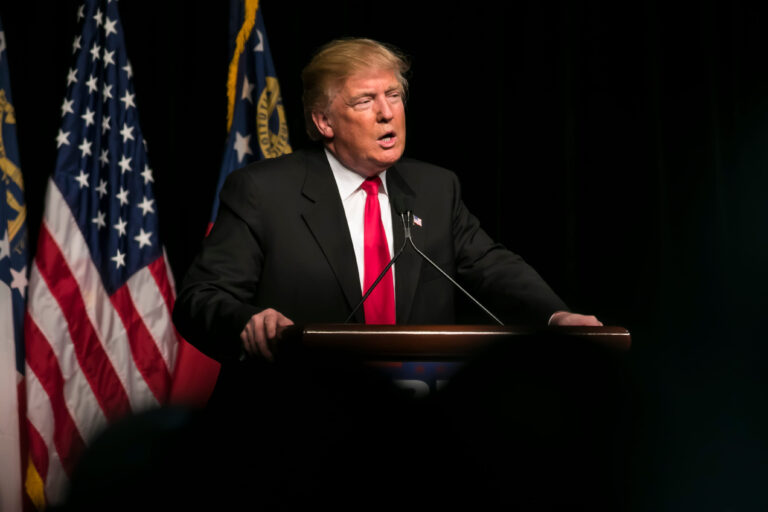
The ruling is also a political setback for President Donald Trump and Republican groups that have pushed for stricter mail-ballot rules. Trump has repeatedly criticized mail voting and has renewed calls for federal legislation to tighten voting requirements after the decision. Reuters reported that Trump urged passage of the SAVE America Act, a bill that would impose additional voting and registration requirements.
The RNC framed the decision as further reason for Congress to act. Voting-rights advocates, by contrast, described the ruling as a protection for voters who comply with the law but depend on the mail system. Rebekah Caruthers of the Fair Elections Center said the decision protects voters who send ballots on time and should not be penalized for delays outside their control.
The political fight is not over. The Court’s decision does not require every state to accept late-arriving mail ballots. It simply says federal Election Day statutes do not prohibit states from doing so. State legislatures remain free to set stricter receipt deadlines, and Congress could still pass a national rule if lawmakers choose to do so.
What Voters Should Understand Before the Midterms
The ruling does not mean every late mail ballot will count. The key requirement is that the ballot must satisfy the voter’s own state law. In Mississippi, that means the ballot must be postmarked on or before Election Day and received within the state’s five-business-day window. Other states have different deadlines, categories, and requirements.
For voters, the safest rule remains simple: mail ballots as early as possible, check state deadlines, confirm signature requirements, and use official ballot-tracking tools where available. A postmark grace period is a protection, not a guarantee against every delay or technical defect. Election offices can still reject ballots that arrive outside the legal window, lack required signatures, fail verification rules, or do not meet state-specific instructions.
For campaigns, the decision means ballot-counting strategies remain crucial after Election Day. In states with postmark grace periods, close races may not be fully settled on election night. That delay does not necessarily indicate fraud or irregularity; it can reflect the normal legal counting of ballots cast on time, but that arrived later under state law.
The Real Meaning of the Supreme Court’s Mail Ballot Ruling
The Supreme Court’s ruling does not create a national mail-voting system. It does not force states to count every ballot that arrives after Election Day. It does not erase state authority to regulate absentee voting. Instead, the Court preserved states’ ability to decide whether ballots cast by Election Day may be counted after Election Day when delivery takes longer.
That is why the decision is so significant. It keeps existing mail-ballot systems intact in many states, protects voters who rely on absentee voting, and prevents a broad federal reinterpretation that could have invalidated postmark-based rules nationwide. At the same time, it leaves the political debate alive in Congress and state legislatures, where lawmakers can still tighten or expand ballot-receipt rules.