Teens Dominate Florida’s Youth Gun Crime Statistics.
A troubling pattern is forcing Florida parents, school leaders, police departments, and neighborhood advocates to confront an uncomfortable reality; too many teenagers are entering adulthood through the doorway of gun violence, arrest records, trauma, and fear. The numbers are not just cold statistics on a state report. They represent classrooms with empty seats, families waiting by the phone, neighborhoods where young people learn to scan the sidewalk before they learn how to build a future.
Across Florida, youth gun arrests have become one of the most urgent public safety concerns facing the state. The issue is especially sharp in communities where Black and Hispanic teenagers are heavily represented in both arrest data and victim data. That does not tell a simple story about race. It tells a harder story about concentrated violence, poverty, policing, illegal gun access, social media conflicts, broken trust, and young people who often believe carrying a firearm is the only way to survive the block they live on.
We should be honest about the dangers without reducing teenagers to stereotypes. Florida has a youth gun problem, but it also has a prevention problem. If the state only responds after the weapon is found, after the arrest is made, or after the shots are fired, then Florida is already late.
Florida Youth Gun Arrests Are Rising While Families Ask What Changed.
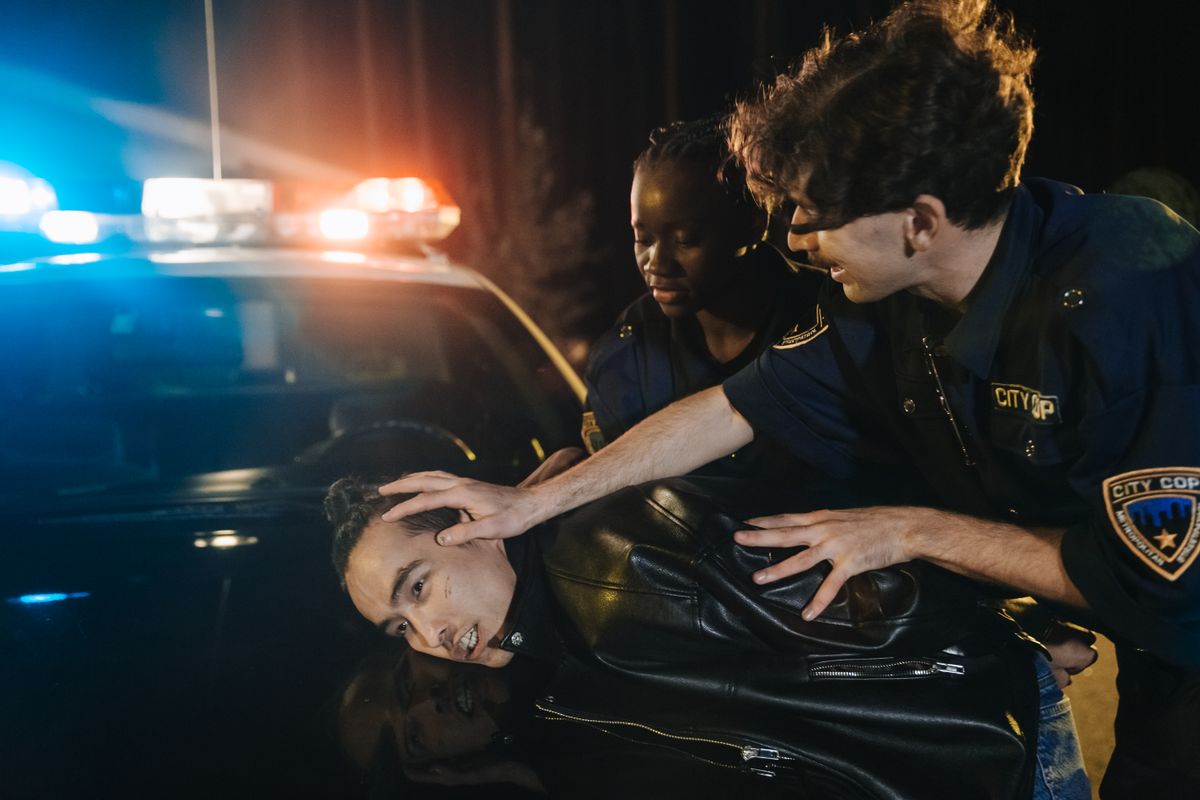
Florida Department of Juvenile Justice data shows that overall juvenile arrests remain far lower than they were decades ago. That matters because it prevents panic from replacing facts. But inside the broader decline, weapons cases have become more concerning, especially felony weapons cases.
The sharpest fear is not just that more teenagers are getting arrested. It is that more teenagers are being connected to guns before they fully understand the consequences of one bad decision. A gun in a teenager’s hand can turn a hallway argument, a social media threat, a stolen car attempt, or a neighborhood dispute into a life-changing tragedy in seconds.
Parents know this fear in a very personal way. In many Florida communities, the question is no longer whether young people are exposed to gun violence. The question is how early they are exposed to it, how often they witness it, and whether the adults around them can interrupt the cycle before police, prosecutors, hospitals, or funeral homes become involved.
Minority Teens Are Disproportionately Represented, But Arrest Data Needs Careful Context.
The most sensitive part of Florida’s youth gun discussion is also one of the most important. Black and Hispanic youth are disproportionately represented in many youth gun and juvenile arrest statistics. In Miami-Dade County, research connected to the Miami-Dade Economic Advocacy Trust and the University of Miami found that Black youth made up a much smaller share of the youth population than their share of arrests over a long period.
That disparity should not be used to label entire communities. It should be used to ask sharper questions. Are the same neighborhoods seeing the highest levels of violence, the heaviest police presence, the fewest youth programs, and the most limited economic opportunity? Are teenagers carrying guns because they want status, because they fear rivals, because older people are pressuring them, or because they do not trust anyone else to protect them?
The answer is often not one thing. In some cases, the behavior is dangerous and demands accountability. In other cases, the arrest data reflects where police are most heavily deployed and where young people are most likely to be searched, stopped, reported, or brought into the system. Both realities can exist at the same time.
What Florida cannot afford is a lazy conversation. A teenager with a gun is a public safety emergency. A teenager who believes a gun is the only protection available is also a public safety emergency.
Miami-Dade Shows the Warning Signs Florida Cannot Ignore.
Miami-Dade County has become one of the clearest examples of the deeper problem. The county has made progress in reducing overall youth arrests over time, but racial disproportionality remains a stubborn and serious concern.
That means fewer young people may be entering the system overall, while certain groups remain far more likely to be arrested. For local families, this creates a painful contradiction. On paper, the system may look like it is improving. On the ground, many parents still see the same neighborhoods under pressure, the same schools dealing with conflict, and the same teenagers moving between grief, anger, fear, and court dates.
Miami-Dade’s experience matters because it shows why Florida cannot measure success only by statewide totals. A statewide number can hide local crisis points. One county may see improvement while another sees rising gun arrests. One neighborhood may receive prevention funding while another receives only patrol cars. One teenager may be diverted into counseling, while another facing similar circumstances may be pushed deeper into the justice system.
That uneven response is exactly why local data matters.
Victims and Offenders Often Come From the Same Neighborhoods.
One of the most important truths about youth gun violence is also one of the most painful: the teenagers most likely to be arrested for gun offenses often come from communities where young people are also more likely to be shot, threatened, or traumatized.
That overlap changes the way we should talk about the crisis. If a teenager carries a gun because he has already been robbed, jumped, threatened online, or lost a friend to violence, punishment alone may not fix the belief that he needs a weapon to stay alive. It may remove him temporarily, but it may not remove the fear that shaped the decision.
This does not excuse illegal gun possession. It explains why the cycle is so difficult to break. Fear spreads faster than policy. A single shooting can change the behavior of an entire group of teenagers. One social media post can revive an old conflict. One stolen firearm can move through several hands before police ever recover it.
Communities dealing with this reality are not asking for excuses. They are asking for a strategy that works before the next child becomes either a defendant or a victim.
Stolen Guns From Cars Are Feeding a Dangerous Pipeline.
Florida’s youth gun problem is also connected to a basic but deadly question: where are teenagers getting the guns?
Some firearms are obtained through older friends, relatives, illegal street sales, or theft. But police agencies across Florida have repeatedly warned that guns stolen from vehicles are a major concern. In some cities, law enforcement officials have said many stolen firearms came from unlocked cars.
This is the part of the story that reaches beyond any one neighborhood. Every gun owner who leaves a firearm unsecured in a vehicle may be creating a public safety risk for someone else’s child, school, store, apartment complex, or street corner.
A stolen gun does not stay in the parking lot where it was taken. It can be traded, sold, passed between teenagers, displayed on social media, used for intimidation, or carried into a confrontation that should never have involved a weapon. In that sense, responsible gun storage is not a private habit. It is a community safety issue.
Schools, Social Media, and Pandemic Fallout Made the Problem Worse.
Florida educators and youth counselors have described a changed teen environment since the pandemic years. School closures, isolation, learning loss, family stress, economic pressure, and anxiety disrupted the normal support systems that often help young people stay grounded.
At the same time, social media became a faster engine for conflict. A rumor that once stayed in a hallway can now spread across group chats. A threat can be screenshotted, reposted, mocked, and escalated before adults even know it happened. For teenagers already living in tense environments, online disrespect can become offline violence.
Schools are left trying to manage problems that start far beyond the classroom. Teachers are not only teaching math, reading, and science. They are also watching for warning signs, calming disputes, reporting threats, and trying to keep students from bringing outside conflicts through the school doors.
That burden is not sustainable without stronger support from families, community groups, mental health providers, and local government.
The Adult Court Question Is Dividing Florida.
Florida’s response to youth gun offenses has become a political flashpoint. Some residents want tougher penalties, faster prosecution, and stronger consequences for teenagers caught with firearms. Their argument is direct: communities cannot feel safe if young people believe gun possession has no serious cost.
Others warn that pushing teenagers too quickly into adult court can cause long-term harm without addressing the root problem. A teenager marked by an adult criminal record may face barriers to school, work, housing, and stability. If that young person returns to the same neighborhood with fewer opportunities and deeper resentment, the community may not be safer in the long run.
The real challenge is finding the line between accountability and permanent destruction. Florida must send a clear message that illegal gun possession is dangerous. But it must also avoid building a system where one frightened, impulsive, or pressured teenager is locked into failure before adulthood begins.