The Secret to a Crisp, Buttery Mushroom and Leek Quiche Starts Before the Filling Goes In
A mushroom and leek quiche has plenty going for it: golden pastry, a creamy center, and vegetables that make eggs feel ready for company. But the crust deserves just as much attention as the filling. To keep it from becoming a soft landing pad for all that custard, blind-bake the pastry before adding the filling. It gives the shell a head start while letting the eggs finish cooking without sacrificing the bottom crust.
Recipe developer Julie Kinnaird’s mushroom and leek quiche for Chowhound uses that technique with an all-butter shell, sautéed vegetables, thyme, and goat cheese. Her recipe makes eight servings in an 11-inch tart pan with a removable bottom. The method below follows her ingredient quantities and baking temperatures, with guidance from King Arthur Baking and the FDA on pastry technique and safe cooking. Allow roughly four hours, including chilling, baking, and resting, rather than treating this as a last-minute brunch project.
Give the Buttery Crust Its Head Start
For the pastry, gather 2 cups all-purpose flour, ½ teaspoon salt, 6 ounces cold unsalted butter cut into small cubes, 1 large egg, 1 egg yolk, and 1 teaspoon apple cider vinegar. You will also need a food processor, plastic wrap, foil, and dried beans or pie weights. Keep the butter cold before mixing. Kinnaird’s method includes both a refrigerator rest for the dough and a freezer rest for the shaped shell, so leave room for those steps in your schedule.
Pulse the flour and salt together in the processor, then add the butter and process until the mixture resembles fine meal. Add the whole egg, extra yolk, and vinegar, processing until the dough comes together. Wrap it and refrigerate for at least one hour. This pause is part of the method, not an optional intermission: resting helps the flour absorb moisture and relaxes the gluten, while chilling keeps the butter firm enough for easier handling.
Let the chilled dough stand at room temperature for about 20 minutes, then roll it into a 12-inch circle on a floured surface. Transfer it to the 11-inch tart pan, gently fitting it across the bottom and into the sides. Fold the excess over the rim, press it against the sides, and trim away the overhang. Prick the base with a fork, wrap the shell, and freeze it for 30 minutes before baking.
Heat the oven to 400°F. Butter one side of a large piece of foil, fit it buttered-side down against the chilled pastry, and add dried beans or pie weights. Bake for 20 minutes, then carefully remove the foil and weights. Lower the oven to 350°F, bake the uncovered shell for another 10 minutes, and let it cool for about 10 minutes. As King Arthur Baking writer PJ Hamel explains, “bake the bottom crust first, before adding the filling.” That head start matters because delicate custard can’t stay in the oven indefinitely while the pastry catches up.
Cook the Vegetables Before They Meet the Custard
For the vegetable filling, set out 1 tablespoon unsalted butter, 2 cups sliced cremini or white button mushrooms, and 1 large leek, using only its white and light green portions. Add 1 tablespoon fresh thyme leaves and 1 teaspoon salt. The custard calls for 3 large eggs, 1 cup heavy cream, ½ cup whole milk, ¼ teaspoon freshly cracked black pepper, and ⅛ teaspoon ground nutmeg. Finish with 4 ounces crumbled plain goat cheese.
Give the leek a proper cleaning before slicing it. Cut away the root end and tough dark green leaves, split the remaining stalk lengthwise, and rinse between the layers under running water. Those overlapping layers can hide debris, so washing only the outside will not do the job. Brush or wipe the mushrooms clean, then slice them. Having everything ready before the skillet heats up makes the next stage much easier.
Melt the tablespoon of butter in a large sauté pan over medium-high heat. Add the mushrooms and cook for about five minutes, until they release their juices and begin turning golden. Stir in the sliced leek and cook for about two minutes, until it starts softening. Add the thyme and salt, stir to distribute them, and remove the pan from the heat to cool. Precooking the vegetables helps keep the moisture they release from going directly into the custard during baking.
Whisk the eggs, cream, milk, pepper, and nutmeg together in a medium bowl. Kinnaird identifies one egg for every ½ cup of dairy as an important ratio for avoiding a rubbery or spongy filling, and these quantities follow that balance. Set the baked tart shell on a baking sheet, spread the cooled vegetables across its base, and scatter the goat cheese evenly over them. Pour in the custard so the vegetables and cheese are evenly distributed throughout the filling rather than clumped in one spot.
Related: 7 Weeknight Dinners American Middle-Class Families Kept Coming Back to in the 1960s
Bake Until Set, Then Give It Time to Rest
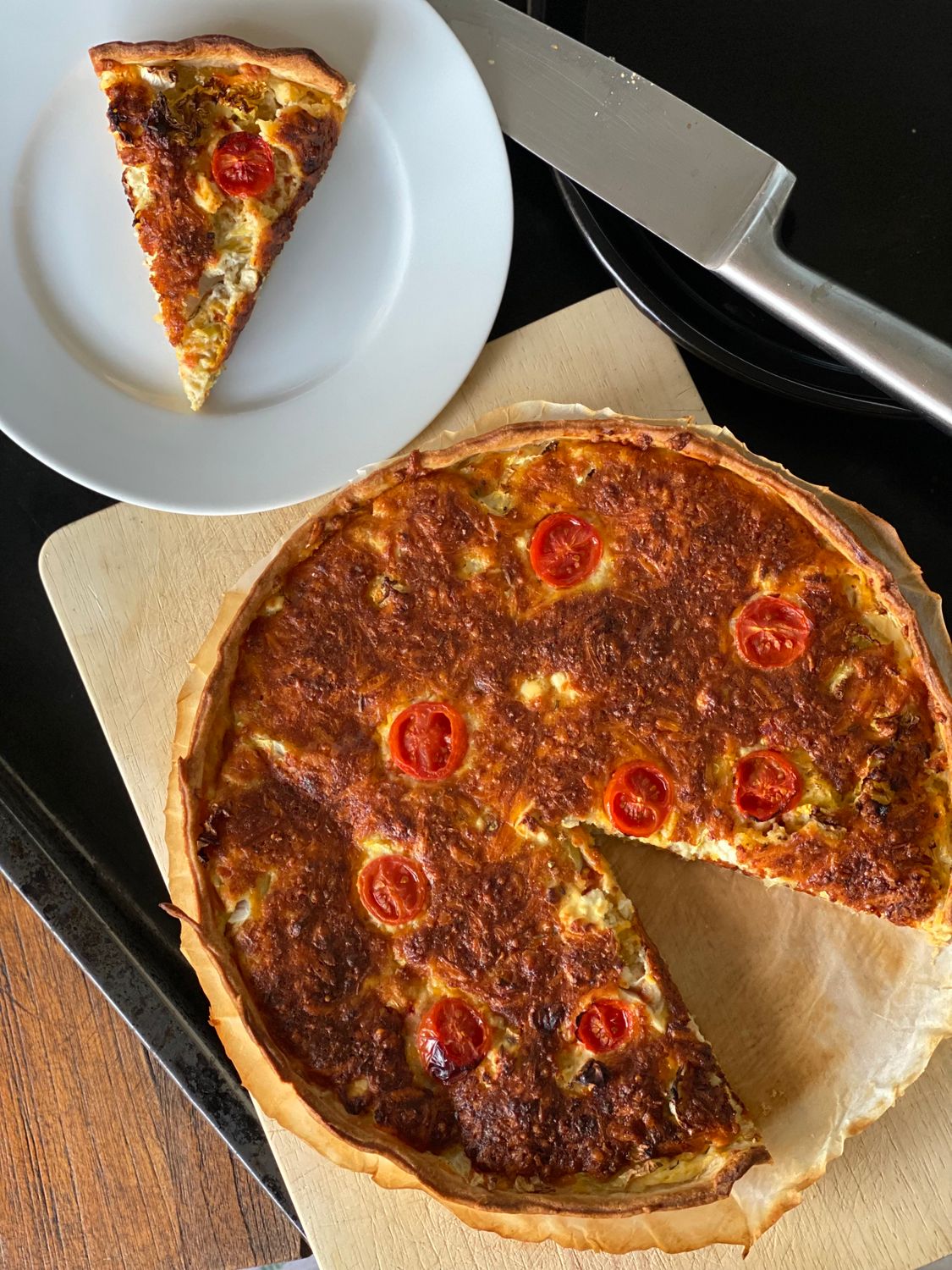
Bake the filled quiche at 350°F for about 45 minutes, until the filling is set and the surface just begins to brown. Kinnaird cautions against overbaking, noting that the filling continues cooking as it cools. Use the clock as a guide, but check doneness rather than relying on color alone. For food safety, the FDA recommends cooking egg-containing dishes to an internal temperature of 160°F, measured with a food thermometer.
Let the finished quiche rest for at least 20 minutes before slicing, as Kinnaird directs. If you are planning ahead, you can make the dough up to three days in advance and refrigerate it, and cook and refrigerate the vegetable filling separately before assembly. Refrigerate leftover baked quiche within two hours, or one hour when temperatures exceed 90°F. Keep it refrigerated at 40°F or below, use it within three to four days, and reheat leftovers to 165°F, following FDA guidance.