Trump Claims Record Poll Numbers After Iran Push, But the Political Picture Is More Complicated
President Donald Trump opened the week with the kind of declaration that instantly turns a political morning into a headline machine. In a Truth Social post on Monday, June 29, he claimed he had the “Highest Poll Numbers Ever,” tying that boast to his repeated promise that Iran will not obtain a nuclear weapon.
The message was classic Trump: bold, brief, combative, and designed to move at the speed of social media. It was also the kind of statement that demanded a closer look, because the polling picture around Trump, Iran, gas prices, and the approaching midterms is far messier than one triumphant post can capture.
Trump Turns Iran Into A Political Victory Lap
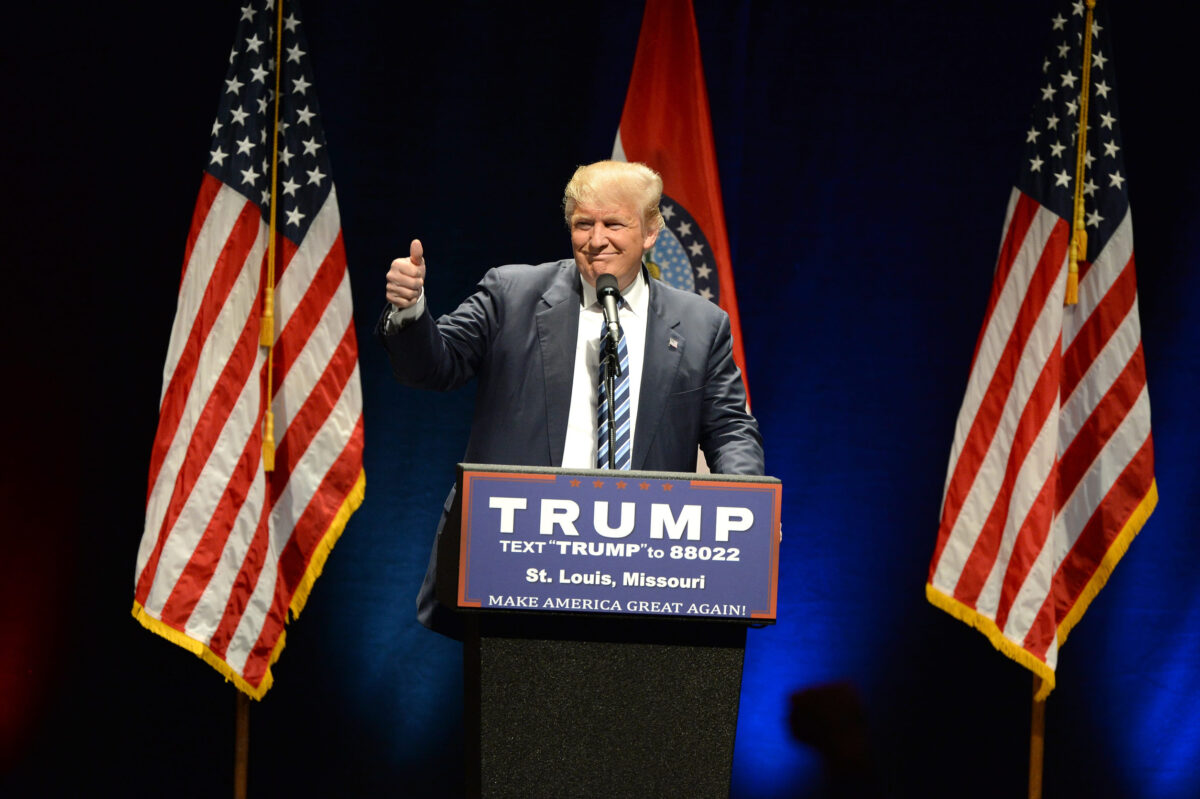
The shortened link being shared online points to a Newsmax story centered on Trump’s claim that his approval numbers had climbed after what he described as success on Iran. Newsmax cited a Daily Mail/J.L. Partners survey showing Trump’s approval rising to 47 percent after sitting at 43 percent for three straight months. Breitbart also reported the same survey, noting that it was taken from June 19 to June 21 and showed his disapproval at 53 percent.
For Trump and his allies, that number offers a clear argument: voters may be rewarding the administration for pushing Iran back to negotiations, keeping oil moving, and promising that Tehran will not cross the nuclear threshold. It is the kind of political storyline any White House would love to sell. Foreign crisis. Presidential pressure. Falling oil prices. A poll bump. Add a social media megaphone, and the message becomes simple enough for a campaign rally: strength abroad is paying off at home.
But that is only one frame.
The Polling Story Is Not One Big Victory Banner

Other recent surveys show a much tougher road for Trump. A Reuters/Ipsos poll released June 23 found Trump’s approval at 34 percent, matching the lowest mark of his second term. That same poll found only 24 percent of Americans believed the Iran war was worth the cost, while 63 percent thought the truce with Tehran was unlikely to last.
AP-NORC also reported that Trump’s overall job approval stood at 37 percent, unchanged from May, and that most Americans continued to disapprove of his handling of Iran. About one-third of U.S. adults approved of his approach to the economy, showing that even a foreign-policy moment may not erase frustration over household costs.
That contrast matters. One poll can give a president a talking point. A wider polling landscape gives the country a temperature check. And right now, that temperature is uneven. Trump may have found a stronger number in one survey, but broader polling suggests many Americans remain skeptical, especially about whether the Iran deal will hold and whether the conflict was worth the disruption.
Gas Prices Give Trump A Pocketbook Argument
Trump’s strongest political argument may not be about diplomacy at all. It may be about gas.
The White House and Trump allies have leaned hard into the idea that pressure on Iran helped calm oil markets. Trump also posted that WTI crude was at $69 and “heading down,” framing energy prices as proof that his Iran strategy was working.
Fox News reported that Trump said U.S. officials were set to meet Iranian representatives in Doha on Tuesday, June 30, for talks focused on Iran’s nuclear program. He described the meeting as “perhaps important, perhaps not,” adding that officials would see what came of it. Fox also reported that oil prices had fallen to around $70 per barrel on Monday morning, while gas prices were listed at about $3.86 a gallon and falling.
For voters, that kind of movement is not abstract. Gas prices are among the few economic signals Americans see in large numbers on the side of the road. A lower price at the pump can change the mood faster than a speech, a policy paper, or a press briefing. If prices keep falling, Trump will almost certainly present that as evidence that his Middle East strategy protected American wallets.
Still, Reuters noted that while the preliminary deal helped bring down crude prices, gasoline remained considerably higher than before the February 28 U.S.-Israeli strikes that began the war. That means Trump can claim improvement, but critics can still argue Americans are paying the price for a crisis that did not need to escalate in the first place.
Iran Talks May Decide Whether The Boast Holds Up
The key question is whether Trump’s Iran moment becomes a durable political win or another flash of headline theater.
On Monday, Trump claimed Iran had requested a meeting in Doha. United Against Nuclear Iran compiled Trump’s Truth Social statements from June 29, including his claim about the meeting and his insistence that Iran would not get a nuclear weapon.
If talks produce a stronger agreement, Trump will likely sharpen the victory message. He will argue that pressure worked, shipping lanes reopened, oil cooled, and Iran blinked. That could help reassure Republicans who want toughness without a long war.
But if the truce collapses, if Iran drags out negotiations, or if gas prices jump again, the same story could turn against him. Reuters found that most Americans doubted the truce would produce lasting peace, which means Trump is not only trying to sell success. He is trying to sell trust.
That is the real political tension beneath the headline. Trump wants voters to see Iran as proof of strength. Many voters appear to see it as a test still unfolding.
For now, the president has a poll he likes, a message he knows how to repeat, and a foreign-policy drama that keeps him at the center of the national conversation. But the scoreboard is not settled. In American politics, one good number can start a victory lap. It cannot finish the race.