Trump Imposes New Tariffs on Brazil, Signaling a Wider Global Trade Crackdown
President Donald Trump has opened a new phase of his tariff strategy, and Brazil is the first major economy to feel its force.
The United States will impose a 25% tariff on thousands of Brazilian products beginning July 22, 2026, following a yearlong investigation into trade practices that Washington considers discriminatory or harmful to American companies. Although major Brazilian exports such as coffee, beef, orange juice, and aircraft components have been exempted, the decision still covers roughly 3,000 categories of goods.
We should view the action as more than another dispute between Trump and Brazilian President Luiz Inácio Lula da Silva. The tariffs reveal how the administration plans to rebuild its broader trade agenda after the Supreme Court rejected its earlier use of emergency powers to impose sweeping tariffs on imports. Brazil may be the initial target, but the legal strategy behind the decision could eventually extend to dozens of other countries.
Why Trump Imposed New Tariffs on Brazil
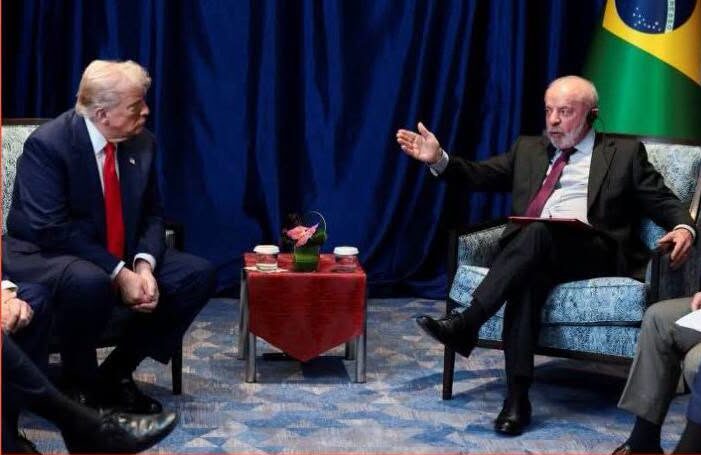
The new duties follow a Section 301 investigation launched by the Office of the United States Trade Representative in July 2025. The investigation examined Brazil’s policies involving digital trade, electronic payment services, intellectual property protection, ethanol market access, anti-corruption enforcement, preferential tariffs and illegal deforestation.
U.S. Trade Representative Jamieson Greer concluded in June 2026 that some Brazilian practices were “unreasonable or discriminatory” and restricted American commerce. Washington then proposed tariffs while continuing negotiations with Lula’s government. The investigation included testimony from more than 30 witnesses and nearly 300 public comments and rebuttals.
American officials have focused heavily on Brazil’s treatment of U.S. technology companies. The USTR accused Brazilian courts of issuing confidential orders requiring American social media platforms to remove content, suspend accounts, and restrict access to certain users. It also argued that large fines and threats to payment systems created an unfair operating environment for those companies.
The investigation also raised concerns about Pix, Brazil’s widely used instant-payment platform. Pix is operated by Brazil’s central bank and allows people and businesses to transfer money quickly, often without paying transaction fees. American officials argue that Brazilian policies have favored the domestic payment system over competing foreign services. Brazilian officials strongly reject that interpretation.
Brazil Rejects Washington’s Trade Claims
Lula’s government described the tariffs as unjustifiable and politically motivated. Brazilian Foreign Minister Mauro Vieira said the United States was pressuring Brazil to give American companies preferential or exclusive access to parts of its economy.
Brazil also challenged Washington’s claim that its market is unfairly closed to U.S. businesses. According to Lula’s office, 76% of American imports entered Brazil duty-free in 2025, and the effective average tariff applied to U.S. products was approximately 3.1%.
That disagreement is sharpened by the existing trade balance. Unlike many countries targeted by Trump’s tariff policies, Brazil does not run a large merchandise surplus with the United States. American exports to Brazil exceeded imports by nearly $42 billion in 2025, giving the United States one of its largest bilateral trade surpluses.
This makes the Brazilian case unusual. The tariffs are not primarily being justified as an attempt to close a trade deficit. Instead, the administration is using them to demand changes in Brazilian regulations, digital policies, and market-access rules.
Coffee, Beef, and Aircraft Parts Escape the Tariff
The administration excluded several strategically important products from the new 25% tariff. The exemptions include coffee, beef, oranges, orange juice, and aircraft components, along with certain goods that are unavailable in sufficient quantities from American producers.
These exclusions appear designed to limit immediate disruption inside the United States. Brazil is a crucial supplier of coffee and other agricultural goods to the American market. Applying the full tariff to those products could have quickly raised costs for importers, restaurants, supermarkets, and consumers.
Aircraft exemptions also matter because Brazilian manufacturer Embraer has deep commercial relationships with American airlines and aviation suppliers. Tariffs on aircraft components could disrupt production and maintenance networks in both countries.
The exemptions soften the initial economic impact, but they do not eliminate it. Manufacturers and distributors that depend on Brazilian industrial products, chemicals, machinery, sugar, ethanol, and specialized materials may still face significant cost increases. Those companies will have to absorb the additional expense, negotiate lower prices with suppliers, or pass part of the cost to customers.
Brazil Prepares Reciprocal Tariffs Against the United States
Brazil has warned that it may respond with tariffs on American goods. Its government said it has begun taking steps under a reciprocity law approved by Congress in 2025, which allows countermeasures when another country adopts trade restrictions against Brazilian products.
Lula’s administration is also considering a challenge through the World Trade Organization. The final form of Brazil’s retaliation remains uncertain, but officials have made clear that they do not intend to accept the U.S. decision without a response.
Brazil must now choose its targets carefully. Tariffs on American agricultural products, machinery, chemicals, technology, or energy goods could create political pressure in the United States. However, retaliation may also increase costs for Brazilian industries that depend on American equipment and components.
A prolonged dispute could encourage Brazil to accelerate trade negotiations with Canada, the European Union, China, and other markets. Brazilian exports to the United States already account for less than 10% of the country’s total exports, reducing Washington’s leverage compared with earlier periods.
Why the Brazil Tariffs Signal What Comes Next
The legal authority behind the decision is central to understanding Trump’s wider strategy. The administration imposed the Brazil tariffs under Section 301 of the Trade Act of 1974, which allows the United States to respond to foreign practices considered unreasonable, unjustifiable, or discriminatory.
Trump previously relied heavily on the International Emergency Economic Powers Act to impose tariffs on imports from numerous countries. The Supreme Court rejected that approach in February 2026, ruling that the emergency law did not provide presidential authority to impose those broad import taxes.
The administration then turned to Section 122 of the Trade Act to establish a temporary 10% global import surcharge. However, that authority is limited to 150 days, and the current tariffs are scheduled to expire on July 24, 2026, unless Congress extends them.
Section 301 offers the administration a more durable alternative. It requires an investigation, public comments, and hearings, but it gives the president broad authority to impose and adjust tariffs after those procedures are completed. Section 301 duties generally expire after four years, although they may be renewed.
Brazil therefore serves as an early model for what may follow. Instead of declaring a national trade emergency and immediately imposing worldwide tariffs, the administration can investigate specific countries or practices and gradually build a new tariff structure through established trade law.
More Countries Could Face Section 301 Investigations
The Trump administration is already pursuing investigations that could affect a much larger share of global trade. One investigation examines whether numerous countries have failed to prevent the import of goods linked to forced labor. Another focuses on alleged industrial overproduction by major trading partners, including China, Japan, and the European Union.
The forced-labor investigation covers countries responsible for almost all U.S. imports. Proposed tariffs range from 10% to 12.5%, depending on the country and Washington’s assessment of its enforcement efforts. The administration is moving through the required procedures as quickly as possible.
The overproduction investigation could eventually produce larger and more targeted tariffs. American officials argue that government subsidies and excessive manufacturing capacity allow foreign companies to sell goods at artificially low prices, putting U.S. producers at a disadvantage.
If those investigations lead to new duties, the Brazil tariff will look less like an isolated dispute and more like the first completed piece of a reconstructed global tariff wall.
The Tariffs Carry Risks for American Businesses
Tariffs are collected from American importers when goods enter the country. Foreign exporters may lower their prices to preserve market share, but U.S. companies often carry at least part of the additional cost.
Businesses that rely on Brazilian materials may respond by searching for suppliers elsewhere. That process can take months or years, especially when products require technical certifications, specialized manufacturing or long-term contracts.
Companies may also delay investment until they understand which countries and products will face new tariffs. Although Section 301 follows a more predictable legal process than the administration’s earlier emergency tariffs, uncertainty remains because investigations can cover broad and politically sensitive areas.
The consequences may spread beyond direct trade with Brazil. When importers move orders to alternative suppliers, prices and availability can change across international markets. Brazilian exporters shut out of the United States may also redirect goods to Europe, Asia, or Latin America, increasing competition for producers in those regions.
The Dispute Enters Brazil’s Presidential Election
The tariff fight has quickly become part of Brazil’s October presidential election. Lula and right-wing Senator Flávio Bolsonaro, the son of former President Jair Bolsonaro, have accused each other of causing the breakdown in relations with Washington.
Lula alleges that the Bolsonaro family encouraged American pressure for political advantage. Flávio Bolsonaro denies that claim and argues that Lula’s handling of negotiations is responsible for the tariffs.
A Quaest poll conducted in July found that 42% of respondents said the tariffs made them more likely to support Lula, compared with 27% who said the issue pushed them toward Bolsonaro. Approximately 63% believed the tariffs would hurt them or their families.
Those numbers suggest that outside pressure may strengthen Lula’s sovereignty message rather than weaken his campaign. Voters who might disagree with his domestic policies could still oppose what they see as foreign interference in Brazil’s economic and political decisions.
Trump’s Brazil Tariffs Mark a New Stage of the Trade Fight
The new 25% tariffs represent a calculated shift in Trump’s approach. The administration is no longer relying solely on emergency declarations to transform U.S. trade policy. It is moving toward investigations that link tariffs to specific allegations related to technology, regulation, labor, subsidies, and market access.
Brazil is the first major test of that strategy. The exemptions protect several politically sensitive American industries and consumer products, but thousands of Brazilian goods will still face higher barriers beginning July 22.
We can expect negotiations to continue even after the tariffs take effect. Trump may offer exemptions or reductions if Brazil agrees to changes involving digital services, payment systems, ethanol, or other disputed sectors. Lula, meanwhile, must balance the economic value of a compromise against the political cost of appearing to surrender to American pressure.
The larger message reaches far beyond Brasília and Washington. Governments, exporters and multinational companies now have evidence that the administration can rebuild its Section 301 tariff agenda, even after losing its broadest legal argument at the Supreme Court.
Brazil may be the opening case, but the real story is the trade framework being built behind it. The next question is not whether Trump will target another country. It is which country will be next, what practices Washington will challenge, and how much of the global trading system will be reshaped before the resistance becomes stronger than the tariff pressure.