Trump Promised to Restore Free Speech. Federal Judges Say His Administration Repeatedly Restricted It
Donald Trump returned to the White House promising to rescue free expression from what he described as years of government censorship. Yet a sweeping review of federal court decisions presents a strikingly different picture.
Federal judges have ruled against the Trump administration in 75 First Amendment cases during his second term, according to a Reuters examination of court records. The decisions cover alleged violations of freedom of speech, religion and the press, creating a widening legal conflict between the president’s expansive view of executive authority and the constitutional limits imposed on government power.
The cases involve universities, journalists, protesters, law firms, federal employees, researchers and foreign students. Although some decisions remain preliminary or are being appealed, the volume of rulings has made free speech one of the administration’s most persistent legal vulnerabilities.
A Campaign Promise Meets the Courts
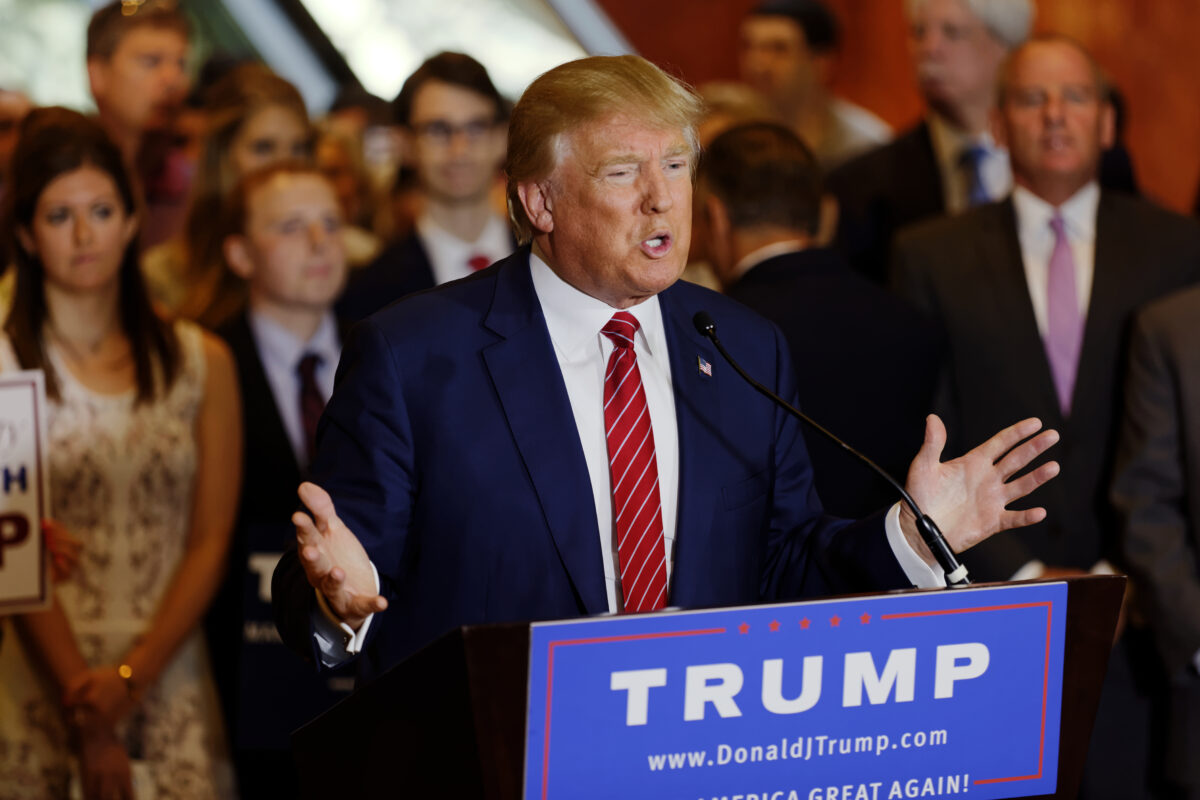
Trump made opposition to censorship a defining theme of his 2024 campaign. He accused the Biden administration of pressuring technology companies to restrict information about COVID-19, elections and other politically sensitive issues.
During his January 2025 inaugural address, Trump promised to end government censorship. Within hours of taking office, he signed an executive order instructing federal agencies and employees not to unconstitutionally interfere with Americans’ speech.
But judges have repeatedly concluded that other administration policies undermined that pledge.
In several cases, courts found that federal officials appeared to punish individuals or institutions because of their political positions, advocacy or refusal to adopt the administration’s preferred ideology. Judges objected not simply to the policies themselves, but to evidence suggesting they were designed to target disfavored viewpoints.
Boston-based U.S. District Judge William Young, who was appointed by Republican President Ronald Reagan, delivered one of the sharpest criticisms. In a case involving foreign students and faculty members who supported Palestinian causes, Young said the government could not retaliate against speech merely because the president disliked it.
His ruling concluded that the administration improperly used immigration powers, including detention, deportation efforts and visa revocations, against people because of their advocacy.
Seventy-Five Losses Across Ninety-Three Cases
Reuters identified 93 civil cases during Trump’s second term in which federal judges considered First Amendment claims against his administration. Lower-court judges ruled against the government in 75 of them.
Most of those unfavorable decisions came from judges appointed by Democratic presidents. However, Republican-appointed judges also ruled against the administration in 10 cases, weakening claims that the legal resistance came entirely from partisan opponents.
The review excluded lawsuits brought by people representing themselves and treated consolidated cases as a single matter. It also acknowledged that some decisions involved emergency requests for temporary relief rather than final rulings after complete trials.
That distinction matters. A preliminary injunction does not necessarily determine how a case will ultimately end. It generally means a judge believes the plaintiffs have shown a meaningful likelihood of success and could suffer serious harm without immediate court intervention.
Even so, the repeated pattern is notable. The cases span unrelated agencies, policies and parts of the country, suggesting the First Amendment disputes are not confined to one controversial executive order.
By comparison, Reuters identified 27 cases in which judges considered First Amendment challenges during Joe Biden’s presidency. His administration lost 13 of them, with many disputes involving religious objections to federal vaccine requirements.
Universities Become a Major Battleground
Higher education has emerged as one of the central fronts in the administration’s fight over speech.
Judges have blocked or criticized efforts to cancel federal grants awarded to universities whose policies or academic programs conflicted with the administration’s position on diversity, equity and inclusion. Courts have also examined whether officials unlawfully attempted to influence what professors could teach or discuss in classrooms.
In one case, the administration terminated grants awarded to University of California researchers as part of its effort to eliminate DEI-related federal spending. A federal appeals court agreed with a lower-court judge that the action amounted to viewpoint discrimination.
The Constitution generally allows the government to establish funding priorities. However, it cannot withdraw funding solely to punish a recipient for expressing a protected opinion.
That legal principle has complicated the administration’s attempt to use federal grants as leverage over universities. Schools receiving public money must comply with legitimate federal conditions, but courts have warned that funding decisions cannot become tools for ideological discipline.
The conflict has also extended to campus activism. Two appellate courts overturned lower-court decisions that had resulted in the release of Columbia University activists Mahmoud Khalil and Mohsen Mahdawi.
The appeals courts did not decide whether the administration had violated the activists’ speech rights. Instead, they found that the lower courts lacked jurisdiction to hear the cases. Khalil’s legal team has indicated that it intends to pursue further review before the Supreme Court.
News Organizations Challenge Access Restrictions
The press has also taken the administration to court over restrictions affecting White House and Pentagon coverage.
The Associated Press and The New York Times separately obtained favorable lower-court rulings after challenging government limits on their access. Some of those decisions have been paused while appeals continue.
These disputes raise questions about whether a president may restrict a news organization because of its editorial choices or coverage. While the government retains authority over security and access to sensitive facilities, it cannot ordinarily use those powers to punish journalists for protected reporting.
The administration has argued that judges are improperly interfering with executive functions. White House spokeswoman Abigail Jackson accused the judiciary of obstructing voters’ choices through rulings the administration considers unlawful.
That argument reflects a broader theme in Trump’s response to legal defeats. Officials have frequently described judges who rule against them as activists attempting to substitute their preferences for presidential authority.
Courts, however, have emphasized that elections do not remove constitutional restraints. A president may win a broad political mandate, but that mandate does not permit the government to retaliate against critics or discriminate among viewpoints.
Law Firms Accuse Trump of Political Retaliation
Some of the most consequential cases involve major law firms that previously represented Trump’s political opponents or participated in litigation against his interests.
Executive orders targeted certain firms by suspending security clearances, limiting access to federal buildings and threatening government contracts connected to their clients. The firms argued that the measures were designed to punish them for their past legal work.
In May 2025, U.S. District Judge Beryl Howell struck down an order aimed at Perkins Coie, a firm with a history of representing Democratic clients. She concluded that presidential power could not legitimately be used to settle personal or political grievances against a private organization.
A federal appeals court in Washington appeared skeptical of the administration’s position during arguments held in May. A final appellate ruling could clarify how far presidents may go when using executive authority against lawyers and firms whose work they oppose.
The stakes extend beyond the targeted firms. If law offices fear government retaliation for representing controversial clients, individuals and organizations may struggle to obtain independent legal counsel.
The Administration Has Won Important Appeals
The Trump administration has not lost every stage of these disputes. It appealed roughly two-thirds of the 75 unfavorable decisions. In 15 cases, appellate courts either overturned the First Amendment ruling or temporarily suspended it.
One significant victory involved an executive action limiting collective bargaining rights for hundreds of thousands of federal workers. Labor unions argued that Trump acted in retaliation for their opposition to his policies.
The 9th U.S. Circuit Court of Appeals rejected that claim. A three-judge panel concluded that the president would have taken the same action even without a retaliatory motive, allowing the policy to move forward.
Other administration victories have rested on procedural questions rather than the underlying constitutional claims. Those outcomes demonstrate that a lower-court loss does not always predict the final result, particularly when questions of jurisdiction, standing or presidential authority reach appellate judges.
Several of the disputes could eventually arrive at the Supreme Court, where the administration may receive a more favorable hearing from the court’s conservative majority.
A Free-Speech Debate With Lasting Consequences
Legal scholars say the current conflict stands out because modern First Amendment protections are already well established.
Timothy Zick, a professor at William & Mary Law School, compared the breadth of the administration’s actions to the suppression of political dissent during the First Red Scare under President Woodrow Wilson. At that time, the federal government carried out arrests and deportations amid intense fears of communism and immigration.
The crucial difference is that constitutional law was far less developed in the early 20th century. Today, decades of Supreme Court precedent prohibit the government from punishing protected speech simply because officials disagree with it.
Trump’s defenders argue that the president is dismantling ideological systems embedded in universities, federal programs and public institutions. His critics contend that the administration is replacing one alleged censorship system with another, this time backed by immigration enforcement, funding threats and executive sanctions.
The courts will ultimately determine where legitimate policy changes end and unconstitutional retaliation begins. For now, however, the record creates an uncomfortable contradiction for a president who made free speech one of his most forceful promises.
Trump said he would bring free expression back. Seventy-five federal rulings suggest that judges believe his administration has too often treated it as a privilege reserved for those who agree with him.