Utah Wildfire Explodes Past 13,000 Acres as Hundreds Evacuate Small Town: Could More Communities Be at Risk?
A fast-moving wildfire tearing through central Utah has forced hundreds of residents to flee their homes, as firefighters battle extreme conditions and officials warn that dangerous winds and dry terrain could push the blaze even further.
For families in and around the small town of Eureka, the weekend brought sudden evacuation orders, smoky skies, and an urgent scramble to safety as flames advanced across the East Tintic Mountains.
What Happened In Central Utah
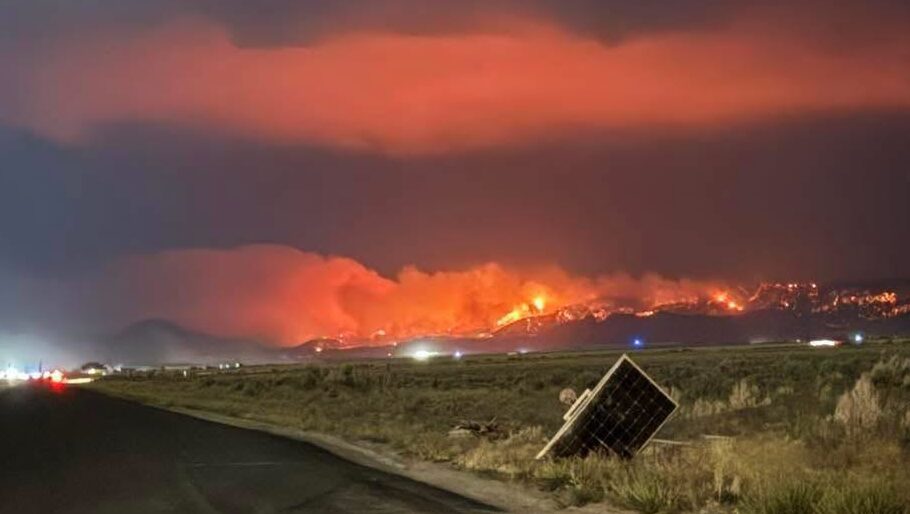
Officials say the Iron Fire ignited on Friday night in Juab County, roughly 28 miles southwest of Provo. Since then, it has rapidly grown into one of the most destructive fires in the region this season.
By Sunday morning, the blaze had burned more than 13,300 acres and remained 0% contained, according to Utah Fire Info.
The fire has already crossed into multiple counties, spread across private and federal land, and forced the closure of at least one highway. Fire officials also reported that the flames are threatening “numerous structures” near Eureka, where mandatory evacuation orders were issued over the weekend.
Authorities say the fire is believed to be human-caused, although investigators have not released further details about how it started.
Why Were Residents Forced To Flee
For residents in Eureka, the decision to leave came quickly as shifting winds pushed flames toward the community.
Daylan Hermanson, a local resident, described watching the fire advance across the mountainside and realizing how close it had become.
“That’s way closer than anybody wants it to be,” he told ABC affiliate KTVX as evacuation orders spread through the area.
Officials say dry vegetation and strong winds created ideal conditions for rapid fire growth, making containment efforts difficult for crews on the ground.
Mandatory evacuations were issued as a precaution after fire officials warned that structures in the town were directly in the fire’s path.
A Broader Wildfire Emergency Across Utah
The Iron Fire is not the only blaze stretching resources across the state.
Officials say it is the largest of at least 11 wildfires that have started in Utah since Friday. Several others, including the Hastings Fire west of Salt Lake City and smaller fires near Ogden and the University of Utah area, have also burned hundreds to thousands of acres with little or no containment.
Utah Gov. Spencer Cox said state and local agencies are deploying “every available resource” to respond.
“Conditions remain dry and dangerous,” Cox said in a social media post. “Please use extreme caution, follow evacuation notices, and do your part to prevent new fires.”
The National Weather Service had previously issued red flag warnings across large portions of the state, signaling an elevated wildfire risk due to wind, heat, and low humidity.
Drought Conditions Are Fueling The Crisis.
Officials say Utah’s ongoing drought is a major factor driving the intensity of current wildfires.
According to the Utah Department of Natural Resources, dry soils and vegetation have created highly flammable conditions heading into peak wildfire season. The agency has reported more than 230 fires already this year, with the majority linked to human activity.
With temperatures rising and vegetation drying out earlier than usual, fire officials warned that the state could face an extended and more dangerous wildfire season than in previous years.
What Happens Next On The Ground
Fire crews are continuing aggressive containment efforts, but officials say shifting winds and difficult terrain are slowing progress.
Evacuation orders remain in place for parts of Eureka, and emergency teams are monitoring whether additional nearby communities may need to be cleared if the fire continues to expand.
Authorities are also investigating the exact cause of the Iron Fire, which is currently believed to be human-caused but not yet fully explained.
Air support, ground crews, and state emergency teams are expected to remain deployed throughout the week as conditions allow.
Why This Wildfire Matters Beyond Utah
The rapid spread of the Iron Fire highlights a growing challenge across the western United States: longer wildfire seasons, drier landscapes, and increasingly unpredictable fire behavior.
For Utah residents, the immediate concern is safety and property loss. But for emergency officials, the broader issue is how quickly fires can escalate before containment even begins.
As hundreds of families remain displaced and firefighters continue working around the clock, the situation in central Utah serves as another reminder of how quickly conditions can change when heat, wind, and dry fuel align.
For now, the priority remains evacuation safety, containment, and preventing new ignitions as fire crews race to bring the Iron Fire under control.