Trump Signs Executive Order Targeting Recommended Childhood Vaccine Schedule, Prompting New Health Debate.
President Donald Trump has placed the nation’s childhood vaccine schedule at the center of a fresh public health battle, signing a sweeping executive order that could reshape which vaccines federal officials recommend routinely, how children receive them, and how states approach school vaccination requirements.
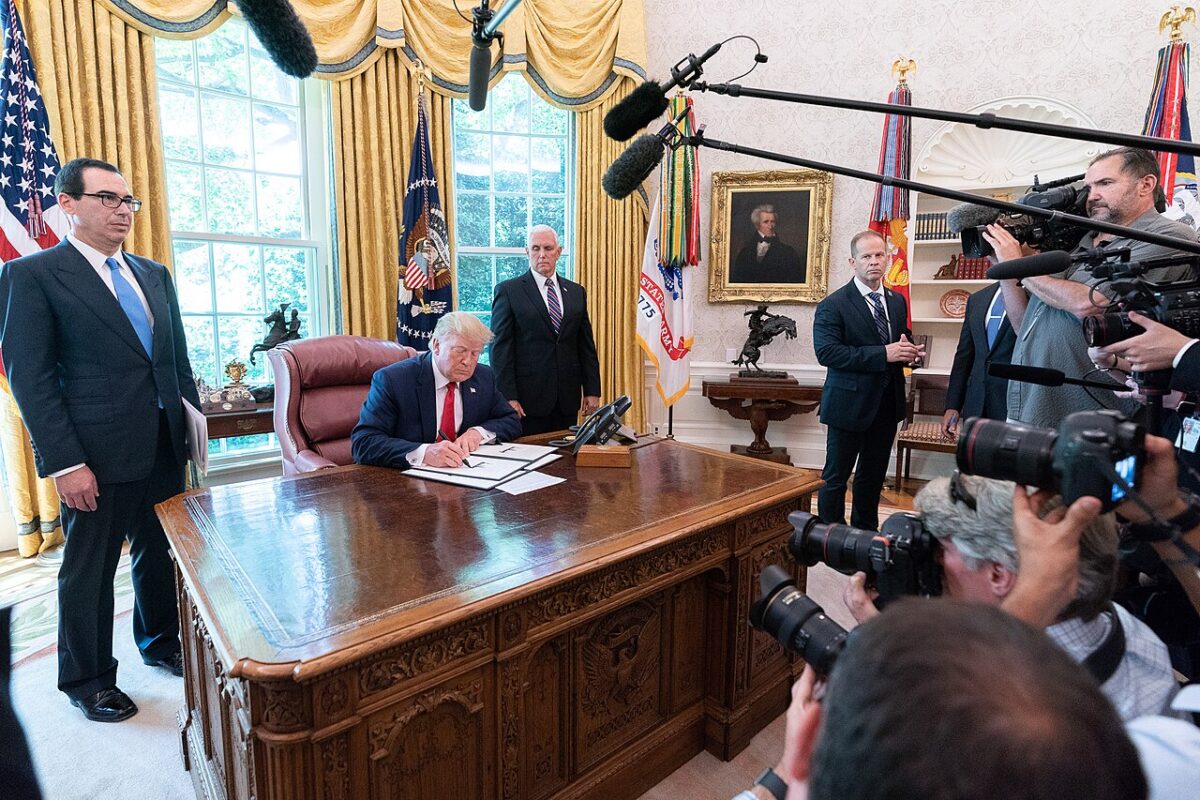
Signed on August 10, 2026, the order establishes what the administration calls its “Gold Standard Childhood Vaccine Recommendations.” The White House says the new framework is designed to increase parental choice and bring U.S. recommendations closer to practices in other developed nations.
The changes are significant. The administration says its framework recommends routine immunization against 11 diseases for all children, compared with 18 diseases covered by the federal recommendations referenced by the White House from 2024. Other immunizations would move into categories focused on higher-risk children or decisions made individually between doctors and families.
But one provision is attracting particular attention: Trump wants the familiar combination measles, mumps and rubella vaccine, known as MMR, separated into three individual vaccines once such products become available in the United States. The order also calls for childhood vaccines to be given at separate medical visits “to the maximum extent feasible.”
That combination of policy changes has turned a technical adjustment into a broader debate over public health, parental choice, and state authority.
The federal vaccine schedule is being reshaped.
Under the new framework, vaccines protecting against measles, mumps, rubella, diphtheria, tetanus, pertussis, polio, Haemophilus influenzae type B, pneumococcal disease, HPV and chickenpox remain recommended for all children.
A second group includes immunizations recommended for certain high-risk populations. That category covers hepatitis A and B, meningococcal vaccines, dengue protection and monoclonal antibodies against respiratory syncytial virus, or RSV.
A third category relies on what the order calls shared clinical decision-making, meaning parents and healthcare professionals would make individualized decisions. It includes influenza, COVID-19, rotavirus and some hepatitis and meningococcal immunizations.
The administration argues that such distinctions will give parents more control without eliminating access to vaccines.
The White House has also emphasized an HHS assessment comparing American vaccine recommendations with those of peer countries. That assessment concluded that the United States recommends vaccinations against more childhood diseases than comparable developed nations and argued for focusing universal recommendations on vaccines with broader international agreement.
Critics, however, are likely to focus less on the number of vaccines listed and more on the broader shift from a strong universal recommendation to an individual choice.
MMR has become the order’s biggest flashpoint
Few parts of Trump’s order are likely to attract more scrutiny than the proposed separation of the MMR vaccine.
For decades, American children have routinely received protection against measles, mumps and rubella through a combination vaccine. CDC guidance has recommended two MMR doses for children, with the first typically given between 12 and 15 months and the second between ages 4 and 6.
Trump’s order takes a different direction. It says measles, mumps and rubella should eventually be administered as three separate single-disease vaccines.
There is an immediate complication: separate single-antigen versions needed to fully implement that policy are not currently available in the United States. The executive order acknowledges this by making the change dependent on those products becoming domestically available.
HHS now has 90 days to present plans that include ways to make individual versions of core vaccines available, beginning with MMR. The department can work with private companies and foreign countries while maintaining access to existing combination vaccines.
That means the order does not instantly break apart MMR shots in pediatric offices. Instead, it points federal policy toward making that option possible.
More vaccine visits could create an unexpected challenge.
Separating vaccines may sound like a straightforward way to increase parental choice, but it could significantly change the practical experience of childhood immunization and the policy debate around it.n.
Combination vaccines allow doctors to protect children against several diseases during fewer appointments. Giving vaccines individually during separate visits could require families to return more frequently.
Supporters of Trump’s approach may see that as worthwhile if parents feel more comfortable controlling the timing of individual vaccines. Public health specialists see another possibility.
More appointments create more opportunities for schedules to be interrupted. Families may face transportation problems, work conflicts, childcare demands or simple difficulty returning repeatedly to a doctor’s office.
The Associated Press reported that health experts have warned wider gaps between vaccinations could leave children vulnerable to preventable diseases for longer periods.
That concern makes the question more complicated than whether parents should have greater flexibility. The eventual effect could depend on whether flexibility encourages hesitant families to vaccinate or makes completing vaccination schedules harder.
A measles surge gives the debate immediate stakes.
The timing could hardly be more sensitive. As of August 6, 2026, the United States had recorded 2,465 confirmed measles cases this year, according to CDC data. Thirty-eight outbreaks had been reported, and 94 percent of confirmed cases were associated with outbreaks.
The numbers are particularly striking because measles was declared eliminated in the United States in 2000, meaning continuous domestic transmission had been stopped. Vaccination coverage has also slipped.
MMR coverage among American kindergarten students fell from 95.2 percent in the 2019-2020 school year to 92.5 percent in 2024-2025, according to the CDC. The agency estimates that roughly 286,000 kindergarteners were at risk during the 2024-2025 school year.
The CDC says two MMR doses are about 97 percent effective at preventing measles, while one dose is about 93 percent effective.
Those figures ensure that Trump’s decision will not unfold as an abstract argument about government regulation. It comes while communities are dealing with one of the country’s largest recent waves of measles infection, making the policy stakes immediate.s.
The autism controversy still hangs over the discussion.
The administration’s vaccine overhaul also arrives against the backdrop of Trump and Health and Human Services Secretary Robert F. Kennedy Jr.’s broader interest in possible explanations for rising autism diagnoses.
The subject requires a critical distinction between calls for additional research and established scientific evidence.
The World Health Organization’s Global Advisory Committee on Vaccine Safety reviewed evidence from 31 primary studies published between January 2010 and August 2025 and concluded that the available evidence does not establish a causal connection between vaccines and autism spectrum disorder.
Its review also examined concerns involving vaccine ingredients including thiomersal and aluminum-containing adjuvants. The committee reaffirmed its earlier conclusion that the strongest available evidence does not show vaccines cause autism.
Trump’s order nevertheless instructs HHS to pursue additional vaccine research. The department is directed to study vaccine timing and sequencing, explore alternatives to aluminum-based adjuvants, continually review vaccine risk-benefit profiles, and strengthen safety monitoring.
That creates one of the central tensions surrounding the policy: the administration describes expanded investigation as necessary to restore public confidence, while public health organizations worry that repeatedly reopening questions already studied extensively can itself weaken confidence.
States now face their own decision.

The executive order does not simply erase state vaccination laws. States have traditionally established immunization requirements for children attending schools. Trump’s order instead advises states and territories to review their requirements and consider bringing them into line with the administration’s new recommendations.
The order goes further by directing the attorney general to support appropriate legal challenges involving state rules that may conflict with federal constitutional or statutory protections involving parental authority, religious freedom, disability accommodations or equal protection.
That could shift part of the vaccine battle from doctors’ offices into legislatures and courtrooms. Some states may preserve their existing requirements. Others could adopt parts of Trump’s framework. Legal challenges could determine how far Washington can push states toward broader exemptions or revised school policies.
The result could eventually produce greater variation in vaccine rules depending on where a family lives.
What happens next could matter more than the signing ceremony.
The executive order begins a process rather than ending one. HHS now faces a 90-day deadline to provide Trump with plans covering single-disease vaccine options, vaccine timing, adjuvant research, safety monitoring and continued evaluation of childhood immunizations.
Drug manufacturers would also have to determine whether producing separate measles, mumps and rubella vaccines makes commercial and regulatory sense. States will have to decide whether to reconsider school requirements. Pediatricians will have to explain changing recommendations to families already navigating a deeply polarized debate.
And parents will ultimately face the most personal question of all: what should they do when federal policy, political messaging and medical guidance do not always appear to be moving in the same direction?
Trump has framed his order as a way to restore choice, flexibility and trust to childhood vaccination. Critics fear that changing long-established recommendations during a measles resurgence could instead produce more uncertainty.
That is why this executive order reaches beyond the number of shots on a childhood vaccination chart. It opens a new chapter in the national argument over who should shape vaccine policy, how much flexibility families should have, and how America balances individual choice with protection against diseases that once seemed firmly under control.
This version is ready to publish and keeps the headline’s policy-and-health-debate angle rather than turning the piece primarily into an autism story.