Trump Targets Canada’s Powerful Dairy Supply Management System as New U.S.-Canada Trade Tensions Emerge.
Canada’s tightly protected dairy market has survived decades of international pressure, repeated trade disputes and criticism from economists who say it limits competition. It is now facing one of its most serious challenges yet as President Donald Trump places the country’s dairy supply management system at the center of a rapidly escalating trade conflict.
Trump has announced an additional 50% tariff on nearly $20 billion worth of Canadian imports, accusing Canada of discriminating against American products in the dairy, automotive and alcohol sectors. The tariffs are scheduled to take effect on August 19, 2026, unless Washington and Ottawa reach an agreement before the deadline, raising the risk of broader economic fallout.
Although the planned duties cover products ranging from dairy ingredients and cement to clothing, furniture and hockey equipment, Canada’s dairy policies have emerged as one of the most politically sensitive points of disagreement.
The United States says American farmers are being denied fair access to Canadian consumers. Canada argues that its system protects family farms, stabilizes food production and gives consumers access to dependable supplies of domestically produced milk, butter, cheese and yogurt.
This is no longer a routine disagreement over agricultural policy. Instead, it has become a test of whether Canada will defend one of its most powerful domestic institutions even when doing so risks deepening a trade battle with its largest economic partner.
Why Canada Controls Its Dairy Market
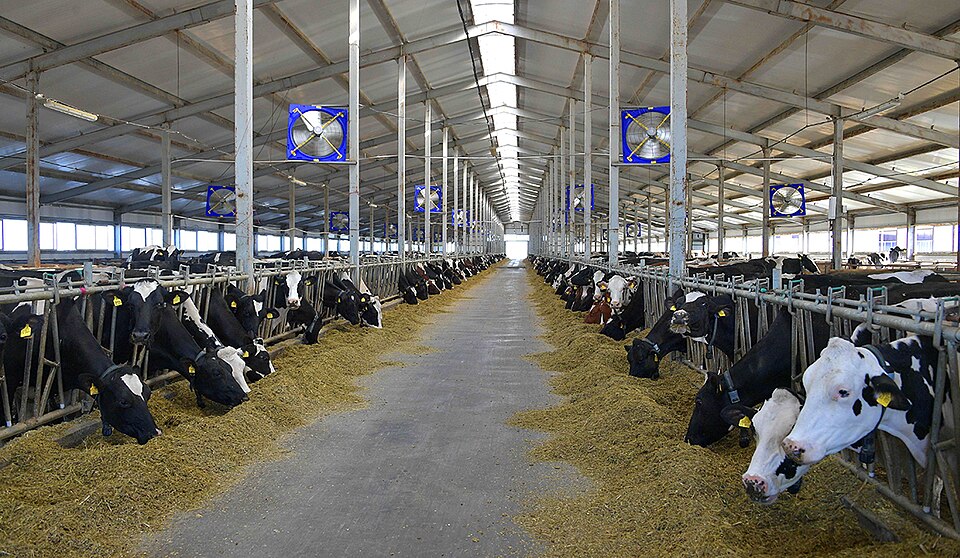
Canada’s dairy sector operates under a system known as supply management. The policy rests on three main pillars: production controls, regulated farm prices and restrictions on imports.
Farmers must hold quotas that determine how much milk they are allowed to produce. Prices are set through a regulated process intended to cover production costs and provide farmers with stable incomes. Foreign products can enter the country through tariff-rate quotas, but imports above those permitted quantities may face extremely high duties.
The purpose is to prevent farmers from producing more milk than the domestic market needs. Supporters say that matching production with demand reduces waste, limits price crashes and protects farmers from the severe market swings often experienced in less regulated agricultural systems.
Canada applies similar supply management policies to eggs and poultry. However, dairy has become the most visible and politically influential part of the system.
The industry is economically significant. Canadian government figures show that the country had 9,048 dairy farms in 2025, generating approximately C$9.15 billion in net farm cash receipts. Canada also had 519 dairy-processing plants, with manufacturing shipments worth nearly C$19.76 billion.
Those figures help explain why Canadian politicians are reluctant to make major concessions. Supply management is not simply an agricultural regulation; it supports farms, processors, transport companies and rural communities, particularly in Quebec and Ontario.
Washington Says the Rules Favor Europe

The latest U.S. complaint is more specific than Trump’s familiar criticism of Canada’s high dairy tariffs.
The White House argues that Canada gives some European cheese producers better access to its market than American suppliers. Canada maintains separate tariff-rate quotas under its trade agreements with the United States and Mexico and with the European Union.
Under the Canada-European Union Comprehensive Economic and Trade Agreement, certain Canadian retailers are eligible to receive cheese import allocations. Washington says similar retailers do not receive the same eligibility under the United States-Mexico-Canada Agreement.
The Trump administration calls that difference discriminatory. It says Canada is giving dairy products from the European Union an advantage over materially similar products from the United States, despite having trade agreements with both markets.
U.S. Trade Representative Jamieson Greer said the tariffs were intended to hold Canada accountable for what Washington sees as unequal treatment of American exporters. The administration has also criticized Canadian restrictions on U.S. alcohol and automobiles.
For American dairy farmers, the Canadian market is especially attractive. The United States produces large quantities of milk, and farmers regularly search for export markets capable of absorbing cheese, powdered milk, whey, butter and other products.
Canada, with a population of about 40 million and a shared border with the United States, represents an obvious opportunity. However, the supply management system prevents American producers from simply flooding the Canadian market with lower-priced products.
High Tariffs Tell Only Part of the Story
Trump has repeatedly highlighted Canada’s dairy tariffs, some of which can reach between 200% and 300%. Those numbers sound dramatic, but they mainly apply to products imported above negotiated quota levels.
Specified quantities of U.S. dairy products can enter Canada at lower tariff rates under the USMCA. Once those quotas are filled, the higher tariffs begin to apply.
Canada therefore rejects the suggestion that American dairy products are completely blocked. The United States remains one of Canada’s leading dairy suppliers, alongside the Netherlands, New Zealand and the United Kingdom.
Canadian government data shows the country imported approximately C$1.93 billion worth of dairy products in 2025. Its dairy exports, by comparison, were valued at about C$560 million, meaning Canada imported considerably more dairy than it exported.
Supporters of supply management use those figures to argue that Canada already provides meaningful foreign access. American officials respond that the issue is not merely whether U.S. products enter the country, but whether Canada administers the quotas fairly, making market access and quota rules the core of the dispute.
The disagreement has survived multiple administrations. Former President Joe Biden’s government also challenged Canada’s handling of dairy quotas under the USMCA. A trade panel ruled in favor of the United States in one dispute, but Canada later prevailed in another case involving revised quota policies.
That history shows the conflict is larger than Trump’s personal trade agenda. It also suggests that American dairy groups have opposed Canada’s policies for years and are likely to continue pushing for greater access under any U.S. administration.
Canada’s Dairy Lobby Has Political Muscle

Any Canadian government considering changes to supply management must confront a powerful and highly organized industry.
Dairy farmers have built strong relationships across Canada’s major political parties. Their influence is especially important in Quebec, the country’s largest dairy-producing province, where rural seats can matter during federal and provincial elections.
Quebec officials have already described supply management as non-negotiable. Canada’s federal government has also repeatedly promised to protect the system during international trade negotiations.
Dairy farmers have a history of turning political concern into visible action. Past disputes have brought tractors, banners and even cattle to Parliament Hill as producers warned lawmakers against sacrificing their livelihoods to secure broader trade agreements.
The industry’s argument is straightforward. Farmers invest heavily in land, equipment, barns, animals and production quotas. As a result, eliminating or weakening supply management could reduce the value of those investments and expose smaller farms to direct competition from much larger American operations.
Removing the system would also create a difficult compensation question. Canadian farmers have paid substantial amounts for production quotas. If the government suddenly made those quotas worthless, Ottawa could face demands for a multibillion-dollar compensation package, adding a major financial stake to the political risk.
Critics Say Consumers Pay More
Supply management remains politically popular, but critics argue that its stability comes at a cost.
By limiting production and restricting competition, the system can keep dairy prices higher than they might be in a fully open market. Critics say this places an unfair burden on families, particularly lower-income households spending a larger portion of their earnings on food.
They also argue that quotas make it expensive for new farmers to enter the dairy industry. A person may have the land, skills and equipment needed to produce milk but still require costly quota rights before legally expanding production.
Supporters counter that comparing Canadian and American supermarket prices can be misleading. U.S. farmers operate within a different system that includes government subsidies, emergency assistance and insurance programs.
Canadian farmers say consumers ultimately pay for agricultural support in every system, either through grocery prices or through taxes. They also argue that stable production protects the public from sudden shortages and dramatic price fluctuations.
The debate therefore extends beyond trade. More broadly, it raises a fundamental question about whether Canadians prefer a controlled market that supports domestic farmers or a more open system that might lower some prices while exposing producers to greater instability.
The USMCA Review Raises the Stakes
The timing of Trump’s move makes the dairy confrontation even more consequential.
The United States, Canada and Mexico recently conducted the first formal review of the USMCA, the trade agreement that replaced the North American Free Trade Agreement in 2020. In response, Trump’s administration declined to automatically extend the agreement for another 16 years, leaving the three countries facing continuing reviews and negotiations.
Washington has begun pursuing separate discussions with Canada and Mexico, creating concern that the trilateral partnership could become increasingly fragmented. Mexico has moved more quickly on some U.S. demands, potentially leaving Canada under greater pressure to offer concessions.
Canadian Prime Minister Mark Carney has promised to intensify discussions with Trump while warning that Canada will consider its options if the tariffs take effect. Provincial leaders have also demanded a firm response, although they disagree on how aggressively Canada should retaliate.
The danger for Ottawa is that defending dairy could expose unrelated Canadian industries to punishing tariffs. Manufacturers, retailers and workers producing goods covered by the new 50% duties could suffer losses because of a dispute they had no role in creating.
However, surrendering on supply management could produce an equally damaging domestic backlash.
A Trade Fight About More Than Milk

Trump sees Canada’s dairy system as a trade barrier that disadvantages American farmers. Many Canadians see the same system as a defense against foreign domination of the country’s food supply.
Both countries have powerful agricultural interests demanding protection, which makes compromise difficult. American farmers want more customers. Canadian farmers want to avoid being overwhelmed by the scale and pricing power of U.S. production.
The approaching August 19 tariff deadline gives negotiators little room for delay. Any settlement may require changes to how Canada distributes dairy import quotas rather than the complete dismantling of supply management.
Even a technical adjustment, however, could provoke resistance if Canadian farmers believe it creates a path toward gradually weakening the entire system.
Canada’s dairy market has endured challenges from the United States, Europe, Britain and international economic organizations. Trump’s latest tariff threat may be its toughest test because it connects the dairy dispute to a much broader confrontation involving billions of dollars in trade.
The fight may appear to be about cheese quotas, milk production and import licenses. Beneath the surface, it is about political power, national food policy and how far two deeply connected neighbors are willing to go to protect their own industries.