Trump Warns Iran: Make a Deal or Face ‘Total Surrender’ in Hormuz Showdown
President Donald Trump has delivered one of his bluntest warnings yet to Iran, accusing the country’s leaders of playing a double game while negotiations over the Strait of Hormuz remain clouded by contradictory claims.
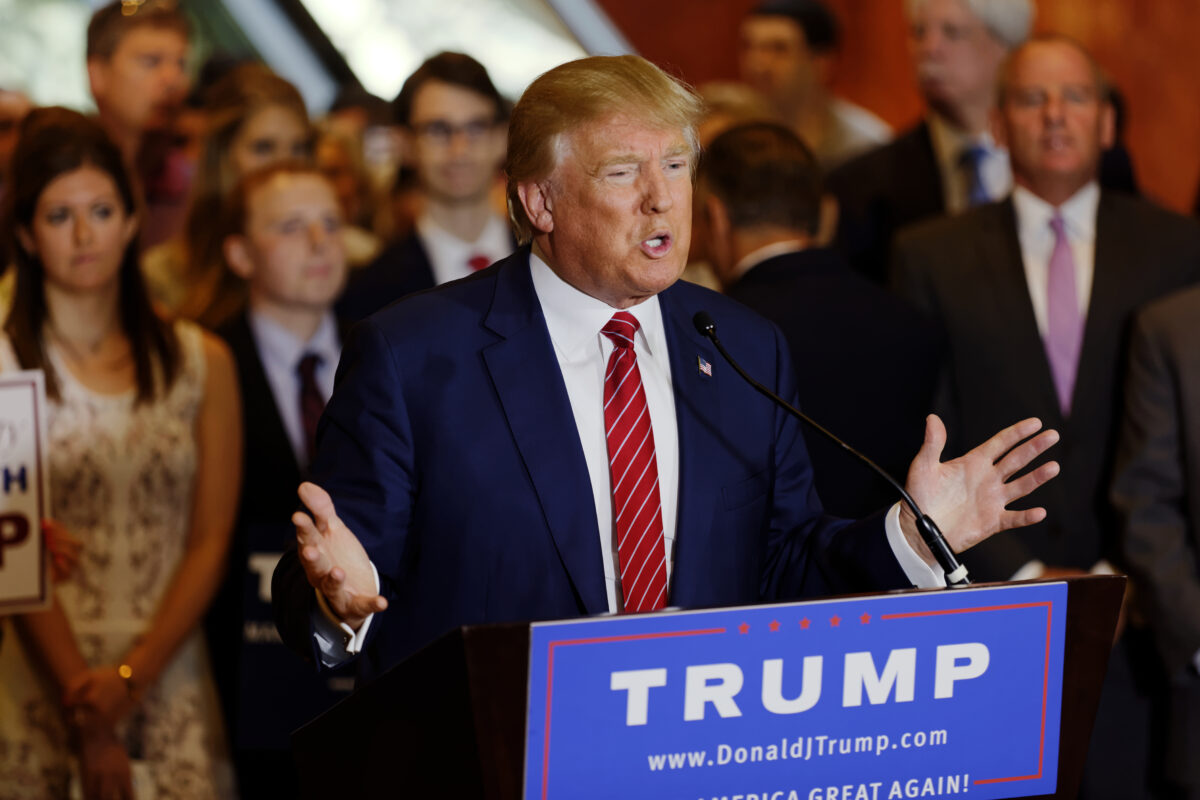
In a social media statement, Trump called the Iranian leadership “unbelievably duplicitous,” alleging that Tehran requested discussions and then publicly denied that talks were taking place. He declared that nothing would be allowed to reach Iran unless its government accepted a deal or what he called “Total Surrender.”
The language was unmistakably confrontational. Behind those words, however, sits a complicated struggle involving military pressure, indirect diplomacy, global energy supplies and one of the world’s most important shipping lanes.
Trump Says the United States Controls Access
Trump said the U.S. Navy had established complete control over access to Iran through the Strait of Hormuz, describing the blockade as a maritime “Wall of Steel.” His administration maintains that American forces can prevent vessels from reaching Iranian ports while allowing ships headed to other countries to pass through the waterway.
That claim reflects an active military operation, not merely political rhetoric. U.S. Central Command announced in April that American forces would blockade maritime traffic entering or leaving Iranian ports. CENTCOM said the operation would not interfere with vessels traveling through the strait to non-Iranian destinations.
The military later said American forces had redirected more than 100 ships and disabled several vessels accused of attempting to violate the blockade. One official announcement in June said six commercial vessels had been disabled and 122 had been redirected since enforcement began.
Trump is now using that naval pressure as negotiating leverage. His message to Tehran is that economic access, commercial shipping and relief from the blockade will depend on an agreement that satisfies Washington’s demands.
The president has also repeated his position that Iran must never obtain a nuclear weapon. The Hormuz dispute is therefore tied to a broader confrontation over Iran’s nuclear capabilities, its regional military activity and the future balance of power in the Persian Gulf.
Iran Denies Direct Negotiations

The immediate dispute is not only about what the two sides are discussing. It is also about whether they are discussing anything at all.
Trump has claimed that Iran requested negotiations and that additional meetings were being arranged. Iran’s Foreign Ministry has denied that direct or indirect talks with Washington are underway. Iranian officials have instead said their discussions are with Oman and focus on maritime routes and the movement of commercial vessels.
Oman has repeatedly served as an intermediary between Washington and Tehran, allowing messages to pass without formal face-to-face negotiations. That creates room for both governments to describe the same diplomatic process differently.
Trump can argue that negotiations are occurring through intermediaries. Iran can insist that it is not negotiating directly with the United States. The result is a fog of competing statements in which diplomacy may be taking place behind closed doors while both governments publicly accuse the other of deception.
Qatar has also said that a draft proposal aimed at restarting U.S.-Iran talks is circulating among mediators. However, no formal agreement has been announced, and the precise status of any negotiations remains uncertain.
Why the Strait of Hormuz Matters
The Strait of Hormuz connects the Persian Gulf with the Gulf of Oman and the Arabian Sea. Its importance to the world economy is difficult to overstate.
About 20 million barrels of oil moved through the strait each day in 2024, equal to roughly one-fifth of global petroleum liquids consumption. Around 20% of worldwide liquefied natural gas trade also passed through the route, much of it originating in Qatar.
Any prolonged disruption can affect fuel prices, shipping insurance, supply chains and national economies far beyond the Middle East. Asian countries are especially exposed because large volumes of Persian Gulf oil travel toward China, India, Japan and South Korea.
The current standoff has forced commercial operators to weigh the dangers of entering the region. Shipping data released this week showed only a small number of vessels passing through Hormuz, while some tankers changed their routes because of security concerns. Ships traveling with their tracking systems switched off may not appear in those figures, making the full level of traffic difficult to measure.
Even when vessels continue moving, the threat of mines, attacks, interception or sudden military escalation can increase insurance premiums and transportation costs.
Diplomacy Under the Shadow of Force
Trump’s ultimatum appears designed to leave Iran with two choices: accept an agreement under intense pressure or face deeper isolation and possible military action.
His administration describes the strategy as peace through strength. Critics argue that demands presented publicly as surrender could make compromise politically dangerous for Tehran and increase the possibility of miscalculation.
Iran, meanwhile, has reasons to keep diplomatic channels open without appearing to submit. Its leaders must weigh economic damage and military pressure against the domestic cost of accepting terms portrayed as capitulation.
The United Nations has repeatedly called for full freedom of navigation in the Strait of Hormuz. It has also warned that renewed large-scale hostilities could have grave consequences for the region, international security and the global economy.
For now, Trump’s warning has raised the stakes without resolving the central contradiction. Washington says discussions are advancing. Tehran says no negotiations with the United States are taking place. American forces are enforcing a blockade, yet normal commercial traffic has not returned.
The next move may reveal whether the harsh rhetoric is preparation for an agreement or the opening signal of another escalation.
Until then, the Strait of Hormuz remains more than a narrow channel on a map. It is the pressure point where military power, national pride, economic survival and the world’s energy security are colliding.