Trump Warns Iran of Devastating Response as High-Stakes Hormuz Talks Begin in Oman
President Donald Trump has warned Iran that the United States is ready to launch a devastating military response if Tehran attempts to assassinate him, even as American and Iranian officials pursue talks aimed at preventing another round of fighting.
The warning came as Iranian Foreign Minister Abbas Araghchi arrived in Muscat, Oman, on Saturday, July 11, for discussions centered on commercial shipping through the Strait of Hormuz. The narrow waterway has become one of the most dangerous pressure points in the months-long conflict.
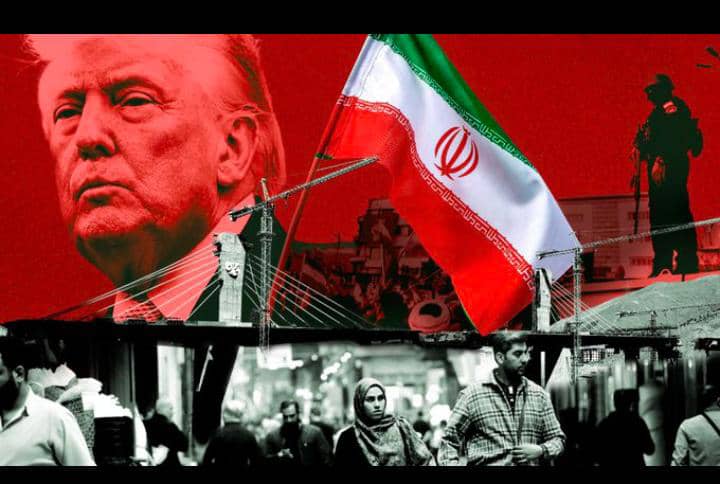
American officials want Iran to publicly promise that it will stop attacking commercial vessels and allow ships to pass through every channel of the strait without paying tolls. The Trump administration reportedly gave Tehran until Saturday to make that commitment.
The negotiations have taken on new urgency after three Saudi and Qatari commercial tankers came under fire earlier in the week. The United States responded with strikes inside Iran, while Tehran retaliated by targeting American military installations in Gulf countries.
No new attacks were reported Friday or early Saturday, offering diplomats a small opening to contain the crisis.
Trump Says U.S. Missiles Are “Locked and Loaded”
Trump delivered his strongest warning Friday night after reports emerged that Iran may have developed a plan to assassinate him.
“1000 Missiles are Locked and Loaded and aimed at the Islamic Republic of Iran,” Trump wrote on Truth Social.
He said thousands more would follow if the Iranian government assassinated or attempted to assassinate the sitting American president. Trump added that the response would “completely decimate and destroy” Iran.
The president said he had already instructed the U.S. military to prepare for that possibility. Iran had not publicly responded to his latest warning as of Saturday morning.
Trump’s statement followed a threat from Iran’s new supreme leader, Ayatollah Mojtaba Khamenei, who vowed to avenge his father’s death. Ayatollah Ali Khamenei was killed on February 28 during joint American and Israeli airstrikes on his compound in Tehran.
“We pledge to avenge your pure blood and the blood of all the martyrs of these two recent wars,” Mojtaba Khamenei wrote in a social media statement.
He said those responsible would not be allowed to die peacefully, sharpening fears that Iran could pursue retaliatory attacks beyond the conventional battlefield.
Trump’s warning shows how quickly the confrontation has expanded beyond arguments over Iran’s nuclear program and control of the Strait of Hormuz. Personal threats against national leaders have added another dangerous element to an already unpredictable conflict.
Washington Demands Safe, Toll-Free Passage Through Hormuz
The immediate diplomatic battle concerns the Strait of Hormuz, where roughly one-fifth of the world’s oil supply passed before the war.
Washington wants Iran to publicly acknowledge that all shipping lanes are open, promise to stop firing on commercial vessels, and abandon any attempt to collect tolls from ships using the waterway.
“What we’re demanding is that the Iranians issue a public statement that acknowledges all channels of the Strait of Hormuz are open and they’re not shooting at ships anymore,” one senior U.S. official said.
The official warned that failing to produce such a statement would lead to a negative outcome for Tehran.
Iranian officials have privately told Washington that the recent attacks on ships came from an “errant part of their system.” American officials believe the explanation may reflect a power struggle between Iranian hardliners and officials who want to preserve negotiations.
Iran has not publicly accepted responsibility for the attacks. Araghchi has instead accused Washington of violating the ceasefire, writing that there could be “only mutual compliance.”
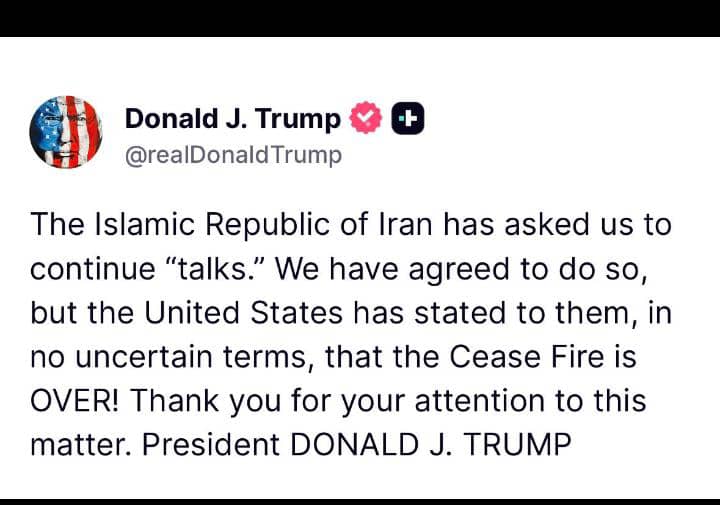
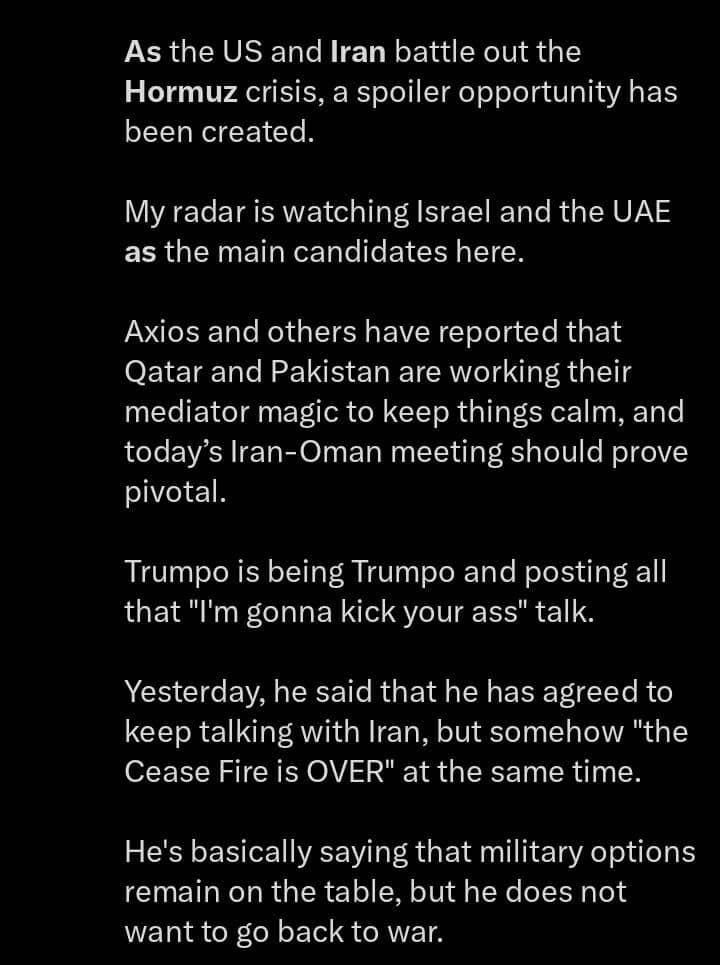
Trump confirmed that the United States had agreed to continue talking with Iran, but he made clear that the truce reached in June no longer stands.
“The Islamic Republic of Iran has asked us to continue ‘talks.’ We have agreed to do so,” Trump wrote. He then added that the United States had told Tehran “in no uncertain terms” that the ceasefire was over.
Vice President JD Vance, Secretary of State Marco Rubio, special envoy Steve Witkoff, and Jared Kushner were expected to form part of the American team engaging with Omani mediators. Qatar and Pakistan have also participated in efforts to stop the fighting.
However, uncertainty continues to surround the discussions. Iranian media cited a source claiming that direct negotiations would not occur unless the United States changed its position. That leaves open the possibility that Omani officials will carry messages between the two sides rather than bring them into the same room.
Rising Oil Prices Add Pressure for a Deal
The military consequences of another escalation would be severe, but the economic danger is already reaching consumers far from the Gulf.
Oil prices recorded their largest weekly increase in eight weeks after the latest attacks disrupted hopes that the June agreement would stabilize the region. Any prolonged threat to tanker traffic could drive crude prices higher, raising gasoline, transportation, and manufacturing costs.
The Strait of Hormuz is difficult to replace because it connects major Gulf energy producers with international markets. Disruptions can affect fuel supplies in Asia, Europe, and the United States, even when American oil production remains strong.
That gives both Washington and Tehran powerful reasons to keep talking. Trump faces political pressure to prevent another surge in energy prices before the November congressional elections, while Iran is confronting American military strikes and renewed limits on its oil sales.
The dispute is also about more than shipping. Washington continues to demand that Tehran surrender more than 900 pounds of highly enriched uranium. American officials have said no broader agreement will be possible unless Iran hands over the material.
For now, Oman’s mediation offers the clearest route away from another major exchange of attacks. Yet the public threats from Trump and Mojtaba Khamenei show just how fragile that route has become.
A written Iranian guarantee covering commercial shipping could calm oil markets and give negotiators room to address the nuclear dispute. A refusal, another tanker attack, or an attempted strike against an American leader could push the conflict into a far more destructive phase.