Trump’s Poll Collapse Is Turning Pressure Into Political Combustion
Donald Trump’s numbers are not just falling. They are starting to tell a much darker story about the mood inside his second-term White House. Every president hits rough patches. Polls sag. Headlines turn cold. Allies get nervous. Opponents smell blood. But Trump has always reacted differently when political pressure closes in. He does not usually soften his tone, widen his circle, or calm the room. He fights harder. He swings wider. He turns every setback into proof that someone is trying to stop him. That is what makes this moment so combustible.
Reuters reported in late June that Trump’s approval had fallen to 34%, tying the lowest point of his second term, with many Americans doubting whether the truce with Iran would last and only a small share saying the country was stronger after the war. AP-NORC has also shown Trump struggling badly on the economy, with only about a third of Americans approving of his overall job performance, and similarly weak approval for his handling of Iran and foreign policy. Those numbers would be dangerous for any president heading toward a midterm season. For Trump, there may be something more explosive: a trigger.
Here are some ways Trump’s collapsing approval ratings, the Iran crisis, the housing bill standoff, the SAVE Act fight, economic anxiety, Supreme Court victories, and midterm pressure are feeding a presidency that looks increasingly volatile.
The “New Disciplined Trump” Story Is Falling Apart

For a while, some Republicans wanted Americans to believe this was a different Trump. This version, they said, was sharper. More organized. More focused. Less chaotic. His 2024 campaign had tighter control. His second-term team looked more loyal and better prepared. His supporters argued that he had learned from the mistakes of his first presidency. That argument is getting harder to sell.
Salon columnist Heather Digby Parton recently argued that Trump has not learned the biggest lesson from his first term and is now behaving “as erratically as ever” under pressure from historically weak approval ratings. That critique lands because it matches what many Americans can see in real time.
The old Trump pattern is back in full view. A crisis emerges. Bad headlines follow. Polls sink. Trump lashes out. A normal policy fight becomes a loyalty test. A legislative opportunity turns into a public power struggle. The country is left wondering whether the president is making a calculated move or simply reacting to the heat. That uncertainty is the real danger.
Iran Has Become the Crisis Trump Cannot Easily Escape.
The Iran conflict has cut into Trump’s strongest political brand: control. Trump has long sold himself as the leader who could project strength without stumbling into endless war. But Iran has complicated that image. Reuters found that few Americans believed the Iran war was worth it, while Trump’s approval dropped back to a second-term low. This is where the political trap tightens.
If Trump escalates, he risks looking reckless. If he pulls back, he risks looking weak to his own base. If he talks peace while threatening more force, he risks looking unstable. That is a hard corner for any president. It is an even harder corner for a president who treats doubt as disrespect. The public does not appear convinced. AP-NORC found that only 34% of Americans approved of Trump’s handling of Iran in June, with his overall approval also sitting at 37%.
That is not just a foreign policy problem. It bleeds into everything else. War anxiety raises economic anxiety. Gas prices become political. Military decisions become kitchen-table conversations. Families who do not follow every Washington fight still feel the weight when uncertainty touches fuel costs, travel, military service, and the broader economy.
Trump wanted to appear to be the man in command. Iran has made him look like a president trying to force a story he no longer fully controls.
The Housing Bill Fight Shows Trump’s Worst Political Habit

The housing fight may be the clearest example of how Trump can turn a political gift into a self-inflicted wound. Congress passed a major bipartisan housing affordability bill at a time when millions of Americans are furious about rent, mortgage costs, and the dream of homeownership slipping out of reach. The bill had support across party lines and was headed to Trump’s desk.
For any president with weak economic numbers, this should have been an easy win. Hold the ceremony. Sign the bill. Praise Republicans. Take credit. Tell voters help is coming. Move on. Instead, Trump reportedly downplayed the legislation as “a big yawn” and pressed for the SAVE America Act, a controversial voting measure, before committing himself fully to the housing bill. Reuters reported that the housing bill had been delayed after Trump canceled a signing ceremony and demanded action on the SAVE America Act first. That moment matters because it showed voters something bigger than one bill.
Housing is one of the most personal issues in America right now. People are not talking about affordability as an abstract policy topic. They are talking about rent due next week. They are talking about adult children stuck at home. They are talking about starter homes that no longer feel like starter homes. They are talking about wages that cannot keep up with the basic cost of living. Trump had a chance to stand in front of that pain and claim he was doing something about it. Instead, he made the story about election rules.
The SAVE Act Fight Turns Affordability Into a Power Struggle
The SAVE America Act has become one of the clearest signs of where Trump’s mind goes when he feels cornered. Supporters frame it as an election integrity measure. Critics see it as a voting restriction that could make registration harder for eligible Americans. Reuters reported that the proposal would require proof of citizenship for voter registration and create a national voter database.
That is why Trump’s housing-bill standoff landed so sharply. It was not just a fight over paperwork. It looked like the president was willing to put an affordability victory on hold in order to force a separate battle over election rules. That is the political combustion point.
When a president with low approval numbers starts treating voting rules as more urgent than housing costs, opponents will call it a warning sign. When the same president is heading toward a midterm election that could determine control of Congress, the fight becomes even more loaded. To Trump’s supporters, this may look like toughness. To critics, it looks like a president trying to reshape the battlefield before voters get their say.
Low Poll Numbers Do Not Restrain Trump. They Seem to Agitate Him.

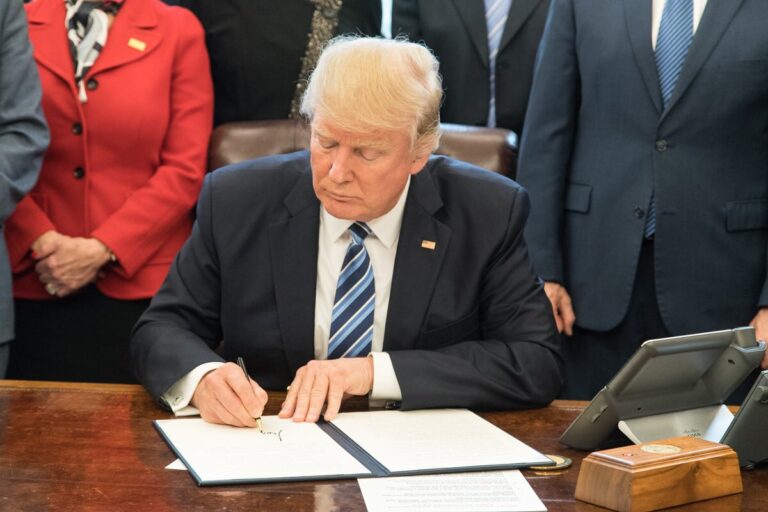
The White House from Washington, DC, Public domain, via pexels
Some politicians respond to weak numbers by moving toward the middle. They soften their language. They look for popular bills. They avoid unnecessary drama. They try to stop the bleeding.
Trump rarely works that way. When he feels threatened, he often grows more aggressive. He does not usually treat bad polls as a warning to change direction. He treats them as evidence that enemies are closing in. That is why his current approval slump matters so much. It is not only a measurement of public dissatisfaction. It may also be a preview of how he will behave as the 2026 midterms get closer.
The danger is not simply that Trump is unpopular. The danger is that unpopularity may push him toward the most volatile parts of his political personality. The grievance, the threats, the sudden reversals, the loyalty tests, and the public humiliation of allies, the willingness to turn routine government business into a personal showdown. This is not a quiet presidency losing altitude. It is a loud presidency shaking under pressure.
The Economy Is Still the Wound That Will Not Close
For all the noise around Iran, voting laws, court fights, and presidential drama, the economy remains Trump’s deepest vulnerability. AP-NORC reported in April that only 30% of Americans approved of Trump’s handling of the economy, down from 38% in March. The poll also found deep public pessimism about the country’s direction. That is brutal terrain for a president who promised relief.
Voters can tune out cable-news arguments. They can scroll past another Washington scandal. They can shrug at another social media outburst. But they cannot ignore grocery bills, rent hikes, insurance costs, credit card debt, or the fear that one emergency could wreck a family budget. That is why the housing bill episode was so damaging. It fed the impression that Trump is more consumed by political control than by the daily pressure hitting American households.
A president can survive a scandal if voters feel their lives are improving. It is much harder to survive scandal, chaos, and rising costs simultaneously.
The Midterms Are Turning Every Fight Into a Survival Test
The 2026 midterms are now the shadow over everything. If Republicans lose ground, Trump could face a more hostile Congress, tougher investigations, and a weakened second-term agenda. If Democrats gain momentum, they will almost certainly frame the election as a referendum on Trump’s chaos, the economy, Iran, voting rights, and executive power.
Trump knows this. Republicans know this. Democrats know this. That is why every fight now feels bigger than the issue on paper. The housing bill was not only about housing. It became a test of Trump’s priorities. The SAVE Act is not only about election rules. It has become a fight over the conditions of political power.
Iran is not only about foreign policy. It has become a measure of whether Trump’s promise of strength still holds. The polls are not only numbers. They are pressure gauges. And right now, those gauges are flashing red.