U.S. Homicide Rate Could Reach Historic Low as Murders Fall 18% Across Major Cities
The United States is moving toward what could become one of its most significant public safety milestones in more than a century. New crime figures show that homicides continued to fall sharply during the first half of 2026, extending a decline that began after the violent disruption of the COVID-19 pandemic.
Reported homicides dropped 18% across 30 major American cities between January and June compared with the same six-month period in 2025. That decrease represents approximately 215 fewer killings in the cities included in the analysis. Should the pattern continue through December, researchers believe the national homicide rate could fall below levels not seen since at least 1900.
We are not looking at a minor statistical adjustment or a single unusually peaceful month. Every month in the first half of 2026 produced a lower homicide rate than the corresponding month in 2025. Even June, which recorded the narrowest year-over-year difference, remained 9% below the level reported in June 2025.
The findings suggest that the United States has moved beyond simply recovering from the pandemic-era crime surge. Homicide rates in the study cities are now about 31% lower than they were during the first half of 2019, the last full year before the pandemic transformed daily life, strained public institutions and disrupted community support systems.
Homicides Have Fallen Far Below Their Recent Peak
The scale of the decline becomes clearer when we compare 2026 with the recent high point in urban violence. Across the cities studied, the average homicide rate during the first six months of 2026 was 51% lower than it was during the same period in 2022, when killings reached their highest level in the report’s nine-year analysis.
That means the homicide rate has been cut by more than half in only four years. Such a rapid reversal is especially striking because violent crime trends often change gradually. Homicide can fluctuate from year to year, but reductions of this size across numerous cities indicate a broad and sustained movement rather than an isolated local success.
The decline also builds on improvements already documented in national data. The FBI estimated that murder and non-negligent manslaughter fell 14.9% nationwide in 2024 compared with 2023, while overall violent crime dropped 4.5%. More than 16,000 law enforcement agencies covering approximately 95.6% of the U.S. population contributed data to that national report.
The newest figures indicate that the downward movement continued through 2025 and into 2026. The Council on Criminal Justice previously projected that the final 2025 homicide rate could become the lowest recorded since 1900. Its midyear 2026 analysis now suggests that the rate may fall even further once complete national statistics become available.
Most Cities Recorded Fewer Killings in 2026

The homicide decline was visible across much of the country. Twenty-one of the 30 cities with sufficient homicide data recorded fewer killings during the first half of 2026 than during the same period in 2025.
Lincoln, Nebraska, recorded the largest percentage reduction, with homicides falling 100%. Rochester, New York, reported a 76% decrease, while Little Rock, Arkansas, experienced a 61% drop. These changes show that the national pattern is not limited to the country’s largest coastal cities or to communities governed by one political party.
Longer-term comparisons reveal an even broader improvement. Twenty-six of the 30 cities recorded lower homicide rates in the first half of 2026 than in the first half of 2019. Only Austin, Minneapolis, Norfolk and Pittsburgh remained above their pre-pandemic levels. Austin had the largest increase from 2019, with its homicide rate standing 74% higher.
Those differences remind us that a national decline does not mean every neighborhood is experiencing the same level of progress. Crime remains intensely local. A city may show a large annual increase because of a relatively small change in the number of killings, particularly where the original total was low.
Norfolk, Virginia, recorded the largest year-over-year increase in the study, with homicides rising 64%. San Francisco also experienced a 55% increase. Roughly one-third of the cities in the sample recorded more homicides during the first half of 2026 than during the same period in 2025, even as the combined rate fell sharply.
We should therefore read the national numbers as evidence of a powerful overall improvement, not as proof that deadly violence has disappeared. Some communities continue to face serious problems that require local attention, targeted intervention and careful analysis.
Violent Crime Is Becoming Less Deadly
One of the most important findings goes beyond the number of homicides. The report also examined the lethality of serious violent crime, measuring the number of homicides for every 1,000 aggravated assaults and robberies.
Across the 17 cities with sufficient data, the average lethality rate fell 23% during the first half of 2026 compared with the same period in 2025. It was also 20% below the 2019 level and 45% lower than its recent peak in 2021.
This finding matters because aggravated assaults and robberies have not fallen as rapidly as homicide. The aggravated assault rate decreased only 2% between 2025 and 2026, while robbery fell 17%. Yet a substantially smaller share of serious violent incidents ended in death.
Several forces could influence that outcome. Changes in the kinds of weapons used, the circumstances surrounding violent encounters, emergency response times and advances in trauma treatment may all affect whether a victim survives. The available figures do not identify one proven explanation, but they show that serious violence is producing fewer deaths.
The monthly pattern strengthens that conclusion. Lethality rates were lower in every month from January through June 2026 than in the corresponding months of 2025. June produced the smallest difference, but the rate was still 4% lower than it had been one year earlier.
For families and communities, that statistical change carries an unmistakably human meaning. More victims are surviving violent encounters, fewer families are facing permanent loss, and fewer neighborhoods are being pulled into the trauma that follows a killing.
Robbery, Carjacking and Gun Assaults Also Declined
The improvement extended across several other forms of violent crime. Robbery fell 17% during the first half of 2026 compared with the same period in 2025. The rate was approximately 41% lower than it had been in 2019 and 44% below its nine-year peak in 2018.
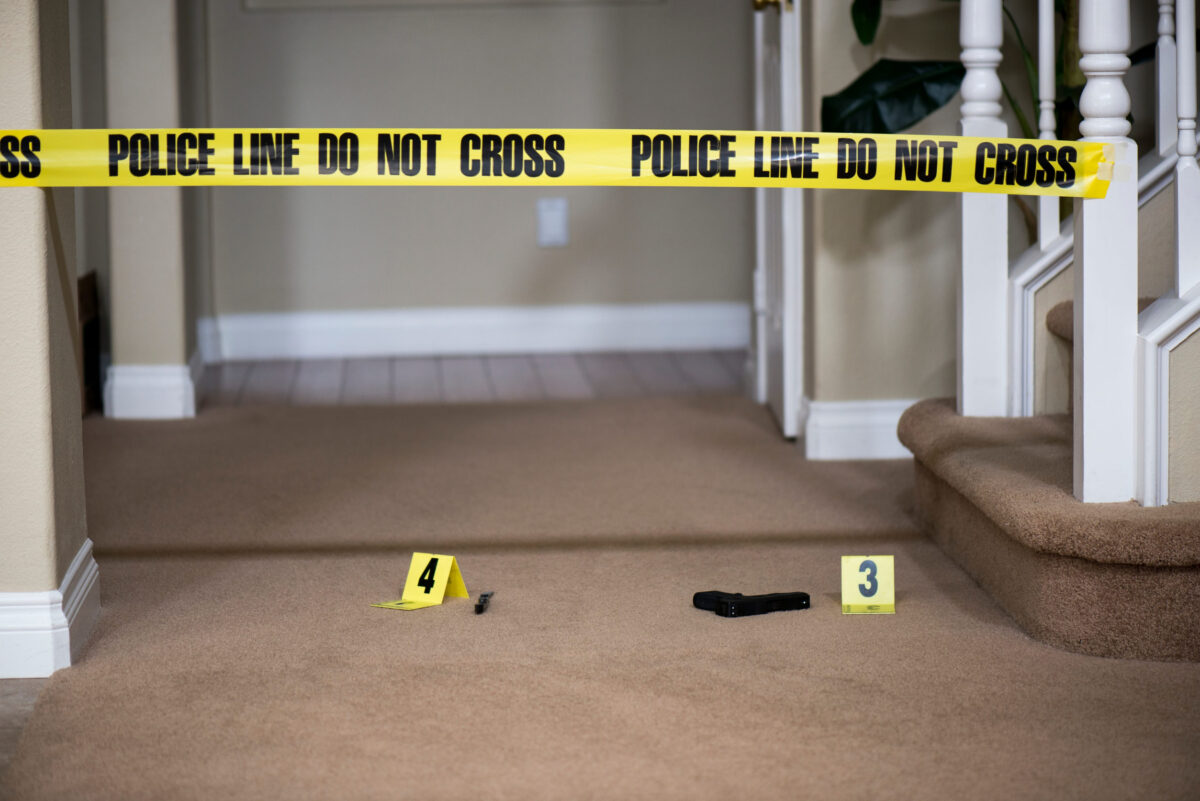
Carjacking recorded the largest decline among all 13 offenses examined. The average reported carjacking rate fell 47% year over year in the seven cities with available data. It was also 51% below the 2019 level and 73% below its recent peak in 2023.
Gun assaults decreased by 6% from 2025 and stood 17% below their pre-pandemic level. Compared with the 2022 peak, the rate of gun assaults was down 45%.
Aggravated assault produced a smaller improvement. The rate fell 2% from the first half of 2025 and was 3% below its 2019 level. The modest movement suggests that homicide may be responding to forces that are not fully visible in broader assault statistics.
The distinction is important. We cannot assume that every type of violence is falling at the same speed or for the same reasons. Homicide, robbery, gun assault and aggravated assault overlap, but each offense is shaped by different circumstances, victims, locations and reporting practices.
Property Crime Fell Across Most Major Categories

The crime decline was not limited to violence. Most major property offenses also moved downward during the first six months of 2026.
Motor vehicle theft fell 20% compared with the first half of 2025. Twenty-seven of the 32 cities reporting vehicle theft data recorded declines. Washington, D.C., experienced the largest decrease at 54%, followed by Colorado Springs, Colorado, at 50%.
The national improvement follows a dramatic rise in vehicle theft during the early 2020s. By the first half of 2026, the average rate was 51% below its 2023 peak. However, the rate remained only 3% below its 2019 level, showing that vehicle theft has not fallen as far below pre-pandemic conditions as homicide or residential burglary.
Residential burglary decreased 13% year over year and stood 50% below the level recorded in the first half of 2019. Compared with its nine-year peak in 2018, residential burglary had fallen 56%.
Nonresidential burglary declined 10% from 2025, while general larceny fell 6%. Larceny was also 21% below its 2019 rate.
Taken together, these figures suggest that several crimes that directly affect homes, vehicles and businesses are declining alongside homicide. Four categories have now fallen at least 50% from their recent peaks: homicide, carjacking, residential burglary and motor vehicle theft.
Shoplifting and Domestic Violence Moved Against the Trend
The findings were broadly positive, but they were not uniformly favorable. Four of the 13 crime categories increased during the first half of 2026.
Drug offenses rose 12%, making them the fastest-growing category in the analysis. Domestic violence incidents increased 8%, sexual assaults rose 3%, and shoplifting climbed 4%.
The longer-term figures offer essential context. Drug offenses remained 15% below their 2019 level. Domestic violence was 7% lower than in 2019, while sexual assault was 13% lower.
Shoplifting was the clearest exception to the wider improvement. The reported rate was 5% higher than in 2019, making 2026 the peak year for shoplifting during the nine years examined.
Even that result requires caution. Shoplifting statistics rely heavily on whether retailers report individual incidents to police. Reporting practices vary across businesses and cities, and the Council on Criminal Justice warns that official police figures almost certainly undercount the actual number of shoplifting incidents.
Domestic violence data also came from a relatively limited sample of eight cities. The rate was higher in every month except February, but differences in local definitions, reporting behavior, and police classification can complicate comparisons.
No Single Political Party Can Claim the Crime Decline
The falling homicide rate has become politically valuable during a competitive midterm election year. Republican and Democratic leaders have each pointed to policies favored by their party when explaining the improvement.
Yet the decline crosses political boundaries. Crime fell in cities with different mayors, prosecutors, policing models, housing markets, economic conditions and levels of federal involvement. That pattern makes it difficult to credit one administration, one law or one local strategy for the entire national shift.
Adam Gelb, president and CEO of the Council on Criminal Justice, emphasized that murder and other crimes are falling in places with widely different political leadership and public safety policies. The report itself does not attempt to prove that a particular intervention caused the decline. It documents changes using police data from a sample of large cities.
Researchers have suggested several possible influences, including changes in policing, improvements in crime-fighting technology and broader social or cultural shifts. Post-pandemic federal funding also helped local governments pay for teachers, social workers and programs serving young people at high risk of violence or victimization.
Reduced drug use and fewer transactions in illegal markets may have contributed as well, because disputes connected to those markets can produce violence. These explanations remain possibilities rather than a single proven national answer.
The most credible conclusion is that several developments may be working together. Local prevention programs, law enforcement strategies, economic changes, community investments and the fading disruption of the pandemic could all be influencing crime in different ways.
Preliminary Data Still Require Careful Interpretation
The midyear report provides a valuable early picture, but it is not the final national crime count for 2026. The analysis covers 36 large cities selected because they publish monthly crime data quickly and consistently. Individual offense categories contain different numbers of cities depending on data availability and local definitions.
The sample ranges from Rochester, New York, with approximately 200,000 residents, to New York City, with roughly 8.5 million. The average population of participating cities is about 986,000, meaning the findings focus primarily on large urban areas rather than small towns or rural communities.
Police departments may also revise their preliminary figures after investigations develop or cases are reclassified. Crime that victims do not report will not appear in police statistics, and differences in local recording systems can make some categories harder to compare.
Final national estimates will depend on the FBI’s broader reporting system. Until those figures are released, we should describe the 2026 result as a strong projection rather than a completed historical record.
The Historic Homicide Decline Represents Lives Saved
Statistics can make crime feel abstract, but the central figure in this report is not merely an 18% decline. It is 215 fewer homicides across 30 cities in six months.
Each avoided killing represents a person who remained alive, a family spared devastating grief, and a community protected from the fear and instability that follow deadly violence. That is why the current trend deserves serious attention rather than easy political celebration.
If the decline continues through the remainder of the year, 2026 could establish a new modern low for the U.S. homicide rate. Such a result would not mean that America has solved violent crime. It would not erase the suffering in cities where killings increased or remove the need to address domestic violence, sexual assault and retail theft.
It would show, however, that the violent surge of the early 2020s was reversible. It would demonstrate that homicide can fall quickly and broadly across cities with very different political and economic conditions.
The next task is to understand which changes helped produce the decline and which investments can preserve it. The country now has an opportunity to study one of the most important public safety developments in decades before the lessons disappear into partisan argument or fading institutional memory.