U.S. Military Plans for High-Risk Mission to Secure Iran’s Nuclear Materials as Deal Talks Intensify
Behind the scenes of rising tensions and fragile diplomacy with Iran, the United States military has been exploring a highly sensitive and complex contingency: securing and potentially removing Iran’s nuclear materials if a diplomatic agreement is reached.
According to reporting from CBS News, Pentagon planners working alongside the Department of Energy have examined operational scenarios that would allow U.S. forces to assist in locating, securing, and extracting Iran’s stockpiles of highly enriched uranium under a future deal framework.
The discussions reflect a growing concern inside Washington: even if a political agreement is achieved, the physical control and verification of nuclear materials could become one of the most difficult and dangerous phases of any deal.
A behind-the-scenes military planning effort
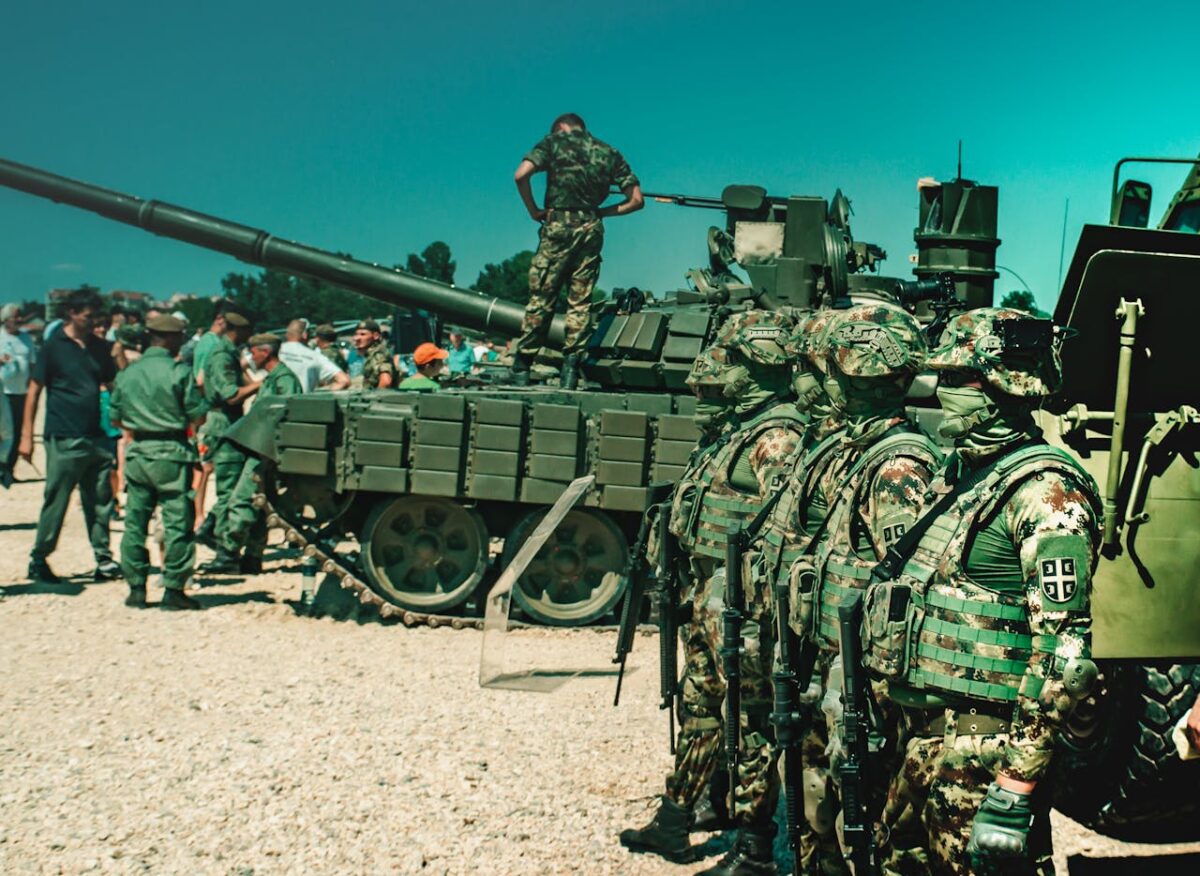
Officials familiar with the planning describe the effort as contingency-based rather than an active mission order. The U.S. military is not currently carrying out an operation inside Iran, but has been mapping out what could happen if diplomatic progress requires physical enforcement on the ground.
The concept involves coordinated work between military units and nuclear specialists from the Department of Energy, who would help verify, track, and potentially transport sensitive materials.
This type of mission is widely considered one of the most complex scenarios in modern military planning. It would require precision intelligence, secure access to nuclear facilities, and tightly controlled movement of materials that are both politically sensitive and scientifically dangerous.
The challenge of securing nuclear stockpiles
Iran’s nuclear program has long been a focal point of international concern, particularly regarding enriched uranium levels that approach weapons-grade thresholds. International monitoring agencies have repeatedly warned that accounting for these materials is essential for any lasting agreement.
The difficulty for military planners is not only locating the stockpiles, but ensuring they are not moved, hidden, or destroyed during a transition period. Even a small gap in monitoring could complicate verification efforts and undermine the credibility of any deal.
This is why U.S. discussions have reportedly included worst-case scenarios, where rapid action might be needed to secure materials before they become inaccessible.
Diplomacy and military planning are moving in parallel
The CBS report highlights an important dynamic in U.S. strategy: diplomacy and military preparation are advancing simultaneously.
While negotiations and diplomatic messaging focus on de-escalation, military planners are preparing for enforcement scenarios that would only come into play if an agreement is reached.
This dual-track approach reflects lessons from previous international nuclear agreements, where verification and enforcement proved just as challenging as negotiation itself.
In this case, officials are weighing how to ensure that any future agreement with Iran is not only signed, but also physically enforceable on the ground.
Why would the operation be so difficult
Experts describe any mission to secure nuclear materials inside Iran as extremely high-risk. The country’s nuclear infrastructure is dispersed, heavily fortified in places, and closely tied to national security.
Even under a formal agreement, access to certain sites could require strict coordination, security guarantees, and international oversight. Without that, any attempt to physically intervene would carry significant geopolitical consequences.
The planning, therefore, appears to be focused on a narrow window of opportunity: a scenario in which Iran agrees to terms, but before full transparency or inspection systems are fully established.
Political tension surrounding Iran’s nuclear future
The broader backdrop to these discussions is ongoing tension over Iran’s nuclear capabilities and the international effort to prevent escalation.
Western governments have repeatedly demanded greater transparency and verification, while Iran has insisted its program is peaceful and sovereign. These opposing positions have left negotiations fragile and often interrupted by military developments and diplomatic breakdowns.
The CBS report suggests that U.S. planners are trying to anticipate not just the signing of a deal, but the difficult enforcement phase that would follow it.
The risk of escalation remains present
Even the existence of contingency planning highlights how unstable the situation remains. Any movement of U.S. forces toward Iranian territory, whether under a deal or in response to violations, carries a high risk of misunderstanding, escalation, or retaliation.
Military officials are reportedly aware that such operations would require precise coordination and international backing to avoid triggering a wider conflict.
For now, the planning remains theoretical. But its existence underscores how seriously Washington views the nuclear question, even in moments of diplomatic progress.
A high-stakes balancing act between war and agreement

The idea of securing nuclear materials rather than destroying them marks a shift in strategic thinking. Instead of relying solely on military strikes or containment, planners are considering hands-on control under diplomatic conditions.
That approach reflects a broader reality: modern nuclear crises are no longer resolved solely by force or sanctions, but by complex hybrid strategies that involve diplomacy, intelligence, and tightly controlled military readiness.
Whether such a mission ever moves beyond planning will depend entirely on the outcome of ongoing negotiations with Tehran.
For now, the message from Washington is clear. Even if a deal is reached, the hardest part may not be signing it, but enforcing it on the ground in one of the world’s most sensitive nuclear environments.