Venezuela Earthquake Leaves Families Searching For Loved Ones As Death Toll Rises
Venezuela woke up to grief, panic, and the sound of rescue crews digging through broken concrete after two powerful earthquakes struck the country on Wednesday evening, June 24, 2026, killing at least 164 people and injuring nearly 1,000 more.
The disaster hit with terrifying speed. A major tremor shook northern Venezuela, and less than a minute later, a stronger quake followed. Buildings cracked, walls gave way, streets filled with dust, and terrified residents rushed outside as the ground continued to move beneath them.
By Thursday, June 25, 2026, the confirmed death toll had climbed to at least 164, with 971 people reported injured. Officials warned that the number could rise as search teams reached damaged neighborhoods, coastal towns, and collapsed apartment blocks where families were still waiting for news.
The most frightening warning came from U.S. Geological Survey modeling, which suggested the disaster could become far deadlier than early official figures showed. The agency’s alert system indicated a serious chance that the final toll could climb into the tens of thousands, with some estimates placing the possible range between 10,000 and 100,000 fatalities.
That number is not a confirmed death toll. It is a risk model based on the strength of the shaking, population exposure, building vulnerability, and past earthquake disasters. But it explains why Venezuela is now facing one of its most urgent humanitarian emergencies in modern memory.
Two Powerful Quakes Hit Within Seconds
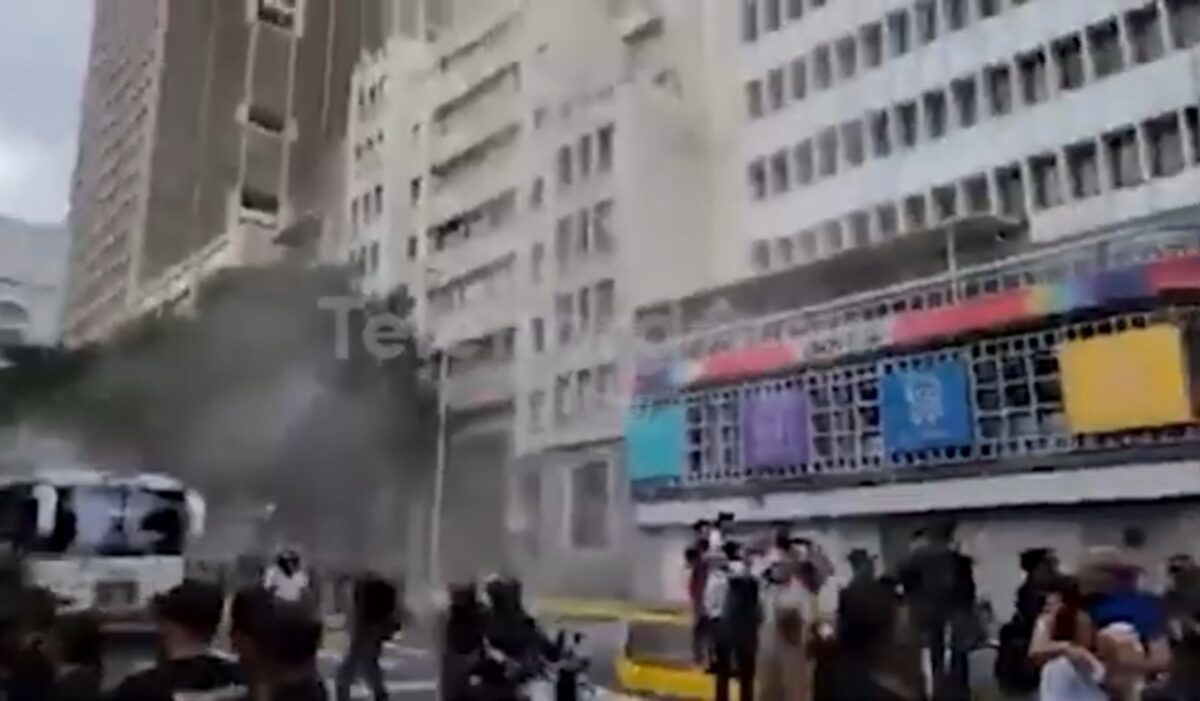
The earthquakes struck northern Venezuela on the evening of June 24, shaking Caracas, La Guaira, and surrounding areas with a force rarely seen in the country.
The first quake was measured at magnitude 7.2. Just 39 seconds later, a stronger magnitude 7.5 quake hit the same general region. Scientists described the event as a rare and dangerous earthquake doublet, meaning two major quakes struck so close together that communities had almost no time to recover from the first shock before the second arrived.
That timing made the disaster especially destructive. People who were already running for exits, standing in stairwells, or trying to protect children were hit again before they could fully react. Buildings weakened by the first quake faced a second violent round of shaking almost immediately.
In Caracas, residents described scenes of chaos as buildings swayed, lights went out, and people poured into the streets. Some families fled barefoot. Others carried children, elderly relatives, pets, and whatever belongings they could grab in seconds.
The quakes were felt far beyond the capital. Reports said tremors reached parts of Colombia and even distant areas of Brazil’s Amazon region, showing how powerful the seismic event was across northern South America.
Caracas And La Guaira Face The Worst Damage
The hardest-hit areas include Caracas and the coastal state of La Guaira, where collapsed structures, damaged roads, and power disruptions made rescue efforts difficult.
La Guaira is especially vulnerable because of its coastal geography, dense settlements, and steep terrain. When powerful shaking hits areas like that, the danger does not end when the ground stops moving. Landslides, blocked roads, broken water systems, and unstable buildings can turn the hours after the earthquake into a second emergency.
Caracas also suffered serious damage. Apartment buildings collapsed or became unsafe. Residents gathered outside overnight, afraid to return indoors because of aftershocks. Hospitals faced heavy pressure as injured survivors arrived with fractures, head wounds, cuts, crush injuries, and shock.
The country’s main airport near Caracas was reportedly damaged and closed, adding another obstacle to rescue and aid operations. With transportation disrupted and communication networks strained, the race to reach trapped people became even more urgent.
For many families, the first day after the earthquake became a painful wait. Some stood near piles of rubble, calling the names of missing relatives. Others searched hospitals, shelters, and social media posts, hoping to find someone alive.
Venezuela Declares A State Of Emergency
Acting President Delcy Rodríguez declared a state of emergency as the scale of destruction became clearer. The government announced rescue operations, emergency shelter plans, and recovery funding while officials urged people to stay away from unsafe buildings.
The declaration was meant to unlock emergency resources and organize a national response. But Venezuela is already struggling with fragile infrastructure, economic strain, political tension, and a weakened public health system. Those problems now collide with a disaster that demands speed, coordination, equipment, medical care, food, water, and shelter.
The first 72 hours after a major earthquake are often the most important for finding survivors trapped under debris. In Venezuela, that window is complicated by damaged roads, aftershocks, limited equipment, and the possibility that some communities have not yet reported full casualty counts.
Rescue teams are now working against time. Every collapsed building presents a dangerous puzzle. Crews must listen for voices, move unstable concrete, avoid further collapse, and decide where limited resources are needed most.
Volunteers have joined official responders in some areas, forming human chains, clearing debris, and helping families move to safer ground. The images emerging from Venezuela show a country in shock, but also one where ordinary people have stepped forward because waiting is not an option.
The Warning Behind The 100,000 Death Toll Fear

The most alarming figure in the disaster coverage is the warning that deaths could possibly reach as high as 100,000.
That number should be understood carefully. It does not mean officials have confirmed anything close to that total. It comes from earthquake impact modeling, which estimates possible casualties based on shaking intensity, population density, local vulnerability, and known building risks.
Such models are often used early in disasters when confirmed numbers remain incomplete. They help governments and aid agencies understand whether an event may require a national or international emergency response.
In Venezuela’s case, the warning is severe because the quakes were strong, shallow, close to populated areas, and followed by aftershocks. The disaster also struck a country where many buildings may not be prepared for extreme seismic shaking.
The confirmed toll may remain far below the upper estimate, or it may rise sharply as crews reach more damaged zones. What matters now is that rescue teams are treating the disaster as a mass-casualty emergency, not a limited local event.
Why Aftershocks Remain A Major Threat
The earthquake disaster did not end with the two main shocks. More aftershocks followed, keeping residents outside and rescue crews on high alert.
Aftershocks can bring down buildings already damaged by the first quake. They can trigger landslides, damage roads, and make rescue work more dangerous. They also deepen public fear, especially for families who have already watched homes crack or collapse.
For survivors, every new tremor can feel like the disaster beginning again. Parents must decide whether to sleep outside with their children. Hospital staff must keep treating patients while worrying about the stability of their own buildings. Rescue workers must enter unstable structures knowing the ground could move again.
That is why officials often warn residents not to return to damaged homes too soon. A building may look standing from the outside, but still be unsafe inside. Cracked columns, weakened walls, and shifted foundations can turn a structure into a death trap hours after the original quake.
International Aid Offers Begin To Arrive
As the scale of the disaster grew, international offers of assistance began to come in. The United States said it was prepared to help, and other countries also offered rescue teams, medical support, and humanitarian supplies.
The disaster places Venezuela in a difficult diplomatic moment. The country has faced years of political tension and strained relations with Washington, yet major earthquakes often force governments to look beyond politics because lives depend on speed.
Rescue dogs, field hospitals, engineers, emergency doctors, generators, water systems, and heavy-lift equipment can make a major difference after a disaster of this size. The challenge is getting that aid into the country quickly, distributing it fairly, and reaching communities that may be cut off.
For ordinary Venezuelans, the politics of aid matter less than the immediate needs. People need help finding relatives. They need safe water, shelter, medicine, food, and power. They need hospitals that can continue to function. They need roads cleared and unstable buildings inspected.
Above all, they need time, and earthquakes are cruel because time runs out quickly under rubble.
A Country Already Under Pressure Now Faces A New Crisis
Venezuela’s earthquake emergency comes on top of years of hardship. Many families were already dealing with economic pressure, migration, weak services, and political uncertainty. Now thousands may face damaged homes, lost income, interrupted schools, and medical needs that could last for months or years.
Earthquakes expose the hidden weaknesses of a society. They reveal whether buildings were safe, whether hospitals were prepared, whether emergency systems were strong, and whether poor communities were protected.
In disasters, the poorest often suffer most. Families in fragile housing, crowded neighborhoods, hillside settlements, or older buildings face greater risk when violent shaking begins. Recovery is also harder for people who lack savings, insurance, transportation, or political influence.
That is why the disaster in Venezuela may become not only a rescue crisis but also a long-term rebuilding crisis. The country will need to count the dead, treat the injured, shelter the displaced, rebuild infrastructure, inspect thousands of structures, and restore public confidence.
Venezuela’s Long Memory Of Earthquake Tragedy
Venezuela has lived with earthquake risk for centuries because it sits near the boundary of the Caribbean and South American tectonic plates. That geography makes the region seismically active and vulnerable to powerful tremors.
The country also carries the memory of past disasters. One of the worst came in 1812, when a devastating earthquake destroyed parts of Caracas and Mérida and killed an estimated 30,000 people. That tragedy became part of Venezuela’s national history, remembered not only for its destruction but for the way it struck during a politically turbulent period.
The June 2026 earthquakes now enter that same painful history. They struck during a public holiday and shook areas central to Venezuela’s political, economic, and cultural life. The symbolism is heavy, but for survivors, the story is painfully practical. They are searching for loved ones, sleeping outside, and waiting for news.
History may remember magnitudes and official death counts. Families will remember voices under rubble, missed phone calls, hospital corridors, and the moment the ground began to move.
The Human Toll Is Still Being Counted
The official numbers are devastating, but they do not fully capture the human reality.
A death toll counts lives lost, but it cannot measure the fear of a mother holding her child in the street after the walls split. It cannot describe the silence around a collapsed building where families wait for rescuers to hear a sound. It cannot capture the guilt of survivors who escaped while neighbors did not.
Nearly 1,000 injured people means nearly 1,000 separate stories of pain, treatment, recovery, and uncertainty. Some will heal quickly. Others may face permanent injuries, amputations, trauma, or grief that never fully leaves.
The missing may become the most painful part of the coming days. In major earthquakes, early numbers often change because communication is broken, buildings remain inaccessible, and rural or coastal communities may take longer to assess.
That is why Venezuela’s disaster remains unfinished. The ground has stopped its strongest shaking for now, but the counting has only begun.
A Nation Searches For Survivors And Answers
Venezuela now faces two urgent tasks at once. It must rescue the living, and it must understand how so many people were placed in danger.
The first task is immediate. Search teams must keep digging. Hospitals must keep working. Shelters must take in families. Aid must reach damaged neighborhoods before hunger, dehydration, exposure, and untreated injuries create new waves of suffering.
The second task will take longer. Officials, engineers, and communities will have to ask which buildings failed, where emergency systems broke down, and what must change before the next major quake.
For now, the country is living hour by hour. Families are waiting outside hospitals. Rescue crews are listening for survivors. Streets that once carried traffic now carry dust, sirens, and the names of the missing.
The confirmed death toll stands at 164, but the fear is that Venezuela’s true loss may be much larger. The coming days will decide how far the numbers rise, how quickly help arrives, and how a shaken nation begins to bury its dead while still searching for the living.