Stephen A. Smith wonders “how the hell” the Clintons and Obamas left the White House with net worths over $100M
Stephen A. Smith has built a career on saying the loud part with volume, rhythm, and just enough outrage to make America stop scrolling. This time, the ESPN star’s target was not an athlete, coach, or front-office executive. It was the wealth machine surrounding former presidents, and his question landed because it tapped into something many voters already wonder about: how do public servants leave office and later become worth tens of millions, or, in some cases, get discussed in the same breath as $100 million fortunes?
Smith’s comment about the Clintons and the Obamas did not arrive in a vacuum. It came at a moment when Americans are already skeptical of political power, elite access, book deals, speaking fees, media contracts, foundations, donor circles, and the strange afterlife of the presidency. We are not simply talking about salary. We are talking about status converted into capital, about the White House as the most powerful credential in the world, and about a post-presidential economy that can turn speeches, memoirs, production deals, consulting, boardroom relationships, and global admiration into extraordinary wealth.
The controversy is not hard to understand. A president’s salary is high by ordinary standards, but it is not billionaire money. The office pays hundreds of thousands a year, not tens of millions. So when a former first family’s financial profile rises dramatically after leaving Washington, the public naturally asks whether this is the fair reward of fame and talent, the predictable value of a historic résumé, or a symbol of a political class that profits from influence long after the campaign slogans fade.
Why Stephen A. Smith’s Question Struck a Nerve
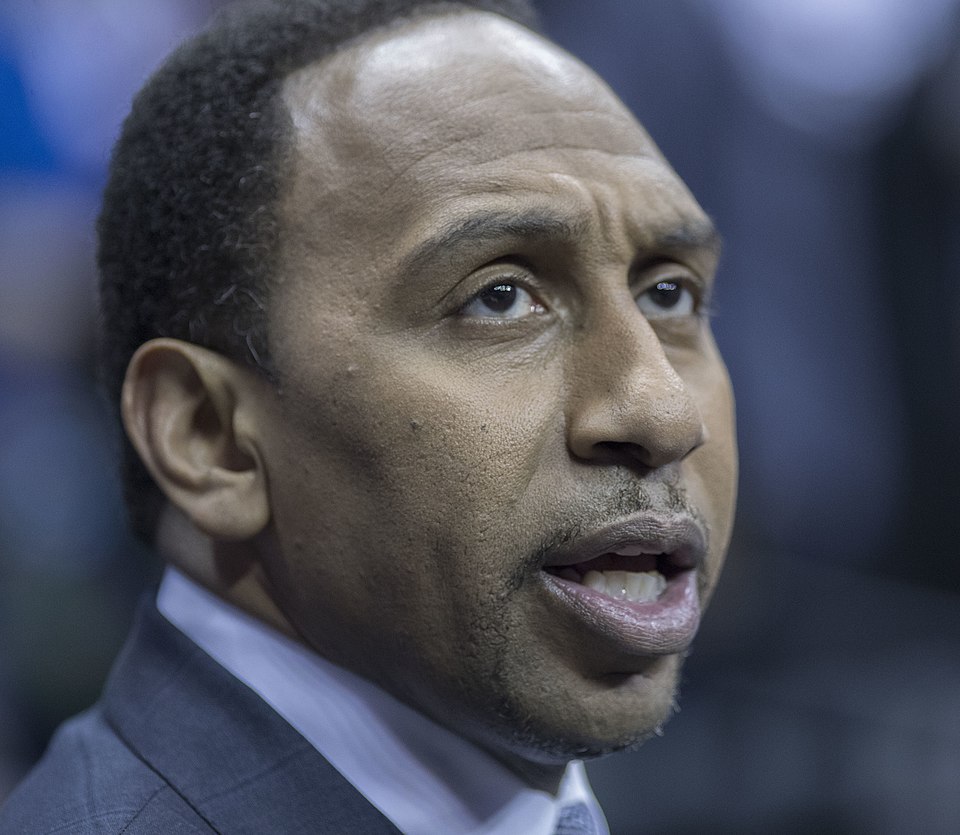
Smith’s appeal has always been his instinct for the public mood. He speaks like someone arguing across a barbershop chair, a studio desk, and a dinner table all at once. His question about former presidents’ wealth hit hard because it was simple, sharp, and emotionally loaded: if someone spends years “serving” the public, how does that service later translate into such enormous private gain?
That question is powerful because it cuts across party loyalty. Conservatives have long scrutinized the Clintons’ wealth. Progressives have questioned money in politics, corporate speaking circuits, and Wall Street’s influence. Independents often view both parties through the same tired lens: politicians tell ordinary Americans to sacrifice, then somehow become very wealthy inside a system ordinary Americans cannot access.
The Clintons and Obamas are especially useful examples because both families entered national politics with compelling public stories. Bill Clinton came from Arkansas politics and became a two-term president. Hillary Clinton built a career as a lawyer, first lady, senator, secretary of state, and presidential nominee. Barack Obama rose from community organizing, law, teaching, and the Senate to become the first Black president. Michelle Obama entered the White House with her own professional résumé and left it as one of the world’s most admired women.
That is exactly why the money conversation becomes so explosive. We are not discussing obscure lobbyists or anonymous executives. We are discussing families whose brands are fused with American history.
The Clintons and the Speaking-Fee Gold Rush
If we want to understand why the Clintons are central to this debate, we have to begin with the speech circuit. After Bill Clinton left the White House in 2001, his name became one of the most valuable names in global events. Corporations, universities, banks, trade groups, and international organizations paid large sums to hear from a former president who could command a room, tell stories from power, and offer an insider perspective on world affairs.
The numbers became staggering. Over the years, reporting on Clinton’s financial disclosures showed millions flowing through paid speeches, book royalties, and related income streams. Hillary Clinton’s own speaking fees also became a major issue during her 2016 presidential campaign, especially when critics focused on Wall Street speeches and the optics of private remarks delivered to powerful financial institutions.
This is where public suspicion grows. A paid speech is legal. A memoir advance is legal. A former president has every right to write books, speak at conferences, and earn income. But politics is not judged only by legality. It is judged by public trust, and the average voter sees a different world: one where the same people who shaped policy can later be paid huge sums by the industries affected by that policy.
The Clintons’ defenders argue that the couple earned money openly through books and speeches, paid significant taxes, and made charitable contributions. Critics counter that the scale of the money shows how public office can become a private asset. Both points can exist at the same time. The money may be lawful, disclosed, and taxed, yet still raise uncomfortable questions about access, influence, and the rewards awaiting at the end of public life.
The Obama Brand Became a Global Media Empire
The Obama wealth story is different in tone but similar in structure. Barack and Michelle Obama left the White House with unmatched cultural power. Their brand was not only political. It was literary, inspirational, generational, racial, global, and deeply marketable. Publishers, streaming platforms, event organizers, and media companies understood that the Obamas were not just former public officials. They were a worldwide audience.
The most visible turning point was the reported massive book deal for Barack and Michelle Obama’s post-White House memoirs. Michelle Obama’s Becoming became a publishing phenomenon, selling millions of copies and turning her book tour into a major cultural event. Barack Obama’s presidential memoir carried its own historic weight. Together, their literary value was extraordinary because their story combined politics, identity, celebrity, and legacy.
Then came Higher Ground, the Obamas’ production company, which moved their influence into film, television, documentaries, podcasts, and streaming. That shift matters because it shows how the modern post-presidency has changed. Former presidents once built libraries, wrote memoirs, gave occasional speeches, and largely stepped away. The Obama model is more modern: build a media company, shape narratives, create cultural products, and turn a public legacy into a long-term intellectual property business.
That does not automatically mean anything improper happened. It means the marketplace placed a huge value on the Obama name. In modern America, attention is currency, and few people on earth command attention like a former president and first lady.
The $100 Million Question Needs Careful Wording.
The phrase “over $100 million” is the spark. It is catchy, viral, and politically potent. But the financial reality is more complicated. Net worth estimates for public figures are often imprecise. They depend on assets, taxes, debts, private contracts, real estate valuations, royalties, investments, and undisclosed business arrangements. Celebrity net worth figures can vary widely, and not every estimate carries the same credibility.
For the Clintons, the broader record clearly shows huge post-White House income. Their speaking fees and book income became a defining feature of their public image. For the Obamas, the confirmed money story is also substantial, especially through books, production deals, speeches, and real estate. But it is important to separate gross receipts, contract value, and net worth. A $65 million book deal does not mean $65 million in personal net worth after taxes, agents, donations, expenses, and timing. A production deal does not always equal cash in the bank. Real estate value is not the same as liquid money.
That distinction matters because the best version of this debate is not built on exaggeration. It is built on the larger truth: the presidency can create enormous private earning power once a president leaves office.
Public Service, Private Wealth, and the Appearance Problem
The ethical tension is not new. America has always wrestled with the relationship between office and opportunity. Former presidents often earn money from memoirs, speaking tours, consulting, foundations, media appearances, and corporate relationships. The difference now is scale. The modern attention economy is bigger, faster, and more profitable than ever. A former president is not just a retired statesman. He can become a media brand, streaming partner, bestselling author, podcast voice, global speaker, and philanthropic figure all at once.
The appearance problem is obvious. Ordinary Americans see stagnant wages, high housing costs, expensive groceries, rising insurance bills, and a political class that often seems insulated from the pain it describes. Against that backdrop, a former president earning millions from speeches or a former first lady selling out arenas for a book tour can feel less like inspiration and more like separation.
This is why Smith’s question travels so well online. It does not require a spreadsheet. It requires only a gut reaction. People hear “public service” and “$100 million” in the same sentence, and they feel the contradiction even before they read the details.
Why Defenders Say the Wealth Is Not a Scandal
There is another side that deserves attention. Former presidents are rare figures with rare knowledge. They have led the world’s most powerful government, managed crises, met global leaders, shaped policy, and lived through history from the inside. Their memoirs have public value. Their speeches can offer insight. Their foundations can support civic projects. Their production companies can tell stories that might not otherwise reach mass audiences.
In that view, the market is not buying corruption. It is buying experience, fame, storytelling, and access to a historic perspective. The Obamas did not need to force millions of people to buy Becoming. Readers chose it. Publishers did not hand out huge advances as charity. They expected demand. The same applies to paid speeches. Organizations paid because audiences would show up.
The strongest defense is simple: in America, people are allowed to earn money from their work, their name, and their story. If athletes, entertainers, CEOs, and media personalities can monetize fame, former presidents and first ladies can too, as long as they obey disclosure rules and avoid selling government action.
Why Critics Still See a Broken System
Critics are not satisfied with that answer because politics is not entertainment. A president is not just a celebrity. The White House is a public trust. When former leaders become rich through networks connected to power, the public wonders whether the system rewards service or proximity to influence.
The concern is not always direct bribery. Often, it is softer and harder to prove: prestige, access, relationship-building, donor ecosystems, institutional favors, and the invisible benefits of being near power. The modern political economy does not always need cash envelopes to feel compromised. Sometimes it only needs a lecture fee, a foundation gala, a private dinner, a streaming contract, or a book auction where everyone knows the real product is not just pages, but proximity to history.
That is the heart of the Smith moment. He voiced the suspicion many Americans quietly harbor: the presidency may officially end on Inauguration Day, but the financial value of having held it can last for decades.
The Bigger Story Is Bigger Than the Clintons and Obamas
The public should resist turning this into a one-family or one-party story. The post-presidential wealth machine is part of a larger American pattern. Power creates fame. Fame creates demand. Demand creates money. That pattern reaches across parties, industries, and generations.
The real question is whether the country is comfortable with a system where public office can become the first chapter of a private fortune. We can admire the achievements of former presidents and first ladies while still asking whether the financial rewards surrounding them have grown too large. We can recognize the legality of book deals and speeches while still questioning the culture that makes them so valuable.
Stephen A. Smith’s comment landed because it sounded less like a partisan attack and more like a civic complaint. In a country where trust is already thin, the optics of political wealth matter. Voters want leaders who understand sacrifice, not just leaders who speak about it after signing multimillion-dollar deals.
The Bottom Line on Stephen A. Smith’s White House Wealth Question
Stephen A. Smith did what he often does best: he turned a complicated public frustration into a blunt, viral question. The Clintons and Obamas became wealthy through different combinations of speeches, books, media, real estate, and global brand power. Much of that wealth appears tied to lawful post-office opportunities. But the public discomfort is real because the presidency is not supposed to feel like a launchpad into elite private wealth.
The sharper question is not whether former presidents can earn money. They can. The sharper question is whether America has allowed public service to become part of a prestige economy in which influence, access, and legacy are monetized at levels that ordinary citizens can barely imagine.
That is why this debate will not disappear. It sits at the intersection of money, politics, celebrity, trust, and resentment. And once a commentator like Stephen A. Smith puts it in plain language, the question becomes impossible to ignore: when public servants leave public office and enter the marketplace, are we watching democracy reward leadership, or are we watching power cash itself out?