Viral Claim Says U.S. Fired 1,800 Missiles at Iran and Every One Hit the Target. The Reality Is More Complicated
A stunning claim spreading across social media says the United States fired 1,800 missiles at Iran and every single missile hit its target.
The statement has gained attention because it paints a picture of a flawless military operation, with American weapons striking Iranian targets with absolute precision. But when the details behind the claim are examined, the reality is far more complex.
The United States has carried out a large-scale military campaign against Iran involving thousands of strikes, hundreds of aircraft, naval forces and advanced weapons systems. However, official military reports do not confirm that exactly 1,800 missiles were launched or that every weapon successfully hit its intended target.
The viral claim appears to mix real battlefield numbers with an exaggerated conclusion.
The number may come from targets, not missiles.

The U.S. military has confirmed that Operation Epic Fury involved a massive campaign against Iranian military infrastructure.
According to the U.S. Central Command Operation Epic Fury Fact Sheet, American forces struck more than 1,700 targets during the first 72 hours of the operation.
Those targets included Iranian air defense systems, ballistic missile facilities, military command centers, naval assets and weapons storage locations.
However, a military target is not the same thing as a missile.
A single target may require multiple weapons to destroy. A missile facility, for example, could include launchers, radar systems, command buildings and storage areas. Each could be counted separately or attacked with different weapons depending on the mission.
The Pentagon commonly uses the term “munitions” when describing weapons used in an operation. That word includes missiles, guided bombs, artillery systems and other weapons.
The difference matters.
A claim saying “1,800 targets were hit” is very different from saying “1,800 missiles were fired.”
The U.S. used many different weapons, not only missiles.
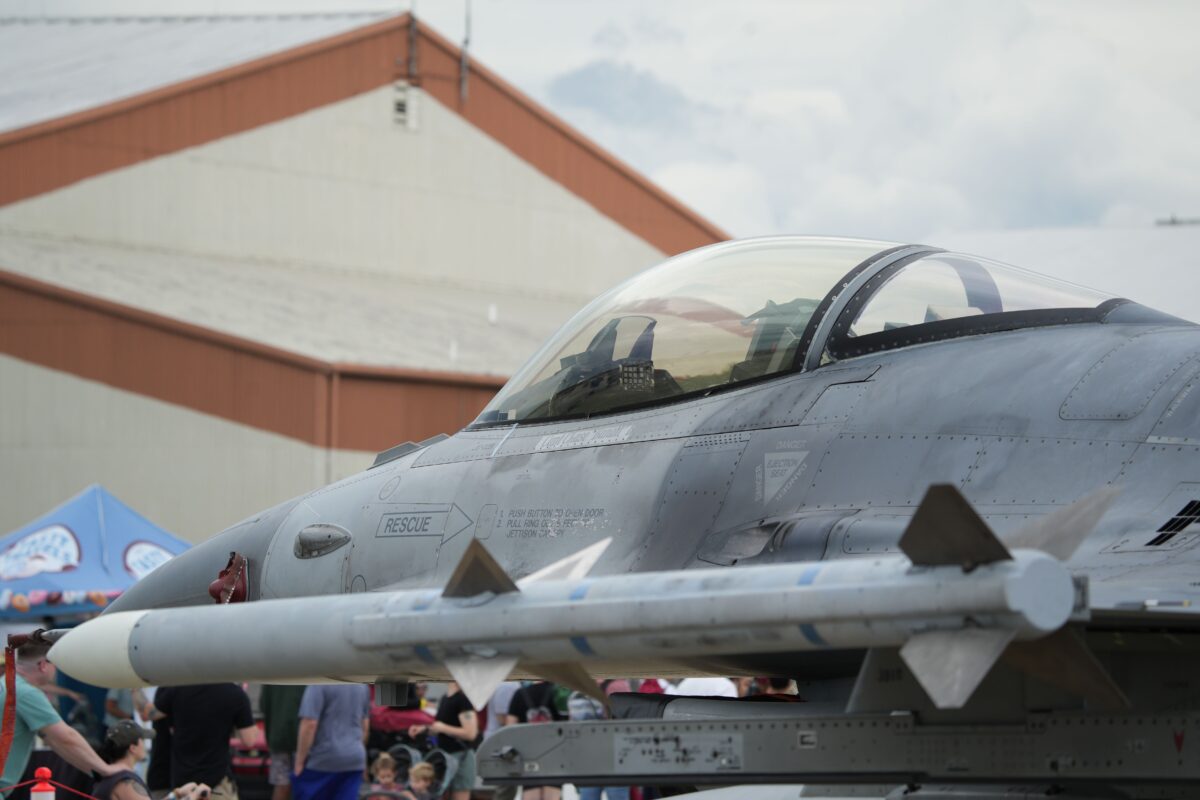
Modern warfare is not fought with one type of weapon.
During Operation Epic Fury, the United States deployed a wide range of military capabilities, including B-1, B-2 and B-52 bombers, fighter aircraft, drones, naval vessels and missile systems.
The U.S. Central Command Fact Sheet described the involvement of aircraft such as the F-35, F-22, F-15 and F-16, along with MQ-9 Reaper drones, naval forces and other strike platforms.
Some aircraft use precision-guided bombs rather than missiles. Naval ships may launch cruise missiles. Drones may conduct direct attacks. Ground systems may use rockets or other guided weapons.
Grouping every weapon into the category of “missiles” creates an inaccurate picture of how a modern air campaign operates.
There is no evidence that every weapon hit perfectly.
The second part of the viral claim is even harder to prove.
The statement that every single missile hit its target would represent a 100 percent success rate. Military officials have not released evidence showing that every individual weapon launched during the operation achieved its intended impact.
The U.S. military has described the operation as highly successful and has reported significant damage to Iranian military capabilities.
According to statements from U.S. Central Command, American strikes destroyed or damaged Iranian missile systems, air defenses, naval equipment and military infrastructure.
But successful military operations are not measured by every weapon hitting perfectly.
Even advanced precision weapons can face challenges. Weather conditions, electronic interference, mechanical failures, changing battlefield conditions and enemy defenses can affect results.
Military analysts usually rely on battle damage assessments, intelligence reports and satellite imagery to determine whether targets were destroyed or damaged.
The Pentagon has not released a complete weapon breakdown.
The exact number of missiles, bombs and other weapons used during the operation has not been publicly released in full detail.
A report from the Congressional Research Service noted that while officials provided broad information about the scale of the campaign, the Defense Department did not publicly provide a complete breakdown of every weapon type used.
This is common during major military operations.
Governments often release enough information to demonstrate capability and communicate strategic goals while keeping some operational details confidential.
Knowing the exact number of missiles launched could reveal information about weapons inventories, military planning and future capabilities.
The scale of the operation was still enormous.
Even without the exaggerated “every missile hit” claim, the scale of the U.S. operation remains significant.
U.S. officials later reported that the campaign expanded beyond the initial strikes, targeting thousands of additional military locations.
According to later U.S. Central Command updates, American forces conducted thousands of strikes against Iranian military assets, including missile infrastructure, air defense networks, drones and naval equipment.
The operation involved some of the most advanced military technology in the world, including stealth aircraft, satellite intelligence, precision weapons and naval strike capabilities.
The reality is not that the United States fired one exact number of missiles with perfect accuracy.
The reality is that a large and complex military campaign took place involving thousands of weapons, multiple platforms and a wide range of targets.
Why viral war claims spread so quickly
During conflicts, dramatic claims often spread faster than verified information.
Numbers such as “1,800 missiles” and phrases like “every single one hit” are powerful because they are simple, emotional and easy to share. They transform a complicated military operation into a single impressive statement.
But warfare is rarely that simple.
Military campaigns involve intelligence decisions, weapon selection, changing conditions and uncertain outcomes. A strike can be considered successful even if every weapon does not perform perfectly.
The available evidence shows that the United States carried out a major operation against Iranian military targets and used thousands of weapons during the campaign.
However, the claim that 1,800 missiles were fired and every missile hit its target has not been verified by official sources.
The real story is already dramatic enough: a massive military operation involving some of the world’s most advanced weapons systems, with consequences that could shape U.S. and Iranian relations for years.