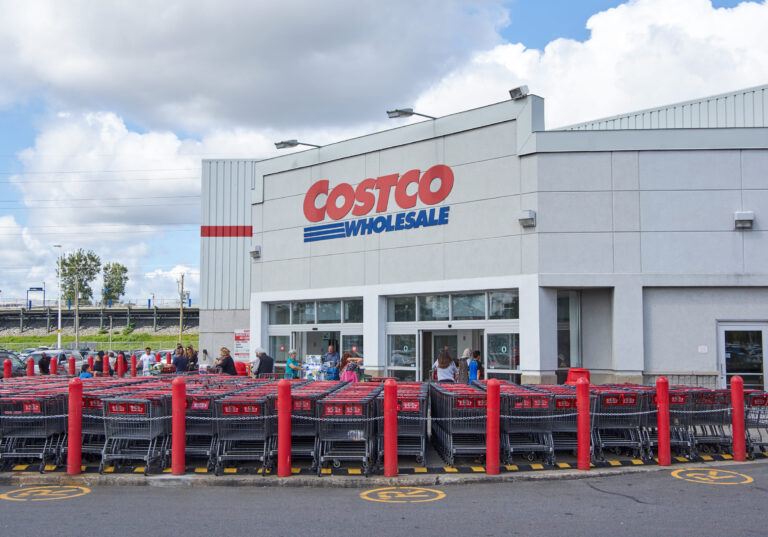
Younger Shoppers Now Rate Costco Above Aldi on Value, a New Survey Finds
Costco has an edge over Aldi that may surprise bargain hunters: younger Americans currently rate the warehouse club higher for value. New YouGov BrandIndex data shows Costco scored 44 among Gen Z adults between January and August 2026, compared with Aldi’s 32. Millennials also favored Costco, 43 to 34.
That does not mean Costco was proven cheaper. YouGov measured value perception, asking consumers which brands give shoppers a lot in return for the price paid. Across all U.S. adults, Costco posted a net Value score of 38, narrowly ahead of Aldi at 35.
Younger shoppers give Costco the clearest advantage

Gen Z puts Costco well ahead. Across January through August, Costco’s average Value score among Gen Z adults was 44, versus 32 for Aldi, giving Costco a 12-point lead. YouGov Profiles also estimates that Gen Z adults represent 18% of Costco’s current customers, compared with 13% of Aldi’s customers. The honest verdict: Costco has the stronger younger-shopper value image right now, but the lead is about perception, not a head-to-head price test.
Millennials lean the same way. Costco earned a Value score of 43 among Millennials, compared with Aldi’s 34. That nine-point spread is smaller than the Gen Z difference but still shows the younger half of the adult market giving Costco the advantage.
Older generations tell a different story
Gen X actually favors Aldi. Among Gen X adults, Aldi recorded a Value score of 35, compared with 33 for Costco. That makes Gen X the only generation in YouGov’s comparison where Aldi finished ahead.
Baby Boomers call it a tie. Costco and Aldi both scored 37 among Baby Boomers and older adults. The generational split reminds us that no single winner fits every shopper, even when two retailers are closely associated with value.
Related: Costco Just Put a Limit on Motor Oil as a Global Shortage Gets Worse
Costco’s Gen Z lead is getting smaller
The late-summer trend favors a closer race. Costco began 2026 with a Gen Z Value score of 46 on January 1, compared with Aldi’s 27, a 19-point gap. Costco later reached 51 on June 7 as Aldi sat at 33, but by August 31 Costco had fallen to 38, and Aldi stood at 33, leaving only five points between them.
That movement matters as much as the average. YouGov says its figures use an eight-week moving average based on daily surveys of U.S. adults, with results weighted for factors including age, gender, race, education, and region. The honest verdict: Costco won the January-to-August Gen Z average, but Aldi had moved much closer by the end of the period.
Value means more than seeing the lowest shelf price
The stores ask shoppers to buy value in different ways. Costco’s standard Gold Star membership currently costs $65 per year, and the retailer says membership fees help offset operating costs so it can keep merchandise prices low. Aldi says shoppers do not need a membership to enter its stores or access its regular prices.
That distinction gives shoppers with both chains nearby something practical to compare: the annual membership cost, package sizes, prices on the products they actually buy, and how much of those purchases they will use.
Retail experts say price is only part of the equation. AlixPartners surveyed more than 1,600 primary grocery shoppers for its 2026 Grocery Shopper Perspectives report and found consumers increasingly looking beyond traditional supermarkets for value. Matt Hamory, a partner and managing director at AlixPartners, summed it up: “Consumers are certainly looking for value, and price is a non-negotiable aspect of it.”
Aldi is still pushing hard on price and expansion
Aldi is not standing still. The company announced plans to open more than 180 U.S. stores across 31 states in 2026, bringing its total to nearly 2,800 locations by year’s end. Aldi also said 17 million new customers visited its stores during 2025.
CEO Atty McGrath said, “One in three U.S. households shopped at ALDI this past year.” More recently, Aldi announced an estimated $86 million in additional fall price investments and said nearly one-third of its everyday in-store assortment was priced lower than a year earlier. The honest verdict: Aldi’s expanding footprint and fresh price cuts could keep the value competition tight.
Related: 8 Costco and Walmart Shopping Mistakes That Quietly Drain Your Wallet
Costco also has strong momentum
Costco remains a massive retail force. The company reported fiscal 2026 net sales of $297.2 billion, up 10.1% year over year. As of September 24, Costco operated 939 warehouses worldwide, including 647 in the United States and Puerto Rico.
Those sales figures do not prove Costco is a better bargain than Aldi, but they provide useful context for the YouGov results. Costco is growing even as younger shoppers continue to associate the membership model with strong value.
What shoppers can watch next
The next question is whether the gap keeps closing. YouGov’s August numbers already show Aldi much closer to Costco among Gen Z than at the beginning of 2026, and Aldi is simultaneously lowering prices on parts of its assortment and opening more locations. For shoppers, the survey offers a useful snapshot, but checking actual local prices and buying formats remains the clearest way to decide which retailer offers better value for a particular grocery list.
For now, Costco holds the younger-shopper value crown, but Aldi has made the contest much closer than the eight-month averages first suggest.