10 Signs America’s Self-Image Is Cracking Before Its 250th Birthday
America is preparing for a huge birthday, but the national mood does not feel like fireworks and marching bands for everyone. A new poll suggests many adults are looking at the country with pride, worry, frustration, and disappointment all mixed together.
The most striking number is hard to ignore. Only about one-quarter of U.S. adults now say America stands above every other nation, a finding that carries extra weight as the country moves toward its 250th anniversary.
America’s exceptional status is losing its old grip
For decades, many Americans grew up hearing that the United States was the greatest country on Earth. That belief still exists, but it no longer feels automatic across the country. The poll shows that far fewer adults now place America above every other nation, which signals a major shift in national confidence.
That does not mean most Americans reject the country outright. Many still see the U.S. as one of the world’s greatest nations, just not the only one at the top. That softer version of patriotism may be more realistic, but it also reveals how much the old certainty has faded.
Older Americans still see a different country
Older adults are more likely to believe in the American Dream and more likely to see the country as exceptional. That difference makes sense. Many came of age in a time when homeownership, steady jobs, pensions, and upward mobility felt more reachable for middle-class families.
Younger adults often see a harsher bargain. They face high rents, student debt, expensive health care, unstable work, and a political system that feels locked in endless conflict. Both generations may love the country, but they are not always talking about the same lived experience.
Younger adults sound far less convinced
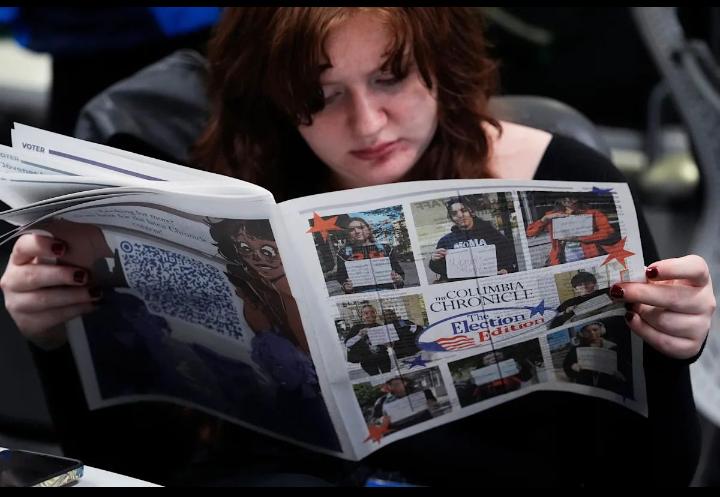
The generational split may be the loudest warning sign in the poll. Adults under 30 are much more likely than older Americans to say other countries may be better than the United States. That matters because younger voters are shaping the next version of American identity.
This is not just youthful rebellion or online cynicism. Many younger adults are comparing wages, housing costs, health care, political anger, and quality of life with what they see elsewhere. If they feel the American promise is harder to reach, patriotic slogans alone will not change their minds.
Diversity is still powerful, but deeply debated
America’s identity has always included different cultures, backgrounds, languages, and beliefs. Yet the poll suggests Americans are split on how central diversity should be to the national story. Some see it as one of the country’s greatest strengths, while others see it as a source of tension.
That disagreement is not small. It touches immigration, race, culture, schools, neighborhoods, and politics. A country can celebrate diversity on paper, but the real test is whether people feel respected, protected, and included in daily life.
The American Dream feels broken to many people
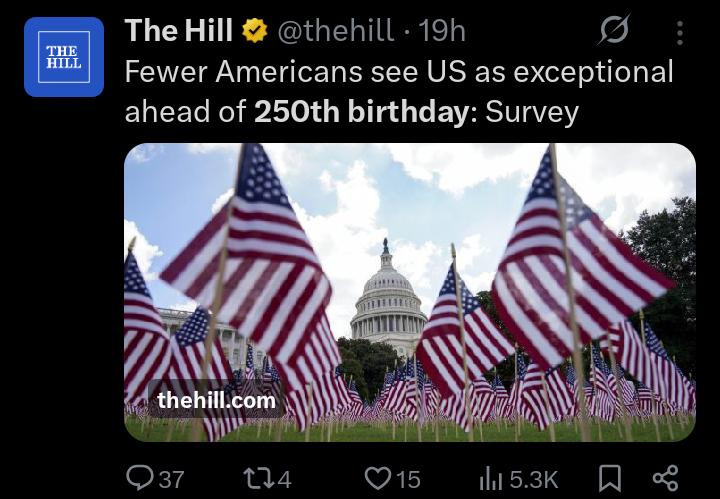
The American Dream has always been one of the country’s strongest selling points. Work hard, play fair, keep going, and life should improve. The poll found that only about one-third of adults believe that dream still holds true today.
That is a painful number because the dream is not just about money. It is about trust. When people feel effort no longer leads to stability, homeownership, retirement, or a better future for their children, national pride becomes harder to sell with speeches and flags.
Democracy no longer feels untouchable
Another troubling part of the poll is how Americans view democracy as part of national identity. About two-thirds of adults say a democratically elected government is highly important to what America is, down from a much higher share just a few years ago.
That drop should worry people across party lines. Democracy depends on more than laws and elections. It depends on citizens believing the system matters, that leadership can be trusted, and that institutions can still protect people when politics turns ugly.
Political identity is shaping patriotism
The poll shows a sharp divide between Republicans and Democrats on whether America stands above every other country. Republicans are far more likely to say the U.S. holds that top position, while Democrats are much less likely to agree.
That divide makes patriotism feel less like a shared civic language and more like a political label. When love of country becomes tangled with party identity, even national celebrations can feel divided. A birthday that should unite people can quickly become another argument over what America really means.
The 250th anniversary may expose more tension
A major national anniversary usually invites unity, nostalgia, and pride. America’s 250th birthday should be a moment to remember sacrifice, freedom, invention, and progress. Instead, the poll suggests the milestone may arrive amid deep public unease.
That does not mean the celebration will fail. It means the mood around it will be complicated. Many Americans may wave the flag and still feel angry about housing costs, political division, immigration disputes, distrust of government, or a sense that the country has lost its balance.
Negative words define the mood
Another national survey found that many voters described the United States with negative words such as divided, struggling, failing, or corrupt. That kind of language says more than a bad news cycle. It shows how emotionally tired many Americans have become.
People do not use words like that when they feel secure and optimistic. They use them when frustration has built up for years. The danger is that negative language can become a habit, and once a country starts describing itself in decline, rebuilding confidence becomes much harder.
Patriotism now needs proof, not slogans
The biggest message from the poll is not that Americans have stopped caring. It is that many want the country to prove its promise again. Pride now competes with real-life pressure, and people are measuring America by what it delivers, not just what it says about itself.
That may be uncomfortable, but it can also be useful. A country that listens to disappointment has a better chance of fixing what feels broken. As America nears 250 years, the real question is not whether people still love the country, but whether the country can earn back their confidence.