10 Things Nobody Tells You About American Prisons
American prisons are often described in simple terms: punishment, justice, crime, and time served. That sounds neat from the outside, but the reality is much messier. The United States does not operate a single prison system. It runs a giant maze of state prisons, federal prisons, local jails, immigration detention centers, juvenile facilities, military lockups, tribal jails, parole systems, probation offices, and private contractors. The Prison Policy Initiative estimates that nearly 2 million people were locked up across these systems in 2026, spread across thousands of facilities.
That number is hard to imagine because prison life is usually hidden from public view. People see the mugshot, the sentence, or the headline, then the human being disappears behind concrete walls. The Bureau of Justice Statistics reported that the U.S. prison population reached 1,254,200 at year’s end 2023, rising 2 percent from 2022. That is not just a statistic. It is a country within a country, with its own economy, routines, dangers, silences, families, debts, illnesses, and broken clocks.
These are the things nobody tells you about American prisons.
Prison is not one system, and that makes everything harder to understand

Most people talk about “American prisons” as if one agency controls the whole machine. That is the first myth. The federal government runs federal prisons, states run state prisons, counties run jails, and immigration authorities use detention systems that can look like prisons even when they are not called that. A person arrested in one county can experience a completely different reality from someone arrested across a state line. Rules on visits, food, phone calls, medical care, discipline, parole, sentence credits, and prison labor can vary sharply by location.
This matters because bad prison conditions often hide inside bureaucracy. When something goes wrong, every agency can point the finger at someone else. A medical contractor blames staffing. A prison blames funding. A county blames state law. A state blames overcrowding. A legislature blames crime. Meanwhile, the incarcerated person and their family face the consequences in real time. The country’s correctional system is not one locked door. It is thousands of doors, each with its own rules.
Jail and prison are not the same, but both can wreck a life.

Many Americans use the terms “jail” and “prison” interchangeably. They do not. Prisons usually hold people who have been convicted and sentenced to longer terms. Jails often hold people awaiting trial, serving short sentences, waiting for transfer, or detained because they cannot make bail. That difference sounds technical, but it changes the entire story. Someone in jail may still be legally presumed innocent, yet they can lose a job, an apartment, a car, a child custody arrangement, a medication routine, or a school placement before their case is resolved.
Local jails held about 657,500 people at midyear 2024, and jails reported 7.9 million admissions from July 2023 to June 2024. That churn is brutal. People cycle in and out so fast that families cannot plan, lawyers struggle to communicate, and medical needs get interrupted. A few days in jail can become a financial disaster. A few weeks can break a household. When people talk about prison reform but ignore jails, they miss one of the busiest doors into the American punishment system.
Families serve invisible sentences, too.
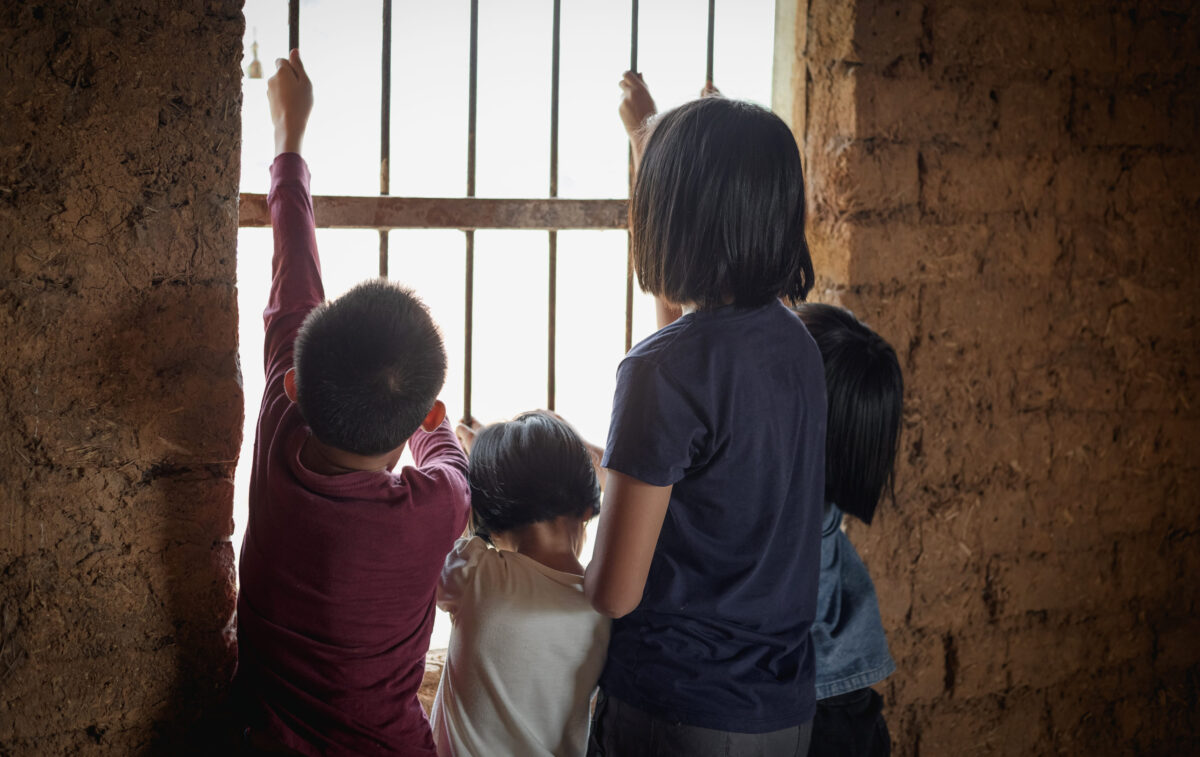
Prison does not take one person out of a community. It pulls an entire web of people into survival mode. Children lose parents. Partners become single-income households overnight. Grandparents become emergency caregivers. Mothers drive hours for a short visit. Fathers miss birthdays, school plays, graduations, funerals, and everyday moments that never make it into a court file. The sentence may belong to one person on paper, but the punishment spreads quietly through kitchens, classrooms, and bedrooms.
The Bureau of Justice Statistics found that about 684,500 state and federal prisoners were parents of at least one minor child in 2016, and those parents reported about 1.47 million minor children. That means prison is also a childhood issue. A child may not understand sentencing laws, but they understand absence. They understand why the phone call costs money, why visits feel tense, and why a parent cannot come home. Nobody tells families that prison can turn love into logistics. Every hug has paperwork. Every call has a countdown. Every memory has a security checkpoint attached.
Prison is expensive for the poorest people.
The public often imagines prison as free housing, free food, and free medical care. That picture misses the hidden economy inside. Incarcerated people and their families often pay for phone calls, video visits, emails, commissary food, hygiene items, clothing basics, medical co-pays, court debt, restitution, and fees. A person earning pennies or very low wages inside may still need to buy soap, stamps, extra food, or warm clothing. Families on the outside often become the bank.
This is where prison becomes a poverty trap. A mother may choose between a child’s school supplies and money for a loved one’s commissary account. A partner may pay for phone calls because silence hurts more. A former prisoner may come home with no savings, no job, and old court debts waiting. Prison Policy Initiative’s research on incarceration economics has tracked how costs tied to communication, commissary, fines, and related charges shift financial pressure onto people who often have the least money. Prison is not just time. For many families, it is a monthly bill.
Prison labor is not the redemption story people think it is
Work inside prison is often described as a form of discipline, training, or rehabilitation. Sometimes it can offer structure and skills. Many incarcerated people want meaningful work. The problem is that prison labor can also become a system where people cook, clean, farm, manufacture goods, fight fires, maintain buildings, or support facility operations for extremely low pay or no meaningful pay at all. The public sees the word “job” and assumes dignity. Many incarcerated workers experience something closer to control.
A 2025 Economic Policy Institute report criticized forced prison labor as part of a broader economic model that extracts work from incarcerated people under highly unequal conditions. The hardest part is the power imbalance. In the free world, a worker can quit a bad job. In prison, refusal can trigger disciplinary action, loss of privileges, worse housing, or other penalties, depending on the system. That does not mean all prison jobs are useless. It means the word “work” deserves scrutiny when the worker has almost no bargaining power.
Solitary confinement is more common than many people realize
Solitary confinement is often imagined as a last resort for the most dangerous people. The truth is more complicated. People can end up in restrictive housing for discipline, investigation, alleged gang affiliation, protection, administrative reasons, or because a prison lacks safer alternatives. Some people spend days there. Others spend months or years. The harm is not just boredom. Isolation can shred mental health, worsen trauma, and make ordinary human contact feel distant or threatening.
A major 2023 report by Solitary Watch and Unlock the Box estimated that federal and state prisons reported nearly 81,000 people in solitary confinement for 22 or more hours a day on a given day in 2019. That number does not fit the public myth that solitary confinement is rare. It is a hidden prison inside the prison. It can mean eating alone, pacing alone, panicking alone, and waiting for a door slot to open. The public rarely sees that version of punishment because it happens in silence, far from courtrooms and campaign speeches.
Staff shortages shape prison life more than outsiders know.
People often talk about prison safety as if more punishment automatically creates more order. Inside many facilities, daily safety depends on staffing, training, leadership, medical access, programming, and basic management. When prisons are understaffed, everything gets worse. Lockdowns increase. Medical trips get delayed. Recreation gets canceled. Classes stop. Violence can rise because there are not enough trained staff to prevent conflicts from escalating. Good officers burn out. Bad officers gain too much unchecked power.
Recent reporting and government-backed reviews have warned that staffing problems can make state prisons more violent and unstable, with shortages affecting medical escorts, daily operations, and safety. This is one of the least glamorous truths about prison life. A person may lose access to school, work, showers, family visits, or outdoor time because a facility cannot staff the day. The punishment becomes bigger than the sentence. Prison stops being a place of rules and becomes one where scarcity controls everything.
Reentry starts before release, but America often waits too long.
The day someone leaves prison should be a turning point. Too often, it becomes a cliff. People return home needing identification, housing, transportation, health care, addiction support, mental health care, clothing, food, a phone, family repair, job leads, and sometimes parole reporting within hours. A person may have changed deeply inside, but the outside world still sees a record first. Applications ask about convictions. Landlords hesitate. Employers disappear. Families expect gratitude, but the returning person may be overwhelmed, ashamed, anxious, or traumatized.
BJS recidivism data found that 71 percent of prisoners released across 34 states in 2012 were arrested within five years, and nearly half returned to prison within five years for a parole or probation violation or a new sentence. That does not prove people are hopeless. It proves reentry is a high-risk period that requires serious support. A prison sentence can end legally before it ends socially. If someone comes home with no stable place to sleep, no income, no treatment, and no real support, the country should not act shocked when survival becomes difficult.
Race and geography change the punishment.
Two people can commit similar crimes and face very different futures depending on race, wealth, county, judge, prosecutor, lawyer quality, plea pressure, criminal history rules, and state sentencing laws. American punishment is not distributed evenly. Some communities experience prisons as a constant presence. Others experience them as distant institutions reserved for “other people.” That gap shapes politics, empathy, and public understanding.
Prison Policy Initiative data shows that Black Americans are about 13 percent of the general U.S. population but 37 percent of people in prison or jail. BJS data also shows that the U.S. imprisonment rate at year’s end 2023 was 360 sentenced prisoners per 100,000 residents, down from 479 per 100,000 in 2013, yet racial disparities remained deeply visible. Geography matters too. A harsh county can change a life. A reform-minded county can change an outcome. Justice may wear a blindfold as a symbol, but in practice, it often knows your ZIP code.
Many people in prison are serving time inside a system that also supervises millions outside.
The prison story does not end at prison walls. Millions of Americans live under probation or parole supervision, where one missed appointment, failed drug test, unpaid fee, curfew violation, or technical violation can bring them back into custody. This is why the correctional system is larger than the incarcerated population alone. Prison is the center of the image, but supervision is the wider net.
At year’s end 2023, BJS reported that more than two-thirds of adults under correctional supervision were in the community on probation or parole, totaling about 3,772,000 people, while almost one-third were incarcerated in prisons or local jails. That means America’s prison system reaches far beyond bars. It follows people home. It shapes where they can go, who they can see, how they work, how they travel, and how quickly a mistake becomes a crisis. Nobody tells you that “freedom” after prison can come with a leash.
Healthcare behind bars can become a second punishment.

Prison health care sounds simple in theory. When the state takes custody of a person, it must provide basic medical care. In real life, access to medical care can be slow, uneven, understaffed, and tangled in grievance systems. A sick person may wait days, weeks, or months to be seen. Chronic pain can be dismissed. Dental problems can become emergencies. Mental health needs can be treated as behavioral problems. Aging prisoners can become trapped in buildings designed for younger bodies.
Bureau of Justice Statistics data on deaths from 2001 to 2019 found that illness caused nearly 87 percent of state prisoner deaths and 89 percent of federal prisoner deaths in custody. That statistic matters because prisons are full of people with high health needs. It also reveals why medical neglect can be so devastating. A missed appointment inside prison is not the same as missing one outside. You cannot simply drive to urgent care. You cannot choose another doctor. You cannot walk out and demand a second opinion. Your body belongs to a schedule you do not control.
Conclusion
American prisons are not just buildings filled with people who broke the law. They are living systems that expose what a country believes about punishment, poverty, race, work, illness, family, and second chances. The public conversation often stays stuck on one question: what did they do? That question matters, but it is not the only one. We also need to ask what prison does to people, what it does to families, what it does to communities, and what it does in our name.
The uncomfortable truth is that prison is both visible and hidden. Everyone knows it exists, but few people understand the daily machinery inside it. It is a place where time slows down, money still matters, health care can become a battle, family love becomes expensive, work can lose its dignity, and release can feel like another test designed for failure. A serious country can care about victims, accountability, safety, and human dignity simultaneously. The real question is not only how many people America locks up. It is what kind of society America becomes when so much suffering stays out of sight.