10 U.S. Presidents Whose Decisions Changed America for the Worse
America often turns its presidents into symbols before fully grappling with their consequences. We carve their faces into stone, quote their speeches, name highways after them, and soften their failures with the language of “complicated legacy.” Yet history is rarely that gentle. Some presidential decisions did not simply create temporary political outrage; they reshaped the nation in ways that harmed communities, weakened trust, expanded injustice, or left future generations paying for choices made in moments of fear, ambition, pride, or hesitation.
We should not pretend that any presidency can be reduced to a single decision. Some leaders on this list also achieved meaningful victories, passed major reforms, or guided the country through danger. That is exactly what makes the subject difficult. A president can be admired for one chapter and condemned for another. When we examine the decisions that changed America for the worse, we focus on choices that left wounds still felt today.
Andrew Jackson and the Cruel Machinery of Indian Removal

Andrew Jackson built his political image around strength, defiance, and the idea that he stood for the common white man against elites. That image helped make him one of the most powerful presidents of the early republic, but it also hid one of the darkest realities of his presidency. The Indian Removal Act of 1830 gave federal backing to the forced displacement of Native nations from their ancestral homelands in the Southeast. Families were treated as obstacles to expansion rather than sovereign peoples with rights, histories, laws, and homes.
The policy’s most infamous result was the Trail of Tears, a phrase that still carries the weight of hunger, disease, grief, exposure, and death. Entire communities were pushed west of the Mississippi under brutal conditions. Jackson’s defenders often point to his popularity or military record, but those achievements cannot erase the harm done. His presidency normalized the idea that national growth could be built on Indigenous suffering.
James K. Polk and the War That Deepened the Slavery Crisis
James K. Polk is often praised by expansionists for achieving nearly all of his promises in one term. Under his presidency, the United States gained vast new territories after the Mexican-American War. Yet that expansion immediately sharpened the national fight over slavery. Every new mile of territory raised the question of whether slavery would spread west, inflaming sectional tensions and deepening political divides.
Polk’s territorial gains came with military conquest, disputed justification, and a political aftermath that made compromise harder. While the map grew, the union weakened, and the slavery crisis intensified, moving the country closer to civil war.
James Buchanan and the Fatal Cost of Presidential Weakness

James Buchanan entered the White House as the country approached collapse. Slavery had already poisoned national politics, and trust between North and South was fragile. Buchanan needed clarity, courage, and a willingness to confront the crisis directly. Instead, his presidency became a study in hesitation, misjudgment, and appeasement. He failed to stabilize the nation and deepen the divide between legality and enforcement.
His handling of secession made that failure even more damaging. By the time Abraham Lincoln took office, several Southern states had already left the Union. Buchanan’s inaction helped push the country into its bloodiest conflict.
Andrew Johnson and the Betrayal of Reconstruction
Andrew Johnson inherited the presidency after Abraham Lincoln’s assassination, at a moment when the United States had to rebuild after the Civil War and protect newly freed Black Americans. Johnson resisted stronger protections for formerly enslaved people, clashed with Congress over Reconstruction, and offered leniency to former Confederate leaders who quickly worked to restore white political control in the South.
The consequences lasted far beyond his presidency. Black Americans faced terror, disenfranchisement, and the rise of Jim Crow laws. Johnson’s leadership allowed former Confederates to consolidate power before freedom could be fully protected, turning a historic opportunity into a long-term betrayal.
Woodrow Wilson and the Federal Blessing of Segregation

Woodrow Wilson is often remembered for leading the United States through World War I, but his domestic racial policies left a lasting stain. His administration expanded segregation within the federal government, reversing opportunities that Black civil servants had fought to build. Federal offices became discriminatory, and Black workers faced demotion, humiliation, exclusion, and reduced paths to advancement.
By granting official authority to segregation, Wilson strengthened a system that denied dignity and opportunity. His presidency demonstrated how federal power can validate injustice, even while promoting democracy abroad.
Herbert Hoover and the Tariff Mistake That Worsened the Depression
Herbert Hoover did not cause the Great Depression, but his support for the Smoot-Hawley Tariff Act of 1930 intensified it. The law raised tariffs on thousands of imported goods to protect American farmers and businesses, but foreign retaliation weakened global trade, worsening an already collapsing economy.
Hoover’s rigid response and reliance on outdated policies left millions of Americans without relief. The government appeared distant and ineffective at a moment when bold action was most needed.
Franklin D. Roosevelt and the Internment of Japanese Americans
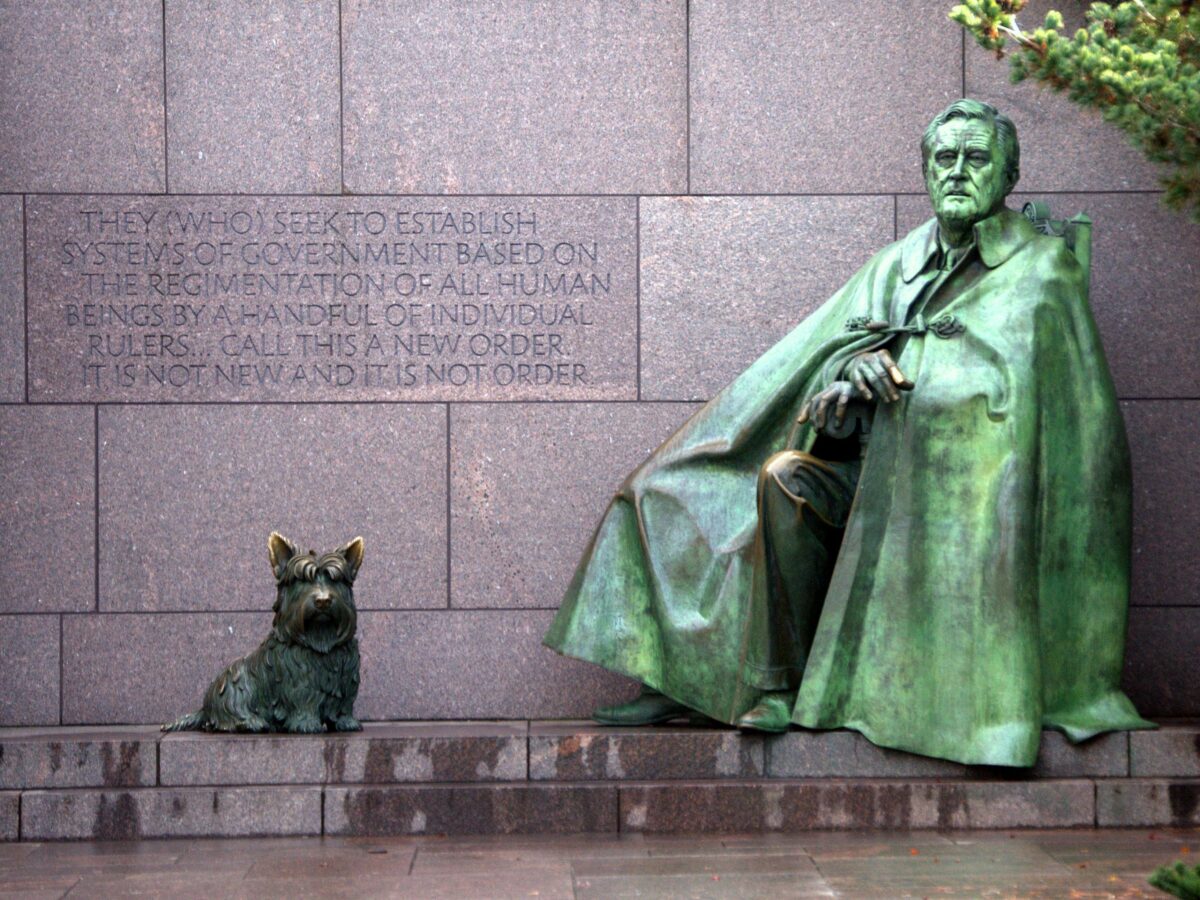
Franklin D. Roosevelt led the nation through the Great Depression and World War II, yet Executive Order 9066 remains one of the most shameful decisions in American history. Following Pearl Harbor, Japanese Americans were forcibly removed from the West Coast. Many were citizens who had committed no crime, yet families lost homes, farms, businesses, and freedom.
Roosevelt’s decision shows how fear can override constitutional rights. Even in times of crisis, the government failed to protect citizens, leaving a lasting lesson on civil liberties and the consequences of prejudice.
Lyndon B. Johnson and the Vietnam Escalation
Lyndon B. Johnson’s domestic accomplishments include major civil rights and anti-poverty programs, but his escalation of the Vietnam War damaged the country’s trust in government. The Gulf of Tonkin Resolution allowed rapid expansion of U.S. involvement, leading to a war that consumed lives, money, and confidence.
The conflict split communities, drafted young Americans, and widened the credibility gap between officials and citizens. Johnson’s attempt to avoid appearing weak abroad created profound weakness at home, leaving distrust that shaped national attitudes toward war for decades.
Richard Nixon and the Watergate Collapse of Trust
Richard Nixon’s presidency featured major foreign policy achievements, yet Watergate exposed the dangers of presidential power exercised in secret for self-protection. What began as a break-in at the Democratic National Committee headquarters escalated into a scandal involving cover-ups, abuse of authority, and a constitutional crisis, culminating in Nixon’s resignation.
The broader impact was lasting. Americans saw that power could be abused without immediate consequence, deepening public suspicion of campaigns, intelligence agencies, and the presidency itself.
George W. Bush and the Iraq War’s Long Shadow
George W. Bush’s decision to invade Iraq in 2003 remains one of the most consequential in modern U.S. history. The administration cited weapons of mass destruction that were never found. The resulting war became long, bloody, and destabilizing, costing thousands of American and Iraqi lives while weakening global perception of U.S. credibility.
The invasion reshaped the Middle East, strained alliances, and left Americans questioning intelligence and leadership. The long-term consequences highlight the dangers of fear, miscalculation, and unchecked power.
Conclusion
These ten presidents shaped the nation in ways that caused enduring harm. Whether through acts of aggression, hesitation, prejudice, or misjudgment, their decisions left physical, social, and moral scars. The consequences touched families, communities, and institutions, often for generations. Presidential power is never abstract: it lands on people, communities, and the nation’s future. Understanding these failures is essential to recognizing how leadership can amplify harm and why accountability matters at the highest level.