15 of the Ugliest Cars from the 1980s That Drivers Would Rather Forget
The 1980s were an interesting decade for cars. Automakers were experimenting with new shapes, smaller engines, unusual body designs, and futuristic styling. Some of those experiments gave us vehicles that still look beautiful today. Others produced cars that make people wonder how they ever made it from the design studio to the showroom.
Awkward proportions, oversized bumpers, strange rear ends, questionable luxury styling, and vehicles that seemed to be having an identity crisis.
Of course, beauty is subjective. Some of these cars have become nostalgic favorites, and a few collectors appreciate them precisely because they look different from everything else on the road.
Still, these 15 vehicles have earned a place in conversations about the decade’s most questionable automotive designs.
1981 AMC Eagle Kammback
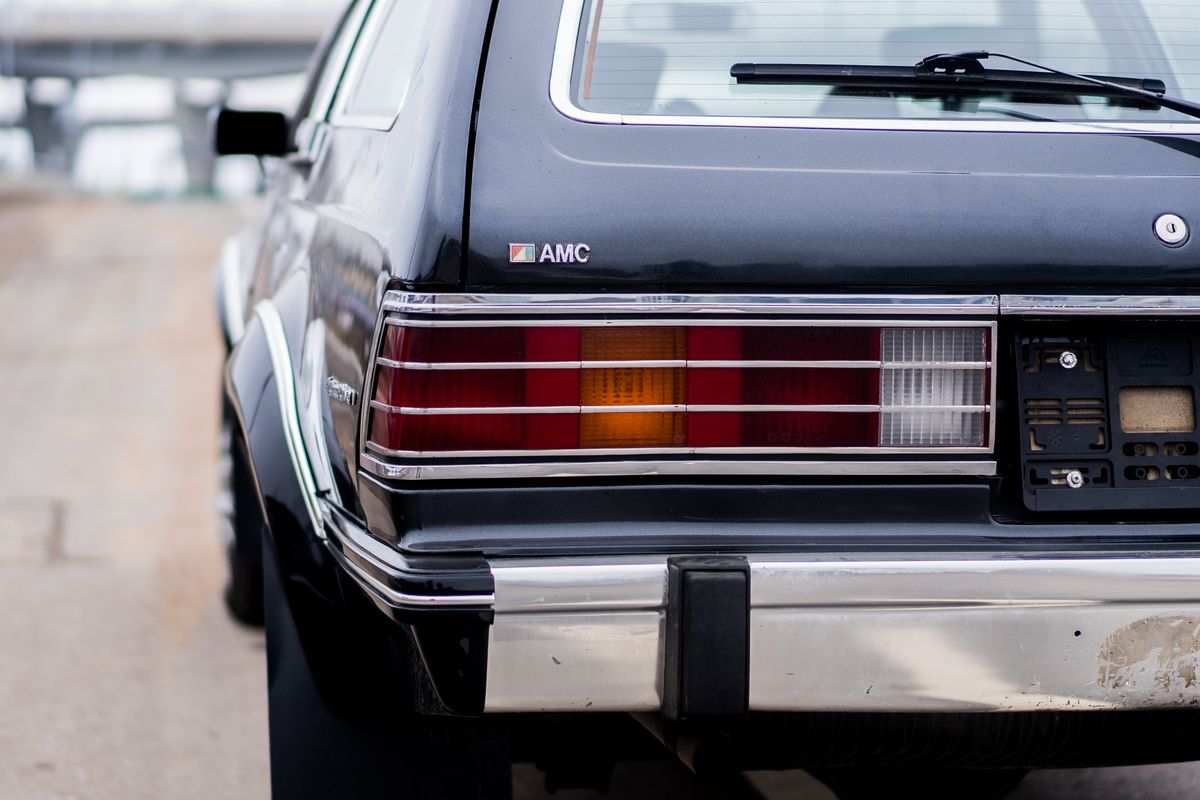
The AMC Eagle was ahead of its time in one important way. It combined passenger-car comfort with four-wheel-drive capability, creating a formula that would eventually become popular with crossover vehicles.
Unfortunately, not every version was equally attractive.
The Eagle Kammback looked like a small hatchback that had been lifted for an off-road adventure. Its unusual proportions, raised stance, and short rear section made it difficult to mistake for an ordinary family car.
Some drivers appreciated its practicality, but its appearance was certainly unconventional. It remains one of the stranger examples of AMC’s willingness to experiment.
Related: 10 Car Insurance Mistakes That Are Costing You More Than You Think.
1980 Cadillac Seville
Cadillac had spent decades building a reputation around elegant American luxury. Then came the Seville’s controversial bustle-back design.
Its raised, sharply shaped rear section gave the car an unusual silhouette, as if the trunk belonged to a different vehicle.
The styling was intended to communicate sophistication and European influence, but not everyone was convinced. From certain angles, the rear looked awkwardly disconnected from the rest of the body.
For a luxury car carrying the Cadillac name, it was surprisingly divisive.
1980 Ferrari Mondial
Ferrari is usually associated with beautiful sports cars, which makes the Mondial an interesting exception.
The Mondial was designed to offer something different from Ferrari’s two-seat sports cars. It had a mid-mounted V8 engine and seating for four, making it more practical for buyers who wanted additional passenger space.
But the extra practicality came with challenging proportions.
Its relatively long body, compact passenger compartment, and unusual front-end styling divided opinions. Compared with the sleek Ferraris many enthusiasts admired, the Mondial looked somewhat bulky.
It had the Ferrari badge, but its appearance never achieved the same universal admiration as some of its relatives.
1982 Maserati Biturbo
Maserati had a reputation for producing elegant Italian automobiles, but the early Biturbo was a controversial addition to that history.
Its compact, boxy body lacked some of the dramatic styling enthusiasts expected from the brand. The front end was relatively ordinary, and the overall shape looked more like a conventional family coupe than an exotic Italian sports car.
The Biturbo was meant to make Maserati ownership more accessible, but its appearance didn’t always convey the exclusivity buyers associated with the name.
Some enthusiasts appreciate its understated character today. Others still consider it one of the less attractive Maseratis.
1982 Nissan Stanza Wagon
The Nissan Stanza Wagon was an early example of the industry’s experimentation with vehicles that combined a station wagon’s practicality with a van’s space.
Unfortunately, it didn’t look particularly graceful.
The tall body, large windows, upright rear section, and unusual proportions made it look like a vehicle caught between two different categories.
It offered useful interior space, but its exterior design was difficult to describe as elegant.
Looking back, it also reminds us that automakers were experimenting with family transportation concepts long before modern crossover vehicles became fashionable.
1982 Cadillac Cimarron
The Cadillac Cimarron remains one of the most criticized vehicles in the brand’s history.
Cadillac wanted to attract buyers interested in smaller European luxury cars, so it introduced a compact model based on General Motors’ J-body platform.
The problem was that the Cimarron looked too much like its less expensive Chevrolet, Pontiac, Buick, and Oldsmobile relatives.
Adding Cadillac badges, extra trim, and luxury features did not completely disguise its ordinary origins.
For buyers expecting something distinctive from Cadillac, the Cimarron was a disappointing surprise.
1983 Chevrolet Citation
The Chevrolet Citation was an important vehicle for General Motors because it introduced the company to a new generation of compact front-wheel-drive cars.
It was also a commercial success when it first arrived.
However, its styling has not aged particularly well. The tall body, blunt front end, thick rear pillars, and unusual proportions made the hatchback look rather plain.
The Citation was designed with practicality in mind, but it lacked the visual personality that made some other 1980s cars memorable.
It is a good example of how a vehicle can be popular with buyers without becoming a design classic.
Related: 10 States With the Highest Car Theft Rates.
1983 Glenfrome Facet
If ordinary 1980s cars looked strange, the Glenfrome Facet took things to another level.
This unusual British vehicle was created by a company known for modifying luxury four-wheel-drive vehicles. Its dramatic bodywork gave it an appearance that seemed to combine several different automotive ideas.
The Facet had exaggerated proportions, unusual styling details, and an unmistakably unconventional appearance.
It was certainly not the kind of vehicle someone could park unnoticed in a shopping-center parking lot.
Its rarity makes it an interesting piece of automotive history, but its design remains difficult to defend in conventional beauty contests.
1984 Zimmer Quicksilver
The Zimmer Quicksilver tried to combine modern mechanical components with the look of an old-fashioned luxury automobile.
Its design was certainly ambitious.
Based on the Pontiac Fiero, the Quicksilver received an extended body, an unusually long front end, and retro-inspired styling details.
The result was a vehicle that looked like it had a massive engine under the hood, even though its mechanical layout was quite different from what the exterior suggested.
Some people admired its extravagant personality. Others wondered why anyone would take a relatively compact sports car and make it look like an oversized vintage limousine.
1984 Lincoln Mark VII
The Lincoln Mark VII had some attractive qualities, particularly in its performance-oriented LSC version.
But its overall appearance was not universally loved.
Its long front section, large rear overhang, prominent bumpers, and formal luxury styling created a somewhat awkward combination.
The car tried to balance American luxury with a more modern, European-inspired approach, but the result could look heavy and dated.
Despite the styling debate, the Mark VII has gained appreciation among enthusiasts who value its place in Lincoln’s automotive history.
1985 Alfa Romeo Milano
The Alfa Romeo Milano, also known as the 75 in several international markets, had an unusual appearance that divided car enthusiasts.
Its angular body, distinctive front grille, sharply defined rear section, and unusual proportions set it apart from many European sedans of the period.
Some drivers appreciated its distinctive Italian personality. Others found its styling too busy and awkward.
It was certainly not a conventional-looking family sedan, which may be exactly why some collectors appreciate it today.
1985 Cadillac DeVille
Cadillac’s traditional image centered on large, imposing luxury cars. But the company’s smaller 1980s models struggled to maintain that distinctive presence.
The 1985 DeVille was a product of an era when American automakers were downsizing their vehicles to respond to changing market conditions.
The result was a car that some traditional Cadillac fans felt lacked the proportions and road presence of earlier models.
Its styling also shared similarities with other General Motors vehicles, making it harder to distinguish from less expensive cars.
For people who remembered the enormous Cadillacs of earlier decades, this smaller interpretation was a difficult adjustment.
1985 Merkur XR4Ti
The Merkur XR4Ti looked as though its designers had been given permission to experiment without worrying too much about conventional styling.
Its most recognizable feature was the unusual rear spoiler arrangement, which gave the car a distinctive appearance.
The large windows and angular bodywork also set it apart from more traditional American coupes.
Some enthusiasts considered it futuristic and interesting. Others thought the design was unnecessarily complicated.
Whatever side you took, the XR4Ti was certainly no ordinary-looking car in the parking lot.
Related: 10 Ways to End a Conversation Without Making It Awkward
1986 Chrysler LeBaron Town & Country Convertible
The Chrysler LeBaron Town & Country convertible attempted to bring traditional luxury styling into a more modern package.
Its wood-look exterior trim, formal front grille, and decorative details gave it a distinctive appearance.
However, that combination wasn’t everyone’s idea of attractive.
The vehicle looked like a compact convertible trying very hard to imitate a much larger luxury car. The decorative wood-style panels also made it appear unusual compared with the cleaner designs emerging during the decade.
Some people loved its retro charm. Others thought Chrysler had gone too far with the imitation wood.
1989 Alfa Romeo SZ

The Alfa Romeo SZ, sometimes nicknamed Il Mostro, was arguably one of the boldest automotive designs of the late 1980s.
Its sharply cut bodywork, unusual headlights, squared-off front end, and dramatic proportions made it look almost futuristic.
Unlike some other vehicles on this list, the SZ wasn’t meant to be ordinary family transportation. It was a limited-production sports car designed to attract attention.
And it certainly succeeded.
Some enthusiasts consider it a misunderstood design masterpiece. Others see a car that looks like it was assembled from several unrelated pieces.
Either way, it is hard to forget.
Were 1980s Car Designers Simply Taking Too Many Risks?
Looking back, it is easy to laugh at some of these designs. But the 1980s were a period of major change in the automotive industry.
Manufacturers were responding to fuel-economy concerns, changing consumer preferences, new safety expectations, and competition from overseas automakers.
Some experimented with smaller vehicles, unusual shapes, and luxury features that would have seemed strange just a decade earlier.
Not every experiment worked. Yet some of the vehicles that attracted the most criticism have become interesting collector cars precisely because they are unusual.
And that raises an entertaining question for anyone who remembers driving during the decade.