4 States That Make Drivers Clear Snow Off Their Car Roof, and the Fines Can Top $1,000
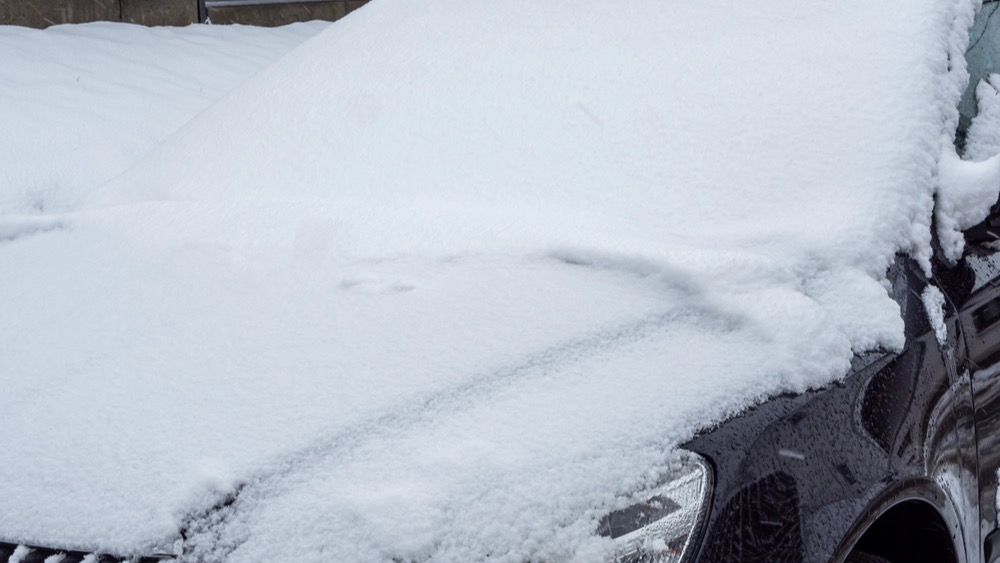
Every winter, it’s the same sight. After a snowstorm, someone pulls out of a driveway with a clean windshield and a thick slab of snow still sitting on the roof. A few miles down the highway, that snow starts to slide, and chunks of ice go flying into the cars behind them.
Most people think of it as lazy or annoying, but in some states it’s also against the law. A handful of states have passed rules requiring drivers to clear snow and ice from their entire vehicle, including the roof, hood and trunk. Several of those laws were named after people who were killed or badly hurt by flying ice.
With the first big storms of the season on the way, it’s worth knowing where these laws apply and what the penalties are. Here are the states that make drivers clear the snow off their car roof, along with a look at how the rules work elsewhere.
Why Snow on Your Roof Is Dangerous
Snow left on a car roof doesn’t just sit there. As the car warms up and picks up speed, the snow can loosen and slide forward onto the windshield, blocking the driver’s view in an instant. Or it can blow backward and hit the cars behind.
When temperatures swing above and below freezing, that snow often hardens into heavy sheets of ice. Safety officials have warned that these “ice missiles” can strike other vehicles with enough force to crack windshields or cause drivers to lose control, according to FOX 5 DC. Some of these incidents have led to serious injuries and deaths, which is exactly why several states acted.
1. New Hampshire
New Hampshire was one of the first states to pass this kind of law. Since 2002, drivers there have been legally required to clear snow and ice from their vehicles before getting on the road, according to WMUR. The rule is known as Jessica’s Law.
It’s named after Jessica Smith, who was killed after ice from a tractor-trailer struck a box truck that then hit her car. Under the law, drivers face fines of $250 to $500 for a first offense and $500 to $1,000 for later offenses. Jessica’s mother has spent years urging drivers to take the few minutes needed to clean off their cars.
2. New Jersey
New Jersey requires drivers to make “all reasonable efforts” to remove accumulated snow and ice from exposed surfaces of their vehicles, including the hood, trunk, windshield, windows and roof, before driving on a street or highway. Drivers can be fined even if no snow actually flies off.
According to WUSA9, New Jersey drivers can face a fine of $25 to $75 “regardless of whether the ice and snow is dislodged from the vehicle.” If flying ice or snow causes property damage or injury, the fines rise to $200 to $1,000.
3. Connecticut
Connecticut’s law requires drivers of both commercial and personal vehicles to remove accumulated snow and ice from the hood, trunk and roof so it doesn’t pose a threat to people or property while the vehicle is moving. The rule is found in Section 14-252a of the state’s general statutes, according to the CT Mirror.
Drivers who don’t clear their vehicles face a $75 fine. If snow or ice from the vehicle injures someone or damages property, the penalties climb steeply: $200 to $1,000 for personal vehicles and $500 to $1,200 for commercial vehicles, for each offense.
4. Pennsylvania
Pennsylvania’s rule is often called Christine’s Law. It’s named after Christine Lambert, who was killed on Christmas Day 2005 when a large piece of ice came off a passing vehicle and crashed through her windshield. The legislature passed the law unanimously, and it took effect in 2022, according to FOX 5 DC.
Under the law, Pennsylvania drivers must make “reasonable efforts” to remove snow and ice from the hood, trunk and roof within 24 hours after snowfall stops. Police can stop a vehicle if the accumulation may pose a threat, with a base fine of $50. If snow or ice falls from a moving vehicle and causes death or serious injury, the fine can range from $200 to $1,500.
Delaware and Other States to Watch
Delaware has also addressed the issue. FOX 5 DC reported that Delaware’s legislative text requires drivers to remove accumulated snow and ice from a vehicle’s exterior before driving, with a civil penalty of $25 to $75 and higher penalties if the snow or ice causes damage or injury. Drivers in Delaware should check the latest rules with the state’s Division of Motor Vehicles.
Other states have considered similar bills. In Maryland and Virginia, lawmakers introduced bills that would have fined drivers who left snow on their roofs, but both died in committee, according to WUSA9. Washington, D.C., once passed emergency legislation requiring drivers to clean off their cars, but it was never made permanent.
States Without a Specific Law
Many states don’t have a law aimed specifically at snow on the roof, but that doesn’t mean drivers can’t get in trouble. New York, for example, has no single statewide law requiring roof snow removal, but it does prohibit driving with an obstructed view, and drivers can be cited if snow or ice from their vehicle creates a hazard, according to FOX 5 DC.
Maryland’s transportation code also bars driving a vehicle loaded in a way that obstructs the driver’s view, and most states have similar rules about clear windshields and windows. In many places, drivers can also be held responsible if snow or ice from their car causes a crash or damages someone else’s property.
How to Clear Your Car the Right Way
Safety experts recommend clearing your roof first, then the hood and trunk, then the windows, mirrors, lights and license plate. Starting with the roof keeps snow from sliding down onto areas you’ve already cleaned.
A long-handled snow broom makes it much easier to reach the middle of the roof, especially on SUVs, vans and pickups. Give yourself a few extra minutes on snowy mornings so you’re not tempted to rush. It’s also a good idea to keep an ice scraper and brush in the car all winter, along with the other basics many people pack when they winterize their home and car.
A Few Minutes That Could Save a Life
Clearing snow off your car takes only a few minutes, but it can prevent serious accidents. Whether or not your state has a specific law, cleaning off the whole vehicle is the safest choice for you and everyone else on the road.
If you’re traveling through several states this winter, remember that the rules can change at the state line. The simplest approach is to clear your car completely every time, no matter where you’re driving.