8 Forgotten Fruit Desserts That Were Summer Staples in Small-Town America
Long before bakery cases and boxed cake mixes, small-town summers had a rhythm of their own. The berries ripened, the peach trees sagged, and the apples started dropping in the orchard by late August. Home cooks had to use all that fruit fast, and they came up with a whole family of simple desserts to do it.
Most people today know a cobbler or a crisp, but our grandparents had a much longer list. They made grunts and slumps, buckles and bettys, pandowdies and sonkers. The names sound funny now, and many of them have slipped out of everyday kitchens, but each one has a story and a loyal group of fans.
If you grew up eating warm fruit desserts on a screened-in porch, some of these might ring a bell. Here are eight forgotten fruit desserts that were once summer staples across small-town America.
1. Pandowdy
A pandowdy starts out looking a lot like a pie. Sliced fruit, often apples, goes into a dish under a sheet of pastry, with or without a bottom crust. But near the end of baking, the cook cuts up the top crust and presses it down into the bubbling fruit so the juices rise up around the flaky pieces.
That rough, “dowdy” look is likely part of how it got its name. Yankee Magazine notes that one cookbook of presidential recipes even claims John Adams celebrated Independence Day with a bowl of apple pandowdy. Whether or not that’s true, it was a sturdy, no-fuss dessert that busy farm wives could put together without worrying about a perfect crust.
2. Blueberry Grunt
The grunt is one of the most old-fashioned desserts on this list, and it doesn’t even need an oven. Fruit, usually blueberries, is cooked down in a cast-iron skillet or kettle on the stovetop. Spoonfuls of biscuit dough are dropped on top, then the pan is covered so the dough steams into soft, fluffy dumplings.
The name is a bit of a mystery. Some say it comes from the sound the fruit makes as it bubbles under the lid, while others joke it’s the sound people make after the first bite. Grunts were especially popular in New England and parts of Canada, where wild blueberries were plentiful and a hot kitchen in July was something to avoid.
3. Apple Slump
A slump is a close cousin of the grunt. In many recipes, it’s made the same way, but the biscuit topping is baked uncovered instead of steamed. The name may come from the way it “slumps” onto the plate when you scoop it out.
This dessert even made its way into literary history. According to the New England Historical Society, Louisa May Alcott, the author of “Little Women,” nicknamed her family’s sagging home in Concord, Massachusetts, “Apple Slump,” after the fruit dessert. The house was officially called Orchard House, but her nickname tells you how common the dish was in her day.
4. Blueberry Buckle
A buckle is more cake than pie, which made it a favorite for church suppers and Sunday afternoons. A simple yellow cake batter is layered with berries and finished with a crumb topping. As it bakes, the cake rises up between the berries, and the surface “buckles” into a lumpy, golden top.
Buckles were perfect for summer because they could be made with whatever berries the kids picked that morning. They also traveled well, so they often showed up at potlucks and family reunions. Today, you’re more likely to find a blueberry muffin than a buckle, but many old church cookbooks still have a recipe tucked inside.
5. Apple Brown Betty
The brown betty is a thrifty dessert that made good use of stale bread. Sliced fruit, usually apples, is layered with sweet, buttery bread or cracker crumbs and baked until the top turns brown and crisp. It’s closely related to bread pudding and was a smart way to stretch a few apples into a dessert for the whole family.
Betty recipes were common in American cookbooks for generations, and they often appeared on the table in late summer when the first apples came in. Some families made them with peaches or rhubarb instead. Because it doesn’t need a crust or even a recipe card, it was one of those desserts grandmothers made by feel.
6. Sonker
If you’ve never heard of a sonker, you’re not alone. This deep-dish fruit dessert is a treasure of Surry County, North Carolina, the area that includes Mount Airy. The Yadkin Valley tourism site says its local roots date to the 1800s and describes it as something akin to a deep-dish pie or cobbler.
Sonkers were often made to stretch fruit in hard times or to use up fruit that was getting too ripe. Recipes vary from family to family. Carolina Country notes that some versions use peaches under a pie-like crust, while others use sweet potatoes or apples under a batter, and many are served with a sweet “milk dip” poured over the top. The county even has a Sonker Trail and an annual Sonker Festival to keep the tradition alive.
7. Fruit Crumble
Crumbles were the easiest fruit dessert of all, which is why so many busy mothers loved them. Fruit went into a baking dish and got covered with a soft streusel of flour, butter and sugar, sometimes with chopped nuts mixed in. It baked until the fruit bubbled up at the edges and the topping turned golden.
While crisps with oats became the more common choice in later years, the plain crumble was a summer standard for a long time. It worked with rhubarb, cherries, plums or peaches, and it could be thrown together in minutes. Many people still remember it served warm with a scoop of vanilla ice cream or a pitcher of cold cream on the side, alongside a tall glass of homemade lemonade.
8. Peach Cobbler With Drop Biscuits
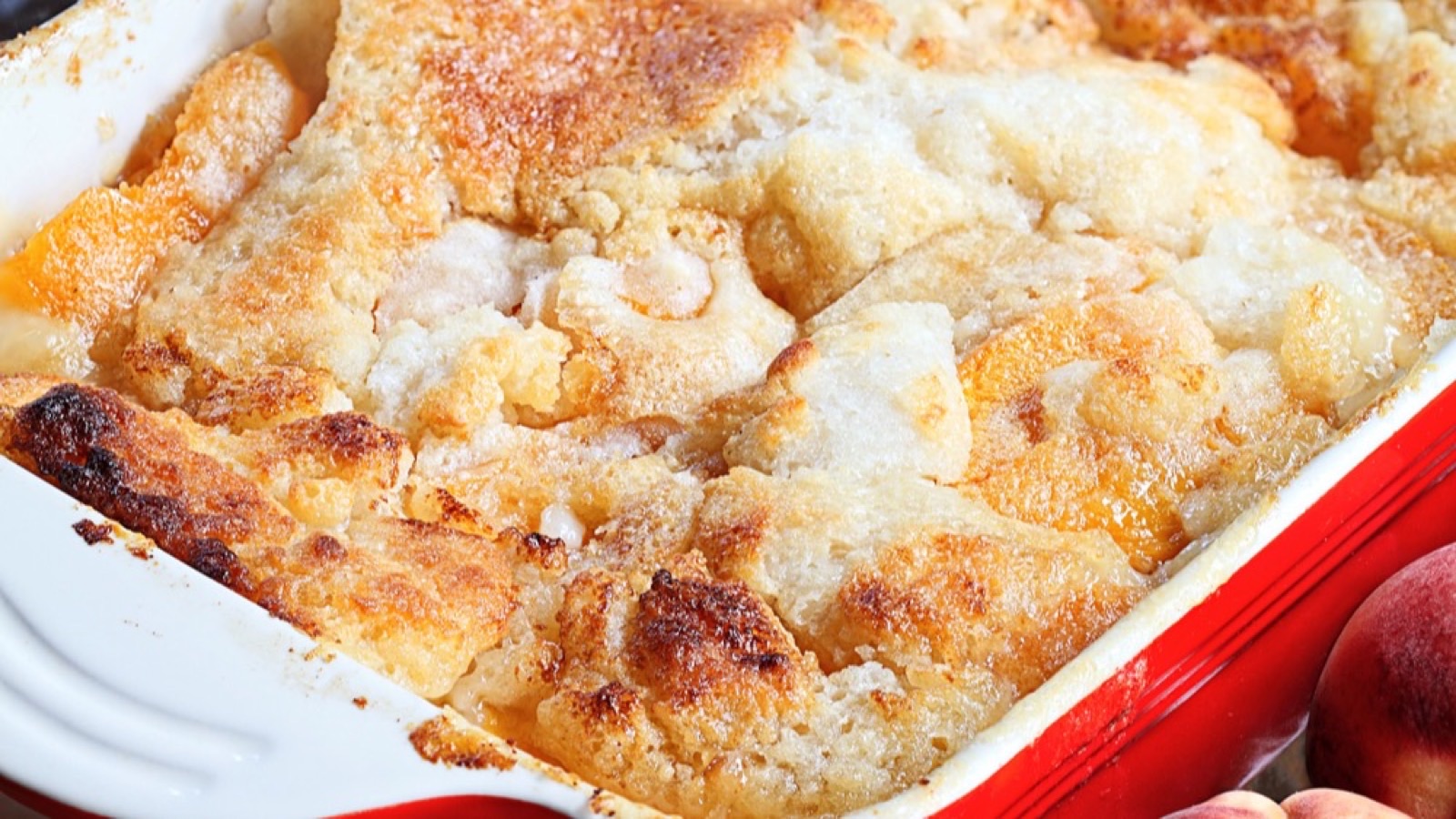
Cobbler is not forgotten, of course, but the old-fashioned small-town version has changed. Many early cobblers were made with fresh fruit under spoonfuls of biscuit dough dropped right on top. The bumpy surface looked like a cobblestone road, which is likely where the name comes from.
Today, many recipes use cake mix or a pourable batter instead. The drop-biscuit cobbler, made with a cast-iron pan and peaches from a roadside stand, is the version many grandparents remember most. It belongs right next to classic American pies as one of the desserts that defined summer in small towns.
Bringing Back the Old Names
These desserts were born out of necessity. Families had more fruit than they could eat, little money to spare and plenty of hungry mouths, so cooks came up with simple, clever ways to turn a basket of berries into something special. Many of them never needed a measuring cup.
So which of these did your family make? Did your grandmother call it a grunt, a slump or just “that blueberry thing”? Share your memories in the comments, and tell us which forgotten dessert you’d love to see back on summer tables.