10 Serial Killers Who Are On The Loose
Most people assume a convicted serial killer disappears behind prison walls forever.
That belief feels comforting. A person commits terrible crimes; the justice system steps in; the public is protected; and the story ends with a locked cell door.
But real life is messier than that.
Some convicted killers have been released after plea deals, parole decisions, juvenile sentencing limits, mental health rulings, or time served under the laws of their countries. A linked true-crime list highlighted several infamous cases involving killers who were no longer behind bars, though some details have since changed. For example, Louis van Schoor, Arnfinn Nesset, and Wolfgang Abel are now reported dead, which means older “free killers” lists can become outdated quickly.
The cases are still disturbing because they force a hard question: what should society do when someone responsible for multiple deaths finishes a sentence or is legally allowed to reenter the world?
Pedro López Remains One of the Most Frightening Unknowns
Pedro Alonso López is often described as one of the most prolific serial killers in modern history. He was convicted in Ecuador after crimes involving children across parts of South America. He was released in 1998 after serving his sentence and was later reported to have disappeared. His exact fate remains uncertain, though warrants were reportedly issued after his release.
That uncertainty is what makes his case so unsettling. In many true-crime stories, the ending is grim but clear. The killer dies in prison. The killer is executed. The killer remains locked away.
López’s case does not give the public that kind of closure.
Instead, it leaves behind a haunting question: what happens when someone tied to massive violence simply vanishes?
Karla Homolka’s Release Still Angers Many Canadians
Karla Homolka remains one of Canada’s most controversial criminal cases. She was convicted of manslaughter in connection with the deaths of Leslie Mahaffy and Kristen French after making a plea deal with prosecutors. She served 12 years and was released in 2005.
The outrage around Homolka’s case has never fully faded because of what later became known about her role. Many Canadians felt her deal was far too lenient, especially because the crimes involved young victims and extreme cruelty.
Her case became a symbol of a nightmare scenario in criminal justice: a person makes a deal, receives a shorter sentence, and later the public learns more details that make the deal feel deeply wrong.
It is one reason plea bargains in high-profile murder cases can leave wounds that last for decades.
Mary Bell’s Case Raises a Different Kind of Question

Mary Bell’s case is different from many others because she was a child when she killed two younger boys in England in 1968. She was convicted of manslaughter and later released from custody in 1980 at age 23. A court order granted her lifelong anonymity, which was later extended to protect her family.
Her case sits in a difficult moral space.
On one hand, the crimes were horrifying. Two children died, and their families carried a pain that no sentence could undo.
On the other hand, Bell herself was also a child at the time of the killings. That fact has long shaped public debate over punishment, rehabilitation, childhood trauma, and the possibility of rebuilding a life after a terrible crime committed at a young age.
Her case does not produce easy answers. It asks society to weigh accountability against the reality that children are not sentenced, judged, or understood in the same way as adults.
The Lainz “Angels of Death” Shocked Austria
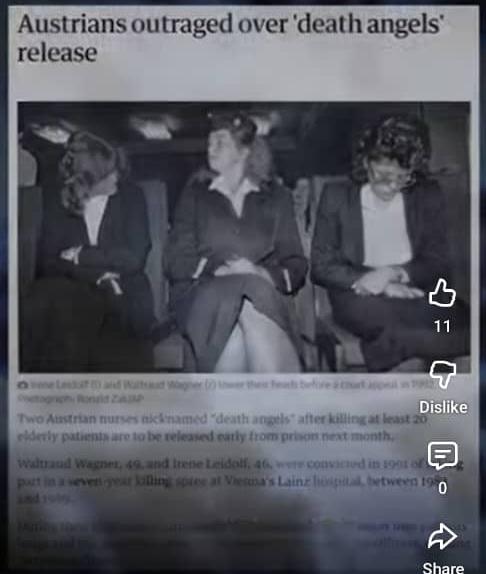
The Lainz case involved four Austrian nurses’ aides who were convicted after elderly hospital patients were murdered in Vienna during the 1980s. The crimes involved methods such as overdosing and forcing water into patients’ lungs. By 2008, all four women had reportedly been released from prison, causing public anger in Austria.
This case remains disturbing because the setting was supposed to be a place of care.
Hospitals and nursing facilities depend on trust. Patients are vulnerable. Families hand over loved ones believing they will be protected, treated, cleaned, fed, and watched with compassion.
When killers hide inside caregiving roles, the betrayal feels especially personal.
The Lainz case also shows how hard it can be for the public to accept release decisions in medical murder cases. Even after years in prison, many people struggle to believe someone who abused such intimate trust should ever be allowed back into society.
Charlene Gallego’s Case Shows the Power of a Plea Deal
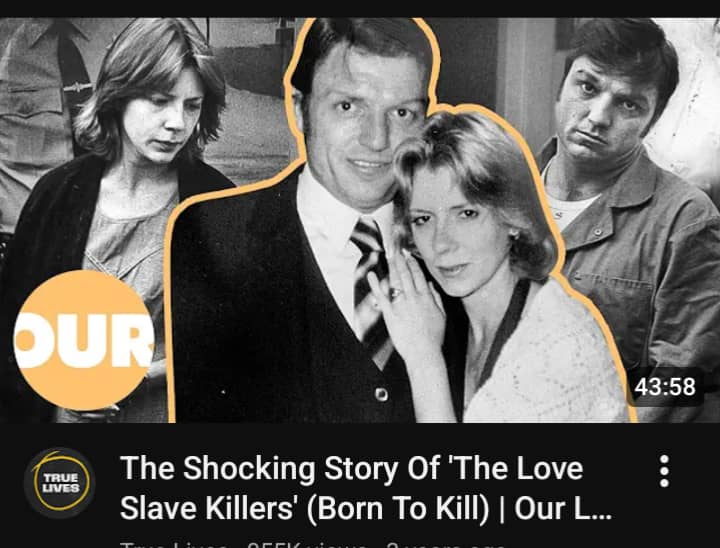
Charlene Gallego, also known as Charlene Williams, was connected to the crimes of her husband, Gerald Gallego. The couple’s crimes involved the kidnapping, sexual assault, and murder of young women. Charlene accepted a plea deal, testified against Gerald, and was released in 1997 after serving her sentence. Gerald Gallego died in prison in 2002.
Her case still bothers people because it raises a painful question: how much mercy should a person receive for helping prosecutors convict someone else?
The justice system often relies on deals. Without them, some dangerous offenders might never be convicted. But those deals can feel brutal to victims’ families when one participant in horrific crimes eventually walks free.
That tension never fully goes away.
Some Cases Do Not Fit the Serial Killer Label Cleanly
One important point is that not every case on older true-crime lists fits the classic definition of a serial killer.
For example, Mitchell Johnson and Andrew Golden were school shooters in the 1998 Westside Middle School shooting in Arkansas, not traditional serial killers. They killed four students and one teacher and wounded several others. Because they were juveniles, they were released in early adulthood. Golden, who later changed his name, died in a 2019 car crash.
That distinction matters.
True-crime writing can become sloppy when every shocking killer is placed under the “serial killer” label. A serial killer, a mass shooter, a spree killer, and a person convicted as an accomplice are not always the same thing legally or criminologically.
The public may feel the same fear, but the categories matter if the goal is accuracy.
Why These Cases Keep Getting Attention
Stories about released killers remain popular because they hit one of the public’s deepest fears: the idea that the justice system can make decisions ordinary people find impossible to accept.
A person can commit a terrible crime and still benefit from sentencing limits. A person can trade testimony for a lighter punishment. A person can be released because the law in that country allows it. A person can receive a new identity because society decides rehabilitation or safety requires privacy.
These decisions may have legal reasons. Some may even have practical reasons.
But emotionally, they can feel unbearable.
Victims do not get to return. Families do not get their loved ones back. Communities do not forget. So when a killer is released, the legal sentence may end, but the public argument continues.
The Real Lesson Is More Complicated Than Fear
It is easy to turn these cases into pure outrage, but the bigger lesson is more complicated.
Some offenders were adults who committed calculated crimes. Some were juveniles. Some were accomplices who cooperated. Some were released under legal systems with maximum sentence limits. Some had their identities protected. Some later died, making older online lists inaccurate.
That is why true-crime stories need careful handling.
The public deserves to know when dangerous people were released. Victims deserve to be remembered with dignity. Readers deserve facts that are current and clearly explained.
But these stories should not be written only to shock people. They should also help readers understand how the justice system can produce outcomes that feel deeply uncomfortable.
Because the most frightening part is not only that some killers walked free.
It is that in several cases, the law allowed it.