The Missing Trump Merchandise at the Great American State Fair and What It Really Signals
The Real Story Is Not Absence but Design
The absence of Donald Trump’s face from official Great American State Fair merchandise is not a branding gap. It is a controlled design choice inside a much larger system of political, civic, and commercial storytelling around America’s 250th anniversary.
At first glance, it looks surprising. An event closely tied to a sitting president, staged as part of a national semiquincentennial celebration, would normally be expected to feature strong presidential imagery on its official souvenirs. Instead, the merchandise leans heavily on Freedom 250 branding, national symbols, monuments, and anniversary language tied to 1776 to 2026.
That contrast is not accidental. It reflects how the anniversary ecosystem has been structured across different layers of messaging.
Official Merchandise Is Built for Mass Neutrality
The official fair merchandise operates in a broad public space. It is designed to be worn and purchased by families, tourists, school groups, and international visitors without forcing a political identity onto the buyer.
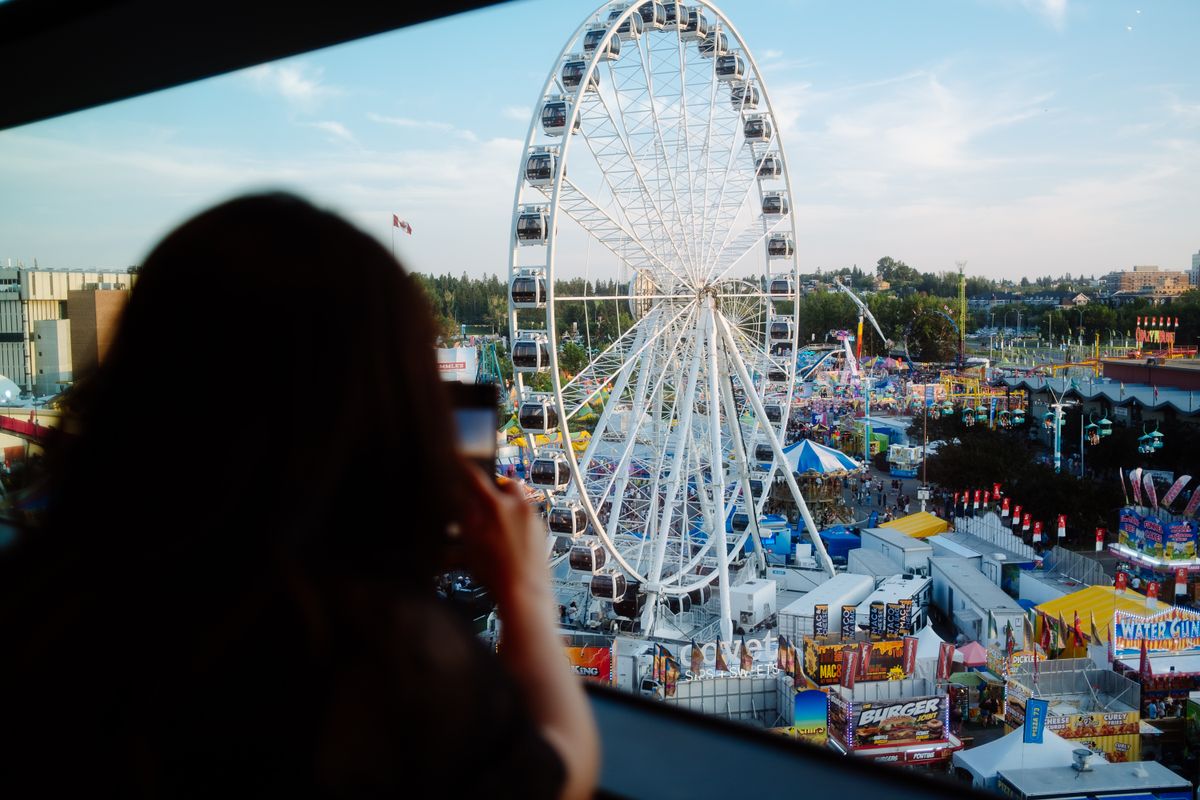
That is why the dominant visual language includes flags, Washington landmarks, Ferris wheels, and celebratory phrases rather than presidential portraits.
In practical terms, this creates a product line that can function as a national souvenir rather than a political statement. A shirt that says “Freedom 250” or “Celebrating 250 Years” can be worn in almost any context. A shirt featuring a sitting president’s face immediately narrows its audience.
The absence of Trump’s portrait on official fair merchandise therefore reflects a deliberate effort to preserve broad appeal and reduce political friction in a highly visible public celebration.
Trump Branding Exists, but in a Separate Channel
The key to understanding this story is recognizing that Trump imagery is not absent from the wider America 250 environment. It is simply located in a different channel.
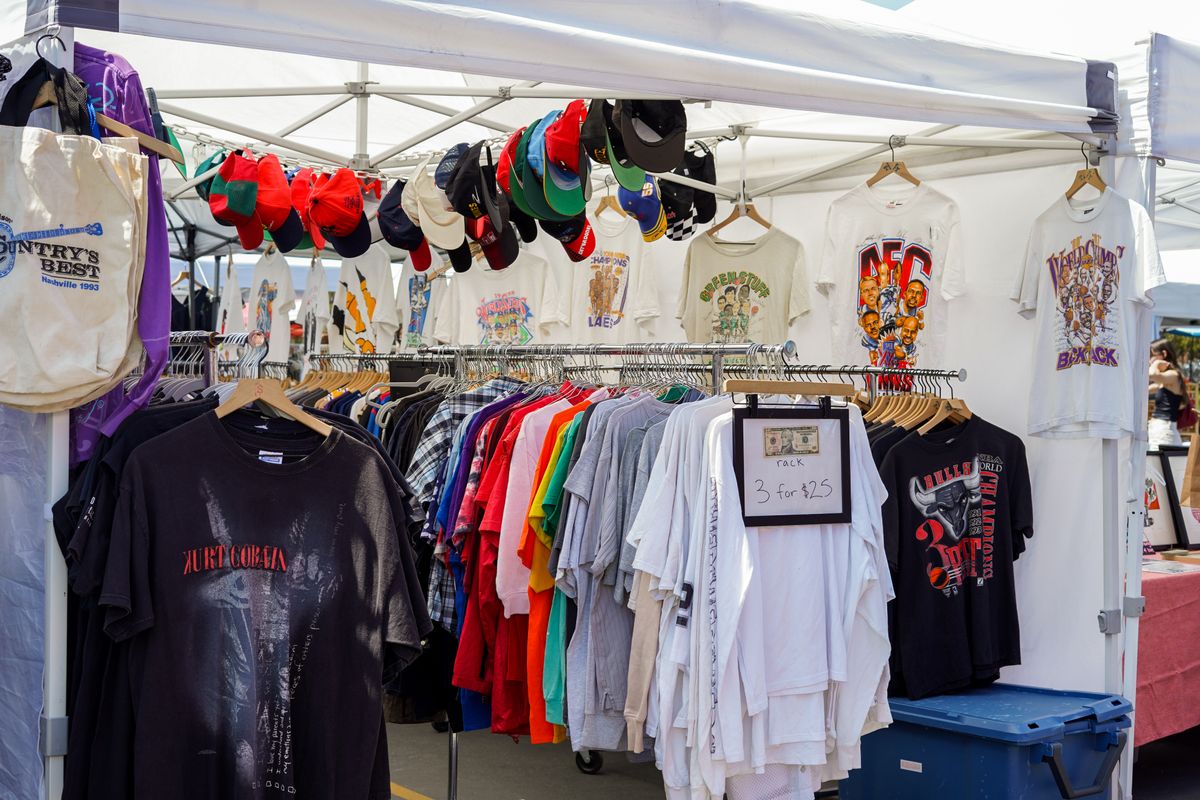
Rally merchandise tied to political events has reportedly included Trump-centered designs, slogan-driven apparel, and campaign-style branding. These items operate in a different ecosystem where identity signaling is the primary function.
That separation creates a dual structure.
Official fair merchandise is designed for national consumption and civic identity.
Rally merchandise is designed for political alignment and supporter identity.
The two are not competing accidentally. They are serving different audiences with different expectations.
The Semiotics of What Is Missing
The most powerful element in this story is not what appears on the merchandise but what is intentionally absent.
In branding terms, omission can function as a design tool. Removing a presidential portrait from official items does several things at once.
It shifts attention away from individual political identity and toward institutional identity. It reduces the perception of partisan ownership over a national celebration. It also strengthens the idea that the event belongs to a shared historical narrative rather than a single political figure.
This makes the absence meaningful. It is not silence. It is structured messaging through restraint.
Inventory and Sales Signals Add a Commercial Layer
Beyond symbolism, there is a practical retail dimension. Reports from the fair suggest that lower-cost items, such as shirts and caps, are moving more steadily than premium products, such as high-priced jerseys.
At the same time, visible unsold inventory behind vendor counters suggests uneven demand across product categories.
This points to a familiar pattern in large-scale event merchandising. Entry-level souvenirs typically drive volume, while premium commemorative products often appeal to a smaller segment of collectors.
In this case, the merchandising strategy appears to prioritize accessibility over exclusivity, reinforcing the broader goal of mass participation in the anniversary branding.
Freedom 250 Functions as a Master Brand System
Freedom 250 is not just a slogan. It operates as a master branding framework that organizes how the anniversary is visually represented across multiple platforms.
Under this system, logos, typography, and imagery are standardized across vendors and venues. That creates a unified visual identity for the event regardless of the specific product being sold.
This approach mirrors large-scale global events where branding consistency is tightly controlled to maintain recognition and coherence.
The result is a controlled aesthetic environment in which individual political imagery is not removed arbitrarily but is filtered through a larger brand architecture.
Historical Context Shows How Much Has Changed
Comparing this moment to the 1976 Bicentennial highlights how structured the current system has become.
Earlier national anniversaries allowed more decentralized merchandising, with state-level creativity and widely varying commercial interpretations of patriotic imagery.
The 2026 celebration, by contrast, appears more centralized and standardized. Visual identity is consistent across official merchandise, suggesting tighter coordination of design language and licensing control.
This shift reflects a broader evolution in how national celebrations are managed, moving from loosely coordinated public participation toward more unified brand systems.
Legal and Institutional Boundaries Shape What Can Appear
There is also a structural constraint shaping these choices. Federal rules governing official imagery and commemorative design impose limits on how living political figures are represented in certain contexts.
This legal environment influences not only currency proposals and commemorative coins but also the broader culture of official symbolism.
As a result, presidential imagery is more likely to appear in controlled commemorative formats or political merchandise rather than mass market civic souvenirs.
That distinction helps explain why Trump’s presence is more visible on coins, passport designs, and rally merchandise than in mainstream retail products.
The Hidden Hierarchy of American Anniversary Branding
When all of these layers are combined, a clear hierarchy emerges in the visual organization of the America 250 celebration.
At the top are institutional and commemorative objects such as coins and passports, which carry the strongest symbolic authority. Below that are official civic merchandise products tied to the fair and public events, designed for mass participation and neutrality. At the political level, sit rally- and campaign-style items focus on identity and loyalty rather than shared national branding.
Within that structure, the Great American State Fair merchandise occupies the civic middle layer. It is meant to represent a national celebration without becoming a political personalization.
That is why Trump’s face is not missing by accident. It is positioned elsewhere in the system.
What the Absence Ultimately Reveals
The missing portrait at the Great American State Fair does not indicate a lack of influence. It reflects a decision about where influence is expressed.
Presidential imagery is not removed from the America 250 ecosystem. It is distributed across different formats depending on audience, purpose, and symbolic weight.
Official fair merchandise prioritizes collective identity over individual branding. Rally merchandise prioritizes political identity over national neutrality. Commemorative objects like coins and passports sit between those worlds, carrying the highest symbolic value.
In that context, the absence becomes a form of organization rather than omission. It shows how a modern national celebration is not just being commemorated. It is being carefully structured across multiple layers of meaning, each serving a different audience and a different version of American identity.