Ford’s Massive 420,000‑Vehicle Seat Belt Recall Is a Wake‑Up Call for SUV Owners.
When you buckle up, you expect the seat belt to protect you, not betray you. Yet Ford Motor Company just announced one of its most serious recalls in recent memory, affecting nearly 420,000 popular SUVs because the seat belts themselves may not work as intended in a crash.
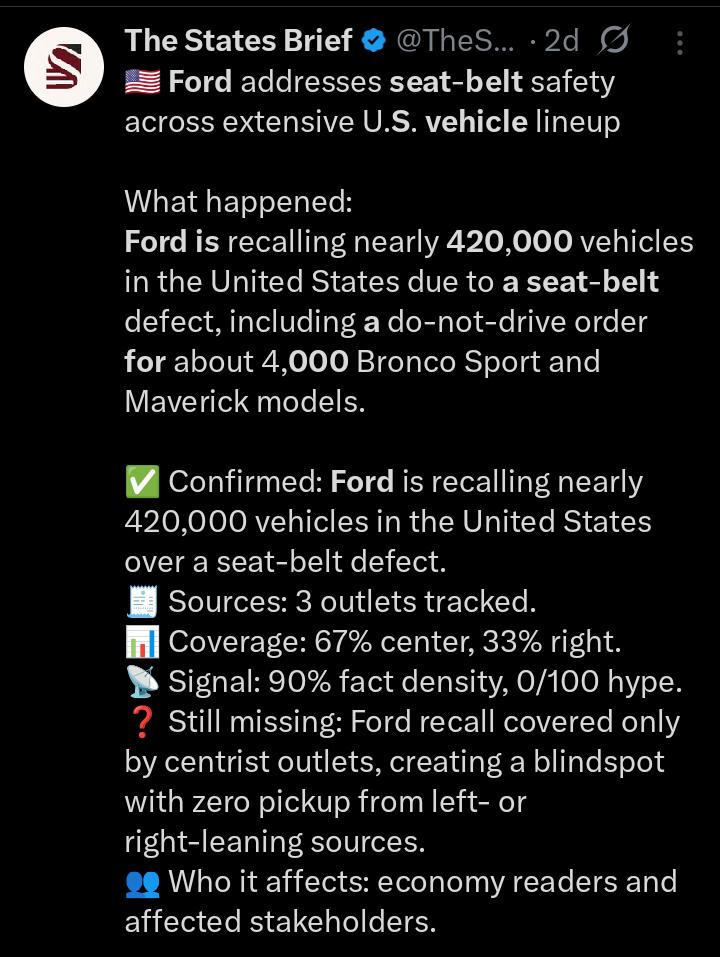
The recall centers on a component most drivers never think about: the seat‑belt pretensioner, the mechanism that tightens the belt just before or during a crash to secure the occupant. According to the National Highway Traffic Safety Administration (NHTSA), under certain conditions, the pretensioner may lock the belt, preventing it from extending or retracting properly.
That sounds like a technical detail, but in real‑world terms, it can mean a belt that gets stuck either too loose or too tight, and in a crash, that could increase the risk of injury instead of mitigating it.
Here’s what drivers need to know, and what Ford itself is saying.
What’s Happening: Nearly 420,000 Expeditions and Navigators Affected
The recall, officially listed under NHTSA Recall Number 26S34, targets specific model years of two Ford SUVs:
- 2018–2022 Ford Expedition
- 2018–2022 Lincoln Navigator
These aren’t niche models; they’re widely used family haulers and full‑size SUVs that carry adults, kids, car seats, and cargo across the country. Together, the total number of affected vehicles is 419,967.
According to the NHTSA report, the problem lies in the seat belt pretensioners on the driver and/or front passenger seats. Because of a chemical degradation issue with the gas‑producing propellant inside the pretensioner, the component may deploy unexpectedly, tightening the belt and then locking it.
Unlike a routine inconvenience recall, this one targets a core safety system, the very thing designed to keep people safe when crashes occur.
“Seat Belt May Not Retract or Extend”
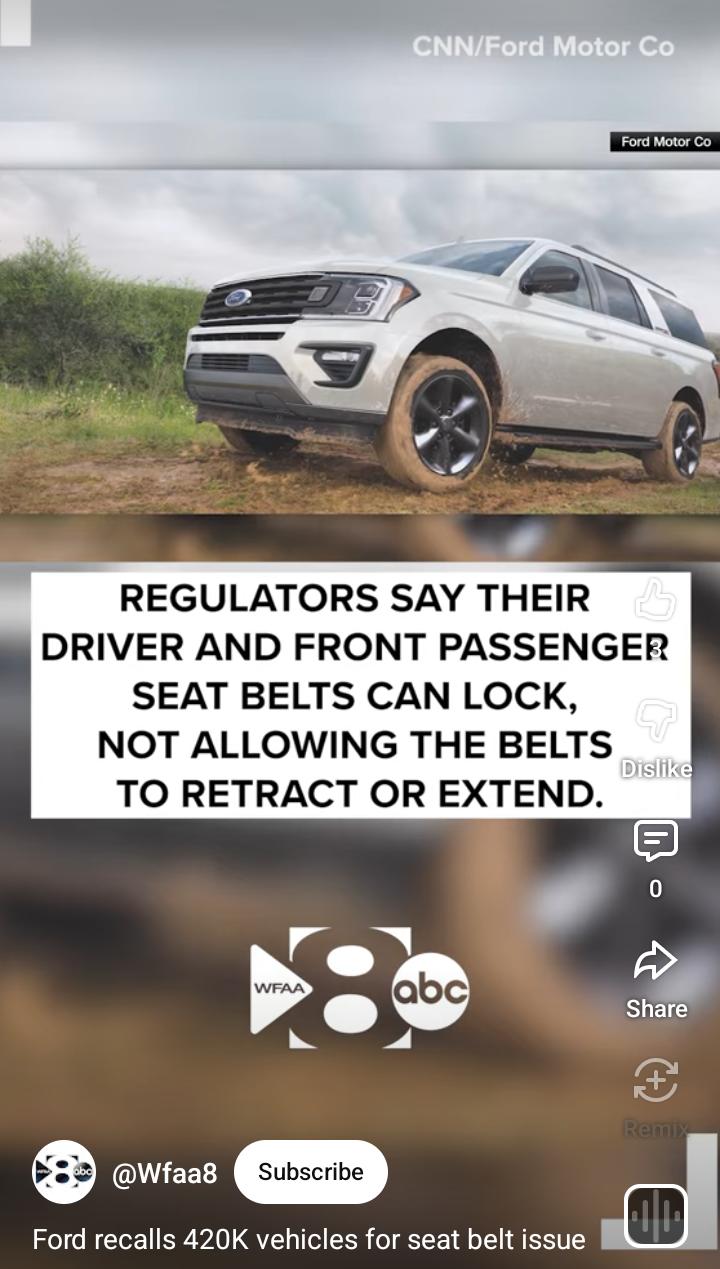
In its official recall notice, the NHTSA warns matter‑of‑factly:
“The seat‑belt pretensioner in the driver and/or front passenger seat may inadvertently lock the seat belt, which will not allow the belt to retract or extend.”
That’s something most drivers never want to hear about their SUV.
Because the belt may no longer move as designed, the agency said:
“A seat belt that doesn’t retract or extend may fail to restrain occupants as intended, increasing the risk of injury in a crash.”
The recall expands and replaces two previous seat belt pretensioner actions, meaning this issue has persisted in one form or another, and that past fixes didn’t fully solve the problem.
How the Defect Happens, And What Ford Has Learned
This recall was born out of an investigation that found the pretensioner’s internal propellant can degrade, particularly in high‑heat environments. Over time, that degradation can change how the pretensioner behaves, leading to an unexpected deployment.
That’s more than just a cold science problem; it connects to climate realities. Many Ford Expedition and Navigator owners live in hot states where vehicles bake in the sun for hours daily. High under‑hood temperatures can accelerate chemical changes in parts over the years.
Has This Caused Injuries?
One of the big questions any recall raises is: Has anyone been hurt?
So far, Ford has acknowledged one injury globally related to this seat belt defect.
That’s not many, but it’s nothing either. In safety circles, a single significant injury is reason enough to act aggressively, especially when the potential consequences involve the vehicle’s most basic restraint system.
In addition, regulators cited two warranty claims and two field reports in the lead‑up to this recall, meaning there were at least a handful of real‑world failures that prompted scrutiny.
What This Says About Modern Car Safety
Some drivers see recalls as inconvenient or even annoying, something you scan quickly and forget. But when a recall touches the fundamental safety system so many of us take for granted, it deserves serious attention.
Seat belts are the single most effective safety feature in crash protection. If a seat belt doesn’t behave the way engineers intended, the consequences can be severe.
Ford’s transparency about the cause, propellant degradation inside the pretensioner, is unusual in its technical detail, but the recall itself underscores a simple truth: modern safety systems are complex, and parts that seem inert can still affect how a crash plays out.
The Bottom Line
Nearly 420,000 vehicles tied to one of the most trusted SUV names in America are being called in over a safety risk that can directly affect crash performance. That’s reason enough to take action, not later, but soon.
If your Expedition or Navigator model falls into the 2018–2022 window, don’t wait for a fender‑bender to find out whether your seat belt behaves the way it’s supposed to. Check, call, and, if needed, get the inspection done.
These recalls exist because safety flaws were found and confirmed, and because regulators and the manufacturer agree the fix is important. This isn’t a bureaucratic notice to toss; it’s a reminder that safety isn’t something you should postpone.