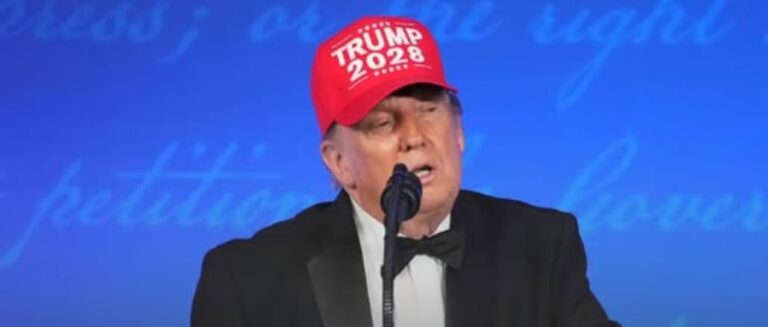
Todd Blanche Warns Trump Could Have Gone to Prison If He Lost in 2024
Acting Attorney General Todd Blanche claims Donald Trump’s 2024 election win shielded him from prison, highlighting unprecedented legal maneuvers, judicial dilemmas, and the cascading impact across federal and state cases.
Todd Blanche’s revelation on Sean Hannity stunned the nation: Trump “absolutely” would have faced prison if he had lost the 2024 election. The comment is not just a throwaway political line; it underscores how a single electoral outcome rewrote the trajectories of multiple criminal cases and exposed a legal system under extraordinary pressure.
Trump’s victory did more than secure the White House. It altered the very mechanisms of justice, delaying sentencing, halting federal prosecutions, and forcing courts to navigate unprecedented constitutional challenges. Blanche’s remark, therefore, provides a rare glimpse into the intersection of politics, law, and real-world survival.
Election as Legal Armor: How the Ballot Box Altered Justice
Blanche’s claim frames the 2024 election as more than a political victory; it functioned as legal protection. Before the election, Trump faced a 34-count felony conviction in New York for falsifying business records and several pending federal cases, including the 2020 election subversion investigation and the handling of classified documents. Any one of these could have led to significant jail time.
After Trump won, the legal calculus shifted dramatically. Judges weighed constitutional obligations and presidential duties against typical sentencing norms. Blanche’s remark highlights the unspoken reality: voters indirectly influence the practical outcomes of criminal law. In effect, the ballot box became a shield, transforming potential imprisonment into political survival.
The Broader Implications for Presidential Precedent
The situation sets a modern precedent. It demonstrates how electoral success can influence not just political power but the enforcement of criminal law. Future candidates and their legal teams may now strategize campaigns not only for political outcomes but to reshape potential legal consequences, creating a new layer of political-legal strategy.
Blanche’s words serve as both a warning and a revelation. They illustrate that winning an election can fundamentally change the trajectory of criminal cases in ways no ordinary citizen could experience. This interplay between law and democracy will be studied for years, shaping debates on presidential accountability and judicial independence.
Judicial Creativity Under Constitutional Pressure
Courts faced unprecedented dilemmas. How do you sentence a convicted president-elect without violating constitutional principles or creating political chaos? Judges employed creative legal reasoning, balancing jury verdicts, constitutional constraints, and the practical impossibility of imprisoning an incoming president.
In the New York case, this led to an unconditional discharge: Trump remained convicted, but no jail time, probation, or fine was imposed. Courts had to reconcile the public expectation of accountability with constitutional and logistical realities. Blanche’s remark captures the tension between law and politics, offering a rare acknowledgment of the extraordinary judicial gymnastics required to navigate the situation.
The Domino Effect Across Federal and State Cases
Trump’s New York conviction was just the first tile in a domino line. The federal election interference investigation and the classified documents probe were indirectly affected. Once the election concluded, Special Counsel Jack Smith moved to halt proceedings against Trump, citing a long-standing Justice Department policy that bars the prosecution of a sitting president.
This domino effect illustrates a rare legal scenario: a single election reshaped multiple cases across jurisdictions. Blanche’s statement gains weight because it compresses years of legal maneuvering into one moment of electoral consequence. The 2024 victory didn’t erase criminal liability but redefined the enforceable outcomes, leaving Trump in a unique legal limbo.
Public Perception and the Weight of Power

Blanche’s assertion also exposes the divide between public perception and legal reality. Trump’s supporters see a political system trying to jail their candidate, only for the voters to intervene. Critics interpret the same events as proof that presidential power can bend legal outcomes.
By putting this conflict into sharp focus, the statement illustrates a broader social phenomenon: the extraordinary influence of power and elections over accountability. The remark is compelling because it captures the human drama behind the courtroom procedures, showing how high-stakes politics and criminal law intersect in ways unprecedented in American history.
Blanche’s remark about Hannity crystallizes the most extraordinary legal scenario in modern American politics. Trump’s election did not nullify his convictions but fundamentally altered their enforceable consequences, creating a scenario in which political victory equaled practical immunity.
The remark invites reflection on how power, law, and democracy intersect. It is a moment where electoral decisions literally shape the course of justice, leaving the country to consider whether such a precedent strengthens the system or exposes it to new vulnerabilities. Blanche’s words are a warning, a revelation, and a lens into the high-stakes drama that continues to define American politics and law.