How an Ordinary Day Turned Into Tragedy for James Handy and a Family Torn Apart: A Morning Errand That Became a Nightmare
On the morning of June 3, in the leafy hills of Tarzana, California, veteran actor James Handy stepped out of his home to retrieve the morning paper, a ritual long familiar and benign in its simplicity. The sun was climbing, birds were stirring, and in that moment, nothing seemed amiss. But in the next instant, the course of three lives was changed forever.
Handy, 81, a beloved character actor whose face had become part of Hollywood’s tapestry for nearly five decades, did not come back inside. Instead, he collapsed on the front lawn of the house he shared with his longtime partner, Wendy Gledhill, fatally wounded. A single act of violence turned a quiet domestic scene into a national tragedy, leaving fans, colleagues, and a neighborhood in shock.
A Respected Life, a Prolific Career
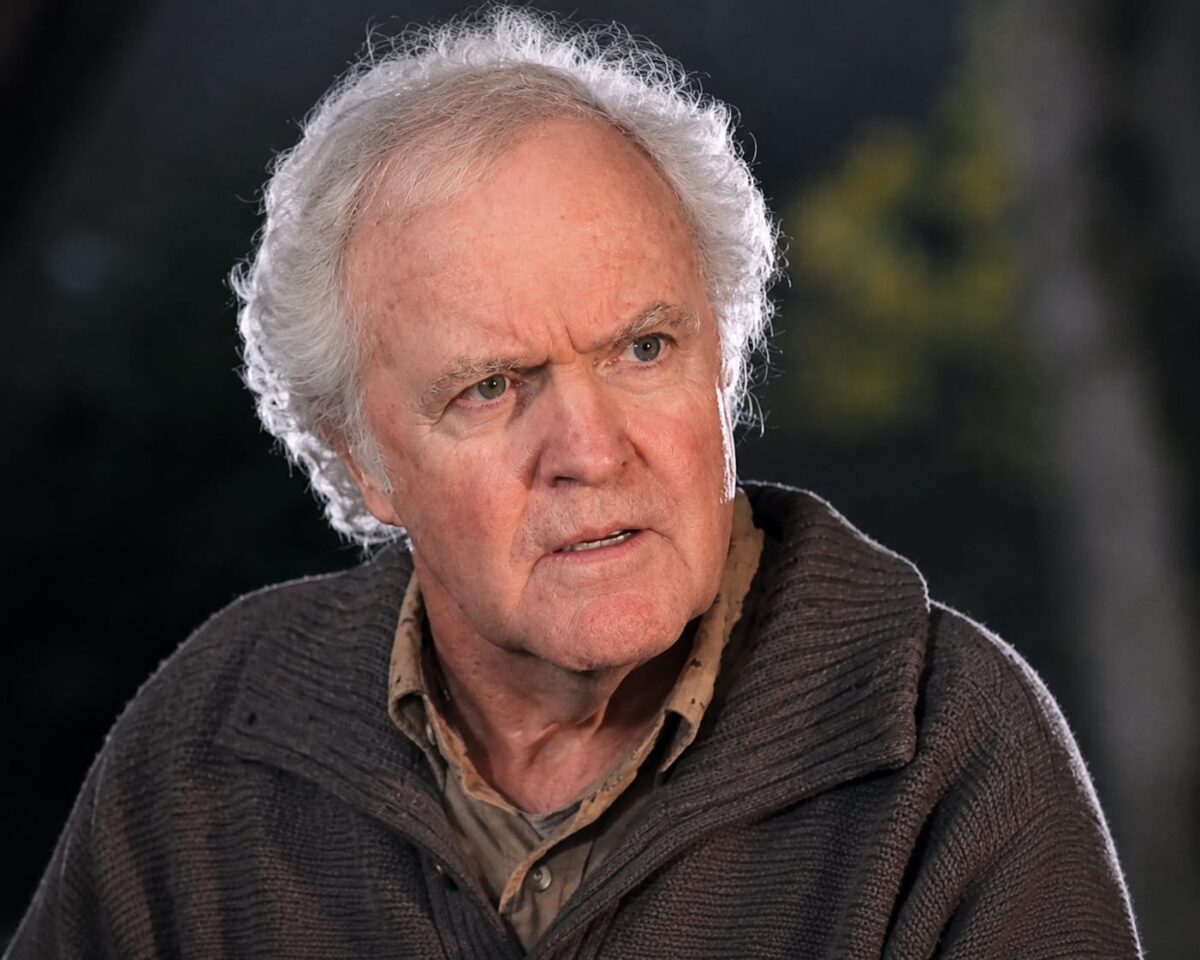
For generations of film and television fans, James Handy was one of those consummate character actors whose presence, though not usually in lead roles, lent texture and depth to some of Hollywood’s most memorable works. Born in New York City, Handy began acting in 1977 and, over the ensuing decades, became a familiar and respected figure with more than 150 credits in film and television.
His work spanned decades and genres from the slapstick adventure of Jumanji (1995) to the gritty texture of Logan (2017), the action‑packed sequel Top Gun: Maverick (2022), and countless television appearances on shows as diverse as NYPD Blue, ER, Criminal Minds, Alias, and Law & Order.
To many viewers, he was “that guy,” the bartender in Top Gun: Maverick whose calm presence belied an instinctive warmth, the authoritative figure in series dramas, the scene‑stealer in smaller yet unforgettable moments. Yet behind this professional steadiness was a man rooted in everyday routines: a life shared with partners, friends, and the simple comforts of morning coffee and an unfolding day.
The Fatal Morning and a Chilling 911 Call
What made this tragedy even more surreal and heartbreaking was how it began. According to Wendy Gledhill, who had been in a long‑term relationship with Handy, the actor rose that Wednesday morning and went out to fetch the newspaper, as he often did. She stayed inside, unaware that the next sound she’d hear would be police knocking at her door, not Handy’s footsteps returning.
Shortly before 9:30 a.m., the Los Angeles Police Department responded to a 911 call from someone reporting “unknown trouble” at the residence. When officers arrived on the 19200 block of Erwin Street, they found Handy lying unconscious in the front yard with a fatal stab wound to his chest. Paramedics transported him to a nearby hospital, where he was pronounced dead.
But in an eerie twist that immediately drew attention, the person who reportedly made the 911 call was not a worried neighbor; it was Michael Gledhill, 44, the son of Handy’s girlfriend and a resident of the same home. According to police, the caller told dispatchers, “I am the son of man, I just killed the man of sin.” Seconds later, officers say, the suspect flagged them down and said he was “the one they were looking for.”
From a routine morning errand to this cryptic declaration: in a matter of minutes, a home was transformed into a crime scene, a career was cut short, and a family unit was shattered.
A Son Accused, a Family Reeling
Michael Wendy’s son and Handy’s alleged assailant was arrested at the scene and later charged with one count of murder, with a special allegation that he personally used a deadly weapon, a knife, in the attack. Bail has been set at $2 million. As of now, he has been unable to post bond.
But the legal story surrounding this tragedy isn’t merely about charges and bail. It has quickly intertwined with concerns about mental health and competency, complicating the narrative in ways that invalidate easy answers.
According to media reports, Michael has a documented history of schizophrenia, a serious mental health condition, and his mother has said he had stopped taking his medication in the week before the fatal confrontation. Some neighbors also reportedly noticed changes in his behavior in the days leading up to the incident.
A judge has ordered that Michael undergo psychological evaluations to determine if he is competent to stand trial, a decision that acknowledges the complex intersection of mental illness and criminal responsibility. In such proceedings, courts must weigh not only the evidence of what occurred but the defendant’s ability to understand the charges and assist in his defense.
In criminal law, especially in cases involving mental health issues, competency hearings can delay the path to trial and shift the focus toward treatment options or raise questions about appropriate custodial settings. In California, if a defendant is found incompetent, the courts may mandate treatment at a psychiatric facility until competency is restored, delaying trial proceedings and complicating public expectations of swift justice. Those determinations are deeply personal, rarely covered in detail by the broader media, yet pivotal to the trajectory of every criminal case involving mental health questions.
A Neighborhood in Shock, an Industry in Mourning
For a quiet residential street in Tarzana known more for its suburban calm than headline‑making violence, the stabbing was startling and deeply unsettling. Neighbors described a familiar, unassuming household where Handy’s presence seemed steady and welcome. The idea that within a familiar front yard such brutality could unfold without warning struck many as incomprehensible.
Even in Hollywood, where news of untimely deaths is not uncommon, the response was one of profound sadness and disbelief. Colleagues and fans shared memories of Handy’s craft not just as a performer but as a dependable presence on set and a gracious collaborator off-camera. His agent reportedly confirmed his passing with sorrow, noting his warm personality and professionalism that spanned generations of film and TV work.
Across social media and fan forums, tributes poured in from viewers who remembered him not just for a line read or a scene played, but for the many fleeting moments when he made a story feel richer or a character feel real. For many, his roles were part of the soundtrack of their lives, a familiar face in the background of shows that defined eras.
Love, Loss, and the Brutal Collision of Family Bonds
At the heart of this tragedy is not merely the loss of an actor whose name may not have been a marquee headliner, but the loss of a life steeped in relationships, routines, rituals, and ordinary joys.
Wendy’s statements that she loved both James and her son, and that her grief is compounded by shock, disbelief, and sorrow, underscore one of the most heartrending aspects of this case. A mother and a partner now find themselves caught between mourning the death of the man she loved and confronting the reality that her own child stands accused of taking that life.
There is, in such tragedies, a social reverberation that extends beyond the immediate family. Conversations about mental health, medication adherence, stigma, and the resources available (or, frequently, not available) to vulnerable adults inevitably emerge. Headlines like these do not just recount a crime; they spotlight systemic cracks in healthcare, in community support, in understanding and compassion for families living with serious mental illness.
In a society where mental health is still too often relegated to the margins of public concern, this case inadvertently raises uncomfortable questions: Could more intervention have helped? Were there warning signs overlooked by spouses, neighbors, or professionals? In the glare of grief and public attention, such questions are both natural and deeply painful. They have no easy answers but demand empathy and reflection.
The Legal Road Ahead

Beyond psychological evaluations and murder charges, the legal journey in this case is expected to unfold slowly and scrutinously. Prosecutors must prove not just that Michael committed the act, but that he did so with the specific intent and understanding required for a criminal conviction. If mental health defenses or competency issues are established, the scope and nature of his legal responsibility could be central to trial proceedings.
In California, a defendant found not guilty by reason of insanity or incompetence might be committed to a psychiatric treatment facility rather than a conventional prison, a legal path designed not to excuse wrongdoing, but to recognize the clinical reality behind it. Whether that occurs here remains to be seen; the evaluations are underway, and the courts are in the early stages of managing a case that is as much about healing and fairness as punishment.
A Life Remembered, a Community Changed
The death of James Handy stands as a stark reminder that tragedy can erupt in the most ordinary of settings, a home, a lawn, a morning air filled with the rustle of newspaper pages. It is a story that defies simple categorization: part violent crime, part mental health crisis, part family heartbreak, and wholly human in its tragic contours.
For friends, family, and fans, the shock resonates across screens and sidewalks alike. Hollywood has lost a reliable and gifted actor; a family has lost both a loved one and a son; a neighborhood has lost its peace. How this case proceeds through the American legal system, how it addresses responsibility, mental health, and justice, will be watched not just for its courtroom drama, but for what it says about the lives we lead, the care we offer, and the fragility of the ordinary.
In the end, what should linger is not just the grisly facts of a stabbing, but the memory of a life full of nuance and small contributions, a man whose work brought texture to hundreds of stories, and whose final moments remind us that even the most familiar routines can end in unimaginable heartbreak. Here, in the hush of a suburban street where a morning errand should have been routine, we find not just a news story, but a poignant human loss.