American Republicans Face a Quiet Midterm Threat—and It’s Emerging From Within Their Own Voters
There is a kind of political danger that does not announce itself with rallies, protests, or dramatic defections. It builds slowly, almost invisibly, inside the very coalition that once looked unshakable. For Republicans heading into the midterms, that danger is not only coming from Democrats. It is coming from within.
The warning sign is not a sudden shift in party allegiance. It is something more subtle and, in many ways, more damaging. It is possible that a meaningful share of Republican-leaning voters simply decide not to show up.
In a country where close House races are often decided by a few thousand votes, silence is not neutral. It is consequential. A missing voter does not just reduce turnout. It reshapes outcomes.
The threat is not switching sides but staying home.

Republicans are not facing an obvious wave of defections to the Democratic Party. That is not the main story. The more dangerous scenario is inactivity, where voters who once showed up for Donald Trump or down-ballot Republicans choose to sit out the midterm entirely.
Midterm elections do not reward passive loyalty. They reward intensity. Voters who feel emotionally connected, politically threatened, or deeply motivated are the ones who actually turn out. Everyone else becomes background noise in the final count.
This is where the Republican challenge begins. A portion of their 2024 coalition was built on energy that is not guaranteed to carry forward. Voters who were driven by frustration, cultural tensions, or dissatisfaction with the economy may not feel the same urgency in a lower-visibility election cycle. And in politics, urgency is everything.
A coalition built on intensity carries hidden risk.

Donald Trump’s electoral strength has often come from expanding the Republican coalition beyond its traditional boundaries. That includes voters who do not always participate in every election, but show up strongly when they do.
That kind of coalition is powerful in a presidential race. It can reshape maps, flip demographics, and create unexpected margins. But it also carries a built-in vulnerability. If a voter is mobilized by a single figure or a specific moment in time, their participation can be inconsistent. Once the intensity of that moment fades, so does their engagement.
This is where midterm math becomes unforgiving. A party does not need mass defections to lose ground. It only needs small pockets of its own voters to become less consistent. A few percentage-point drop-off in the wrong districts can shift control of the House.
Midterms punish emotional fatigue.
Every midterm election in modern American politics has followed a familiar pattern. The party in power tends to lose ground. The opposition tends to gain energy. But underneath that pattern is a deeper reality that often gets overlooked.
Voters who feel emotionally exhausted are far more likely to stay home than switch parties. That is especially true for voters who do not feel directly connected to down-ballot races. For Republicans, this presents a quiet but serious challenge. If parts of their base feel that politics is repetitive, frustrating, or disconnected from their daily lives, participation drops before persuasion even becomes an issue.
And once turnout drops, no amount of messaging can fully compensate for missing ballots.
The fragility of persuasion in a low turnout environment
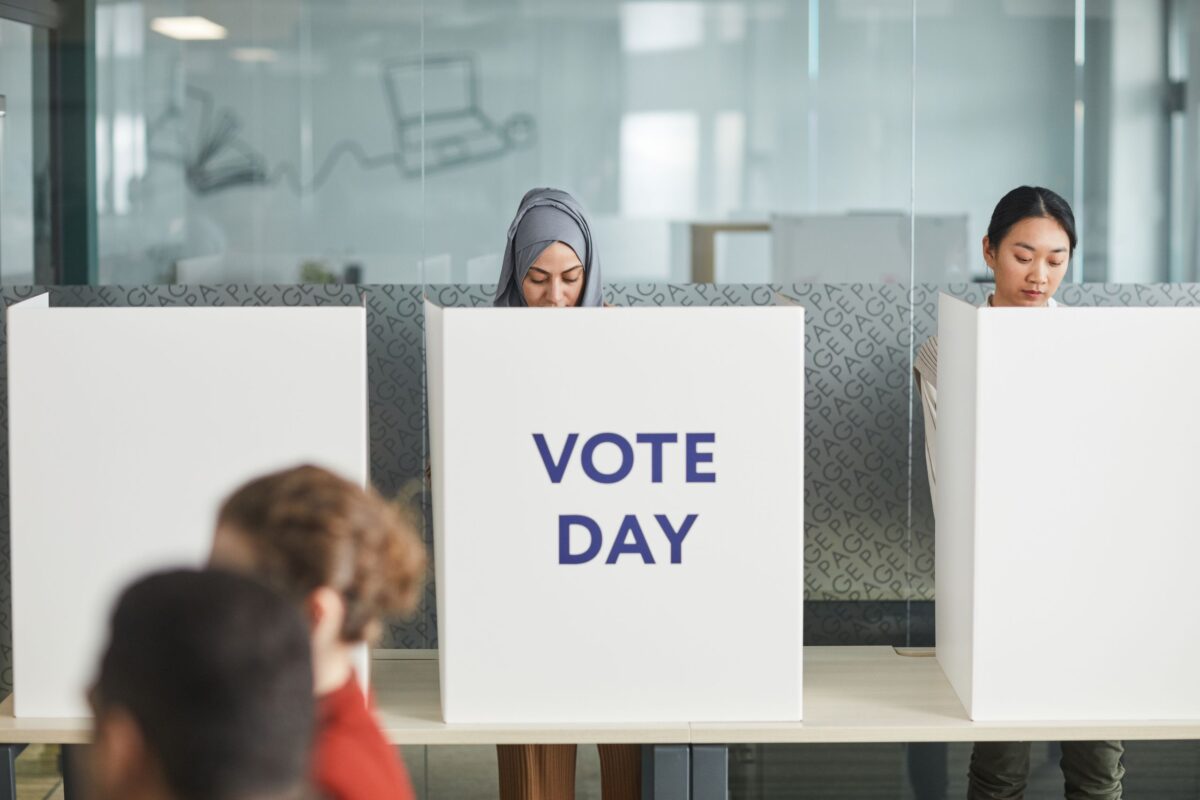
In high-turnout elections, persuasion matters. In low turnout elections, mobilization dominates. The question is not only who people support, but whether they care enough to act on that support.
Republicans may find themselves in a position where their biggest challenge is not convincing voters to change sides, but convincing them to participate at all. That is a much harder task because it requires emotional motivation rather than political argument. Voters need to feel that something is at stake, even when the ballot feels distant or technical.
House races, local issues, and midterm messaging often struggle to create that sense of urgency. Without it, even loyal supporters can drift into inactivity.
The hidden impact of the Trump-era voters
A significant part of the Republican coalition now consists of voters who were not always consistent participants in previous cycles. Some were drawn into politics by Donald Trump himself. Others were activated by issues like immigration, inflation, cultural identity, or dissatisfaction with Washington.
These voters expanded the Republican map in important ways. But they also introduced variability into turnout patterns.The challenge for Republicans in a midterm year is simple but difficult. Can a coalition built during a high-intensity presidential cycle maintain its energy when Trump is not on the ballot in the same way?
If the answer is no, the consequences will not appear evenly across the country. They will show up in specific districts where turnout differences are razor-thin.
Democrats do not need perfection to benefit.
It is important to understand that Democrats do not need a massive wave of enthusiasm to gain an advantage in this environment. They only need consistency.
If Democratic voters show up at normal midterm levels while Republican voters dip slightly, the balance shifts quickly. That is the mathematics of turnout-driven elections.
However, Democrats also face limitations. Their brand remains uneven across key voter groups. Many independents remain skeptical. And enthusiasm is not guaranteed in a political environment defined by frustration with both parties.
This creates a strange dynamic in which neither side fully owns the momentum, yet one side may still benefit from relative levels of participation.
The House map magnifies every absence.
The structure of the U.S. House makes fluctuations in turnout especially powerful. Many districts are decided by narrow margins. Suburban areas in particular can swing on small shifts in participation.
For Republicans, this means that even a modest decline in turnout among supportive voters can have outsized consequences. A few thousand missing voters in competitive districts can flip seats without any dramatic national shift in opinion.
This is why political strategists often say that, in practice, midterms are not national elections. There are thousands of local turnout contests happening at the same time.
The psychology of staying home
One of the most underestimated forces in elections is voter psychology. People rarely decide in advance that they will not vote. Instead, they gradually disengage.
They stop paying attention. They feel less urgency. They become frustrated with politics in general. Eventually, Election Day arrives and feels less important than daily life.
For Republicans, preventing that gradual disengagement may be just as important as persuading undecided voters. Once a voter mentally exits the political process, it becomes difficult to bring them back into it within a short election cycle.
A warning hidden in plain sight
The Republican Party is not facing a collapse in support. That is not the story. The story is more subtle and therefore more dangerous.
It is about participation gaps.It is about voters who still identify with the party but no longer feel compelled to act.It is about a coalition that remains intact in theory but becomes uneven in practice.
And in close elections, uneven participation is enough to change control of Congress.
The real midterm battle is motivation.
As the midterms approach, the central question for Republicans is not only how many voters support them, but how many actually show up. Support without participation does not win seats. It only creates assumptions that can be quickly overturned on election night.
The quiet threat facing Republicans is not external. It is internal. It lives inside the gap between political identity and political action.
If that gap widens, the consequences will not be loud at first. They will appear slowly, district by district, until the final map reveals a shift that many did not see coming.
In the end, the most powerful force in the midterms may not be persuasion. It may be an absence.