Americans Are Losing Pride in Their Country, and the Numbers Tell a Deeper Story.
The idea of American pride has always carried a certain weight: flags on porches, national anthems at stadiums, and a shared belief that the United States represents something bigger than itself. But new polling data suggests that sentiment is shifting noticeably. Americans are still connected to their country, but fewer now say they feel deeply proud of it, especially when it comes to democracy and national history. The change is not abrupt but steady, reshaping how people describe what it means to be American in 2026.
Recent surveys from Gallup and AP-NORC point to a clear trend: pride in the country remains, but it is no longer universal and, in some cases, is weakening across key areas such as government, institutions, and the American Dream itself.
Pride in America is still here, but it is no longer automatic.
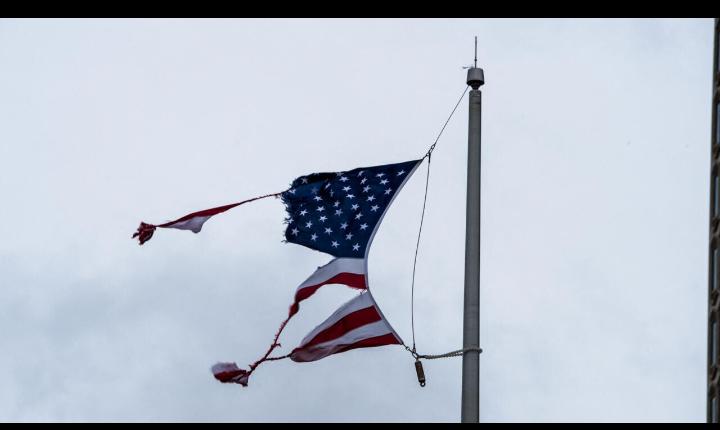
Gallup’s latest findings show that just over half of U.S. adults now say they are “extremely” or “very proud” to be American. That figure may still represent a majority, but it marks a significant drop from earlier decades when national pride consistently ranked much higher across nearly all demographics.
What makes the shift more striking is not just the decline itself, but what it suggests about public sentiment. Pride is no longer a default response. Instead, it appears to be something many Americans now weigh against their experiences with politics, the economy, and social conditions.
At the same time, the AP-NORC survey adds another layer: pride in American democracy has fallen sharply. In 2017, about 42% of Americans said they were proud of how democracy works in the country. Today, that number has dropped to 28%. The change reflects a growing gap between valuing democratic ideals and feeling confident in how those ideals are functioning in practice.
Confidence in democracy and history is weakening.
One of the most concerning findings in the new polling is the decline in pride related to democracy itself. The AP-NORC results suggest that fewer Americans feel confident in the systems that govern elections, lawmaking, and civic participation.
This does not mean Americans are abandoning democratic values. Instead, it reflects frustration with how those systems are performing. Political polarization, institutional distrust, and ongoing debates over voting rights and representation have all contributed to a sense that democracy is under strain, even among those who continue to support it in principle.
History, too, is becoming a more complicated subject in the public imagination. While many Americans still feel pride in the nation’s achievements, fewer express simple or unconditional pride in its historical record. That shift reflects broader cultural debates over how the country’s past should be taught and understood, especially regarding issues such as civil rights, inequality, and historical injustices.
The result is a more divided emotional relationship with national identity. For some, history remains a source of inspiration. For others, it is a reminder of unresolved contradictions.
The American Dream and national identity feel less certain.

Beyond democracy and history, the idea of the American Dream itself appears to be losing some of its emotional power. According to AP-NORC’s America 250 poll, only about one-third of Americans believe the traditional idea of the American Dream still holds true.
That sentiment helps explain the broader decline in pride. When people feel that hard work no longer guarantees stability, opportunity, or upward mobility, national identity becomes harder to tie to optimism. Economic pressures, from housing costs to wages and job security, are shaping how people interpret their place in the country.
The poll also highlights sharp divisions across political and generational lines. Republicans remain more likely to express great national pride, while Democrats and younger Americans report lower levels of it. These differences suggest that pride in the United States is no longer just a shared cultural feeling; it is increasingly shaped by political identity and lived experience.
Even so, the data do not point to the country’s rejection. Instead, it reflects a more conditional form of patriotism, one that depends heavily on whether people feel the nation is living up to its promises.
Across all groups, certain themes remain consistent: Americans still value freedom, democracy, and opportunity. But they are more willing than in the past to separate those ideals from their current evaluation of national performance.
That distinction is at the heart of what the latest polling reveals. Pride has not disappeared. It has become more selective, more cautious, and more tied to expectations about the future.
As the United States approaches its 250th anniversary, these findings suggest a country reflecting on itself with less certainty and more questions than in previous generations. For many Americans, pride is no longer just about where the country has been; it is about whether it still feels like the place it once promised to be.