Who Won the “War That Ended”? Inside the U.S.–Iran Deal That Doesn’t Feel Like Peace Yet
A war is over. The Strait of Hormuz is reopening. Iran is getting economic relief. U.S. forces are pulling back. Israel is adjusting its positions in Lebanon. And suddenly, everyone is asking the same question: who actually won?
But once you strip away the social media noise and focus only on what is verified in public reporting, the picture becomes far less cinematic and far more complicated.
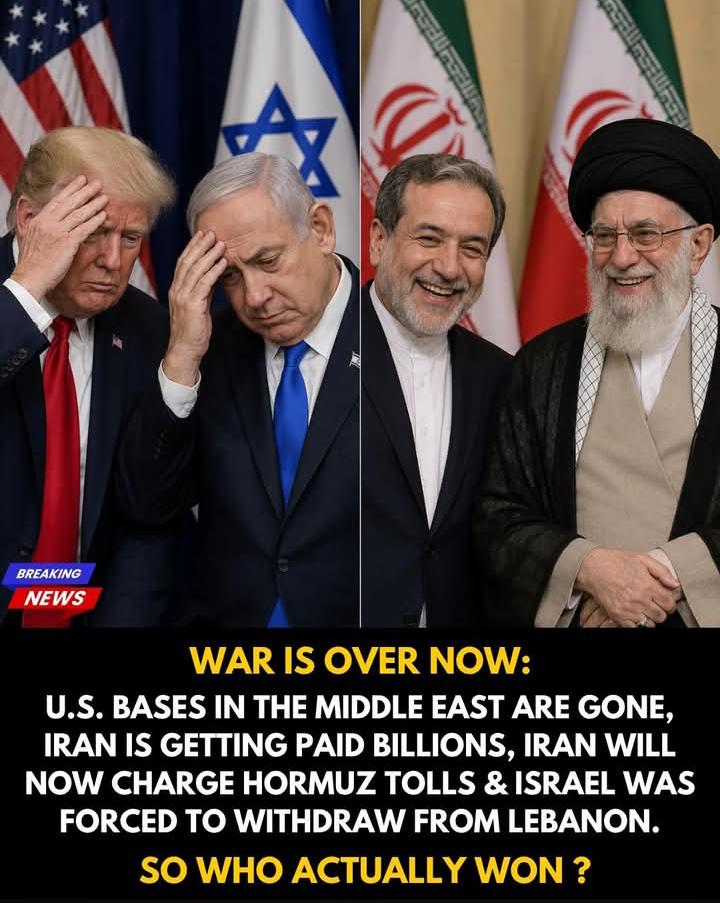
What exists right now is not a final peace treaty. It is a fragile, negotiated framework, one that pauses escalation, opens economic channels, and leaves some of the most explosive issues unresolved.
So instead of a winner, what we really have is a set of competing claims about victory, survival, and leverage.
A “peace deal” that looks more like a controlled pause
The U.S. and Iran have not signed a permanent end to the conflict. What has been reported is a temporary framework agreement aimed at reducing direct confrontation, reopening critical shipping routes, and setting conditions for broader negotiations.
One of the most important elements is the Strait of Hormuz, the narrow waterway through which a large portion of global oil shipments pass. Recent reporting indicates efforts to stabilize shipping there and reduce the risk of military escalation, not a permanent Iranian-controlled toll system.
In other words, the strait is not “under Iranian toll authority” in any confirmed formal sense. It is still a contested strategic corridor, even if tensions have eased.
A senior U.S. official, speaking in reporting around the agreement, framed the goal as preventing escalation rather than declaring victory. The language used across diplomatic channels has been careful: stabilization, de-escalation, and conditional cooperation, not triumph.
Iran, meanwhile, has publicly emphasized a different narrative.
Iranian Foreign Minister Abbas Araghchi has consistently argued in statements tied to negotiations that regional security cannot be separated from Israeli military activity and sanctions pressure. His messaging focuses on resistance and sovereignty, not defeat or surrender.
But even here, there is no confirmed evidence of Iran receiving direct “billions in payments” from the United States. What has been discussed in reporting is the possibility of future investment frameworks and sanctions-relief mechanisms that would activate only under strict conditions.
That distinction matters. One is cash delivered. The other is conditional economic access.
And conditional access is not victory; it is bargaining power still under negotiation.
Iran’s leverage vs. America’s containment strategy
If there is one clear shift in this situation, it is leverage, not victory.
Iran has managed to remain a central negotiating player despite years of sanctions and military pressure. That alone is strategically significant. It means Washington cannot ignore Tehran and must instead engage through structured diplomacy.
But the United States also retains leverage of its own.
U.S. officials have repeatedly tied any long-term agreement to strict limitations on Iran’s nuclear capabilities, regional military activity, and monitoring requirements. That means Iran is not negotiating from a position of free expansion; it is negotiating under constraint.
Former President Donald Trump, commenting on the broader framework discussions, has described the agreement as a move designed to “prevent a nuclear Iran and stabilize the region.” While supporters interpret this as a win, critics argue it reflects a compromise rather than a decisive outcome.
And that is the core tension here:
Each side is selling the same deal as a different kind of victory.
Iran frames it as a matter of survival under pressure.
The U.S. frames it as containment and risk reduction.
Neither frames it as surrender.
So who actually “won”?
The more accurate answer is: neither side achieved a total win. Both achieved partial goals while accepting unresolved risks.
Lebanon, Israel, and the unresolved pressure point
The most unstable piece of this entire equation is not Iran or the U.S., it is Lebanon.
Reports across multiple outlets confirm ongoing tensions involving Israeli military positioning and Hezbollah activity along the Israel–Lebanon border. However, there is no confirmed, comprehensive Israeli withdrawal from Lebanon tied to a finalized U.S.–Iran deal.
Israeli Prime Minister Benjamin Netanyahu has consistently maintained that Israeli forces will remain in operational positions as long as security threats persist. Defense officials have echoed similar language, emphasizing defensive objectives rather than negotiated withdrawal timelines.
This directly clashes with Iranian and Hezbollah-linked narratives, which argue that any broader regional de-escalation must include Israeli withdrawal from contested areas.
That contradiction matters because it exposes the weakest part of the framework:
Even if Washington and Tehran reduce tensions, local conflicts can still keep the region unstable.
Lebanon has already paid the price. Thousands have been displaced during cycles of cross-border escalation. Infrastructure damage, humanitarian strain, and political paralysis remain ongoing realities.
So while diplomatic language may suggest “de-escalation,” ground-level reality still looks unsettled.
And this is where the idea of “who won” starts to collapse entirely.
Because in Lebanon, there is no scoreboard, only recovery timelines.
The economic story everyone is trying to claim
A major part of the viral narrative is the claim that Iran is being “paid billions” or that a massive reconstruction fund has already been activated.
That is not supported by verified reporting.
What has been discussed is the idea of future investment structures, potentially involving Gulf states, international partners, and conditional sanctions relief. One widely cited figure circulating in discussions is a multi-hundred-billion-dollar economic framework, but it is not a confirmed payout or finalized fund.
Think of it less like a transfer of money and more like a locked vault with conditions attached.
Iran could benefit significantly if conditions are met. That includes expanded oil exports, access to banking, and foreign investment opportunities. But none of that is automatic or immediate.
For the U.S. and its allies, the economic angle is about stability: mitigating oil shocks, preventing disruption in the Strait of Hormuz, and calming global energy markets.
For Iran, it is about reopening economic life after years of pressure.
For global markets, it is about avoiding another energy spike that hits everything from fuel prices to inflation.
So again, no clear winner, just competing interests temporarily aligned.
So who actually won?
If war is measured in total dominance, then nobody won.
If it is measured in survival, multiple actors can claim partial success.
Iran survived military and economic pressure and remains central to negotiations.
The United States avoided uncontrolled escalation and maintained influence over the diplomatic process.
Israel retains strategic military positioning but faces ongoing regional pressure and diplomatic friction.
Lebanon remains the most affected by unresolved conflict dynamics.
And the global economy gets temporary relief from one of its most dangerous pressure points.
But here is the uncomfortable truth beneath all the claims:
This was never a clean war with a clean ending.
It is a shift from open confrontation to controlled tension.
And controlled tension is not peace; it is just conflict with better paperwork.
So the real answer to “who won?” may be the least satisfying one:
No one won outright. Everyone is still negotiating what “not losing” looks like.