Lincoln Memorial Reflecting Pool Renovation Faces Scrutiny as Liner Peels
The newly renovated Lincoln Memorial Reflecting Pool is facing fresh scrutiny after portions of its recently installed “American flag blue” coating appeared to peel away from the bottom of the landmark, adding a new complication to a project already under pressure from algae, cost questions, and rushed federal contracting.
The issue emerged days after the National Park Service and Department of the Interior moved to defend the high-profile renovation, saying crews were using hydrogen peroxide treatment and nanobubble ozone technology to battle algae that had turned parts of the pool green shortly after it was refilled.
Instead of the clear blue surface officials had promised, visitors and reporters saw green water, dead algae, cleanup crews, and now what appeared to be pieces of the blue liner separating from the pool floor.
Blue Coating Appears to Peel From Lincoln Memorial Reflecting Pool
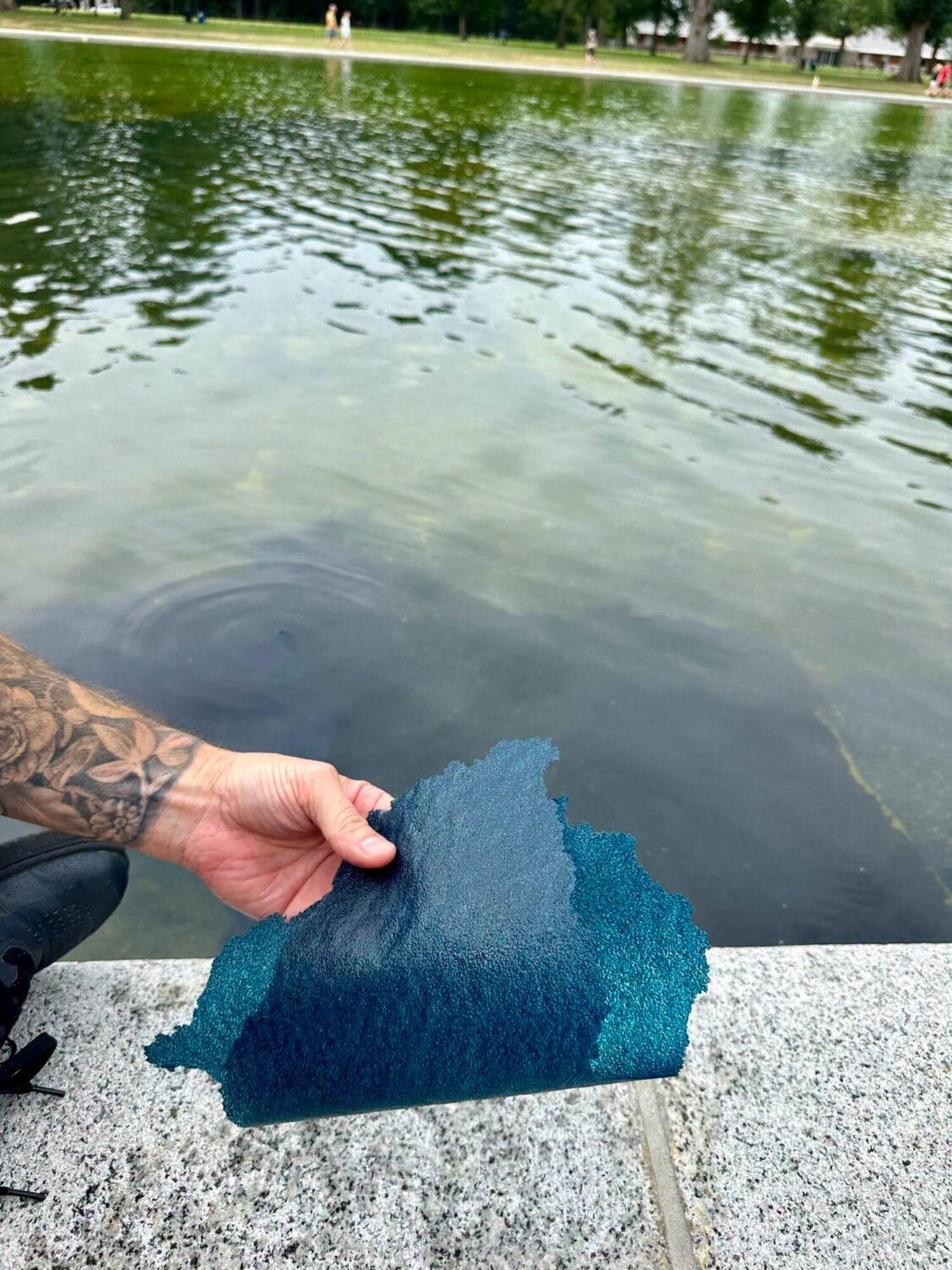
The latest concern centers on the surface coating added to the bottom of the Lincoln Memorial Reflecting Pool as part of a fast-moving renovation ordered ahead of the nation’s 250th anniversary celebrations.
The coating was intended to give the pool a deep blue appearance while also helping seal and resurface the aging basin.
But images from the site showed sections of the material appearing to lift or float near the water’s surface. That visual problem matters because the Reflecting Pool is not a hidden utility project.
It is one of the most photographed public spaces in Washington, stretching between the Lincoln Memorial and the Washington Monument and serving as a symbolic centerpiece for national ceremonies, protests, visits, and commemorations.
For a project designed to improve the pool’s appearance, peeling blue material sends the opposite message.
It raises immediate questions about whether the coating bonded properly, whether chemical treatments affected the finish, whether algae removal equipment caused damage, or whether the resurfacing was completed too quickly before the basin was returned to service.
Algae Returned Days After the Renovation Was Completed

The liner issue followed another visible setback. Algae returned to the Reflecting Pool shortly after the renovation was completed, turning sections of the water from blue to green and forcing crews back into the basin to vacuum and treat the water.
Officials described the algae as residual material connected to reactivated supply lines. The Department of the Interior said treatment efforts included hydrogen peroxide and nanobubble ozone technology, a system that releases tiny ozone-filled bubbles into the water to kill algae and other organisms.
The problem is that algae is not only a cosmetic issue. In a shallow, sun-exposed pool that holds warm water and receives heavy public attention, algae can spread quickly and make a newly completed project look unfinished almost overnight.
Even when algae is killed, crews still have to remove the dead material from the bottom, which can leave the water cloudy, uneven, and visually unpleasant until cleanup is complete.
Why the Reflecting Pool Is So Difficult to Keep Clear
We should understand the Reflecting Pool as more than a decorative water feature. It is a large, shallow, outdoor basin exposed to sunlight, heat, debris, birds, stormwater, and complex water-circulation demands.
Those conditions make controlling algae difficult even under the best circumstances. Shallow water warms faster than deeper water.
Warm water encourages biological growth. Sunlight feeds algae. Any organic material left in pipes, joints, drains, or basin surfaces can become part of the next bloom once the system is restarted.
That is why the return of algae so soon after the renovation has become such a central question. If the bloom came from old supply lines, as officials have said, then the blue surface alone could not solve the broader maintenance challenge.
If circulation, filtration, and source water problems remain unresolved, the pool may continue to require frequent chemical treatment and manual cleaning.
Nanobubble Ozone Technology Became the Center of the Cleanup
The Department of the Interior promoted nanobubble ozone technology as part of the solution, saying it had been deployed to help kill algae and keep the water clear.
The system uses microscopic ozone-containing bubbles, which can break down organic material and help treat water without relying entirely on traditional chlorine-based methods.
In theory, the approach sounds modern and precise. In practice, the Reflecting Pool is a difficult test case because it is large, shallow, exposed, and historically prone to water quality problems.
A treatment system can kill algae, but it does not automatically remove dead algae from the basin or correct every condition that allowed the bloom to form.
That distinction matters. Killing algae is one stage. Removing algae is another. Preventing the next bloom is a larger operational challenge. The public sees the final result, not the technical process, and the visible result has remained uneven.
Cost of the Reflecting Pool Project Drew National Attention

The renovation also drew scrutiny because of its rising price tag. President Donald Trump had publicly suggested the pool could be cleaned or improved quickly and at a much lower cost.
Federal contract records and news reports later placed the project in the multi-million-dollar range, with the resurfacing contract alone reported at nearly $14.7 million after modifications.
That figure changed the public conversation. What began as a promise of a quick fix became a debate over federal spending, project management, procurement decisions, and whether the work was designed for long-term durability or short-term visual impact.
When a project costs millions of taxpayer dollars, the standard becomes higher. Green water days after completion is no longer a small maintenance hiccup.
Peeling liner is no longer just an aesthetic flaw. Together, they become evidence that the project may require more explanation from federal officials and contractors.
No-Bid Contracts Add Another Layer of Controversy
The contracting process has also become a major part of the story. Federal documents cited “unusual and compelling urgency” as the reason for proceeding without the usual full competitive bidding process, citing the need to complete the work before the nation’s 250th anniversary event series.
That urgency argument may explain why officials moved quickly, but it does not end the debate. Competitive bidding exists to protect taxpayers, test prices, compare contractor qualifications, and reduce the risk of rushed decisions.
When that process is shortened or bypassed, the final result is subject to even more public scrutiny.
If the pool had reopened clear, stable, and durable, the urgency argument might have carried more weight. But the algae bloom, ongoing cleanup, and apparent liner failure have made the process itself part of the controversy.
The Peeling Liner Creates a Bigger Maintenance Question
The appearance of peeling material introduces a serious question that goes beyond color. A liner or coating must survive water pressure, sunlight, temperature changes, cleaning equipment, chemical treatments, and constant exposure.
If the blue surface is already separating, officials will need to determine whether the issue is isolated or widespread.
They will also need to explain whether repairs can be made underwater, whether the pool must be drained again, and whether the coating failure could worsen during continued cleaning.
There is also the question of accountability. If the coating was installed properly, investigators may look at treatment chemicals, algae removal methods, or water conditions.
If the coating was not installed properly, attention may turn to contractor performance, quality control, surface preparation, curing time, and inspection standards before the pool is refilled.
National Park Service Crews Are Left Managing the Public Fallout
National Park Service crews have been seen cleaning the basin, vacuuming algae, and restoring the pool’s appearance. Their role is now highly visible because every new image from the site becomes part of the national debate over whether the renovation succeeded.
The agency is not only maintaining water quality. It is also protecting a historic public space during a politically sensitive moment.
The Reflecting Pool sits at the heart of the National Mall, and any visible problem there becomes larger than ordinary infrastructure maintenance.
For visitors, the issue is simple. They expect the Reflecting Pool to reflect. They expect the water to look clean. They expect the setting between Lincoln and Washington to feel dignified.
When the water turns green and the new blue bottom appears to peel, the public sees failure before it hears technical explanations.
The 250th Anniversary Deadline Increased Pressure
The timing of the project is central to the controversy. The United States is preparing for its 250th anniversary celebrations on July 4, 2026, and the National Mall is expected to serve as a major symbolic stage.
That deadline created pressure to move quickly. It also raised the stakes. A renovation completed under urgency rules must be performed immediately, because there is little room for slow troubleshooting when national events are approaching.
The problem is that monuments do not always respond well to rushed fixes. Historic spaces often require careful review, staged testing, environmental assessment, preservation input, and time for materials to settle into real-world conditions.
A fast visual upgrade can appear efficient at first, only to expose deeper problems once water, heat, biology, and public use return.
What Officials Still Need to Explain
Several questions remain unanswered. Officials need to clarify whether the blue material is paint, sealant, liner, coating, or another resurfacing product.
They need to explain why it appears to be separating. They need to say whether chemical treatments played any role. They need to identify whether the affected sections are limited or part of a broader failure.
The public also needs a clearer timeline. When was the surface applied? How long did it take? When was the pool refilled? When did algae first appear? When did crews begin chemical treatment? When did the first signs of peeling appear?
Those details matter because they help separate normal startup problems from avoidable project failures. Without them, the controversy will continue to grow around images, assumptions, and political arguments.
The Bottom Line on the Reflecting Pool Renovation
The Lincoln Memorial Reflecting Pool renovation is now facing two visible tests at once. First, officials must control the algae and restore clear water.
Second, they must determine why the new blue coating appears to be peeling and whether the surface can hold up over time.
The project was promoted as a fast, patriotic upgrade for one of the most famous views in America. But the return of green water and the apparent failure of the blue liner have turned the renovation into a national accountability story.
For now, we are watching a landmark meant to symbolize permanence become the center of a very practical question: Did the government fix the Reflecting Pool, or did it simply cover old problems with a new shade of blue?